Choral-detail commuters
If you want to distinguish choir sections, soloists and accompaniment despite carriage noise, consider sound balance alongside the quality of the ear-tip seal rather than choosing on bass emphasis alone.


Choose an in-ear monitor with a comfortable seal and a sound balance that helps you follow choir and accompaniment without simply raising the volume. If train noise masks quiet passages, pay particular attention to passive isolation and ear-tip fit; if voices seem overshadowed by bass, compare the tuning with familiar choral recordings. Check the connection to your playback device, and remove your earphones when boarding or listening for announcements.
If you want to distinguish choir sections, soloists and accompaniment despite carriage noise, consider sound balance alongside the quality of the ear-tip seal rather than choosing on bass emphasis alone.
A comfortable, isolating fit may help you hear quieter passages without raising the volume to compete with train noise. You still need to hear announcements and remain aware of your surroundings when boarding or on platforms.
A cable avoids charging the earphones, but you need to check whether your phone, tablet or other playback source accepts the plug or requires a compatible audio adapter.
Start with the fit and the amount of carriage noise you need to manage, then judge choral balance and confirm that the cable works with your playback device.
| Concern | What to check | Who this matters to |
|---|---|---|
| Choral balance | Compare model-specific tuning descriptions, then listen to familiar recordings to judge voices against accompaniment. | If I want to follow separate choir parts, a bass-heavy presentation may distract from the voices. Roughly 34% of consumers put choral balance first. |
| Noise isolation | Check the stated isolation method and try the supplied ear tips for a secure seal at a moderate listening level. | When carriage noise masks quiet passages, I want to hear the music without continually turning it up; around 33% of consumers make isolation their primary concern. |
| Journey-long fit | Try the tip options for pressure and stability, and check how any over-ear cable sits with glasses or clothing. | For a full journey, I need the earphones to stay comfortable as well as sealed. About 20% of consumers prioritise fit over the other concerns here. |
| Device connection | Confirm the plug and your device’s audio output; check the exact connector before choosing a replacement cable. | If my phone has no headphone socket, I need to know which audio adapter will work before I buy wired earphones. Roughly 13% of consumers put connection practicality first. |
Etymotic says the ER2XR’s 35–42 dB attenuation depends on the ear tip and insertion depth. A seal that does not suit your ears can change both isolation and the sound you hear.
Try the supplied tips and assess comfort and seal rather than assuming the published range will apply to your fit.
Shure’s SE215 and Sennheiser’s IE 200 use 3.5 mm plugs. A phone without a compatible headphone output needs an audio adapter or digital-to-analogue converter that works with that device.
Check the device’s audio connection and the adapter’s compatibility before ordering; a charging adapter is not necessarily an audio adapter.
Effective isolation can make announcements and nearby activity less audible. National Rail advises passengers to take off headphones and listen to announcements, while Translink advises removing them when boarding.
Pause playback and remove your earphones when boarding, alighting or listening for instructions, and stay aware near platform edges.
Sennheiser describes the IE 200 as neutral, while Etymotic describes added bass on the ER2XR and Shure describes deep bass on the SE215. Those descriptions do not establish how each will sound to you with a particular recording and fit.
If possible, compare familiar choral passages for how clearly you can follow voices and accompaniment.
The ER2XR is a reference point for listeners who prioritise passive isolation and are willing to spend time finding a suitable ear-tip fit.
The wired IE 200 is worth considering if an even presentation for voices and accompaniment matters to you and your source can use a 3.5 mm plug.
The SE215 offers an over-ear, detachable-cable option for commuters who want to assess isolation and cable practicality together.
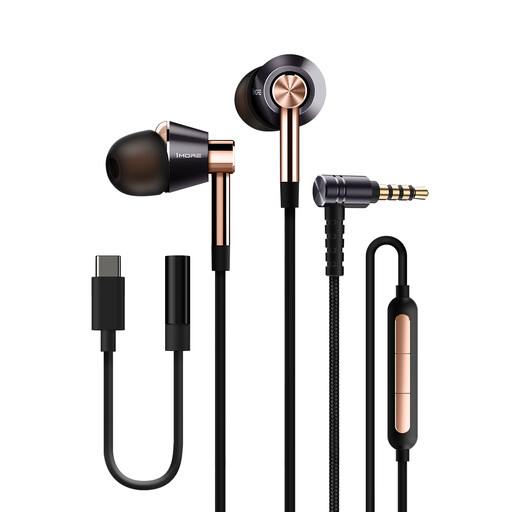
The wired in-ear model below gives you a product to assess for train listening; weigh its bass-focused description against your preferred choral balance, and check fit and device connection before choosing it.
 No image available
Consider this wired model if you can assess whether its bass-focused description suits the choral recordings you listen to. Check the ear-tip seal in your own ears and confirm the connection your playback device requires.
The E1001 is described as a triple-driver in-ear model with a MEMS microphone.
A good seal can reduce the temptation to turn up the volume over carriage noise, but isolation does not make loud or prolonged listening safe. The World Health Organization explains that hearing risk rises with sound level and listening duration; keep the volume moderate and use your device’s exposure tools if available.
Remove them when boarding so you can hear instructions and remain aware of your surroundings. National Rail advises passengers to listen to announcements, and Translink advises removing headphones when boarding.
Only if the plug matches your phone’s audio output; otherwise you need a compatible audio adapter or digital-to-analogue converter. Shure lists a 3.5 mm plug for the SE215, as does Sennheiser for the IE 200, so check your phone and any adapter before buying either model.
For most UK online orders, GOV.UK says consumers can cancel within 14 days of delivery when they change their mind; check the applicable exceptions and how handling the earphones may affect a return. Faulty or misdescribed goods are a separate matter with statutory remedies, so a change-of-mind restriction does not remove those rights.