Chord learners in a noisy household
If conversation or appliances cover quieter notes while you pause and replay a song, focus on finding a dependable ear-tip seal before choosing by bass emphasis or other features.


Start with an in-ear monitor whose tips give you a comfortable seal: household noise is harder to ignore when the fit lets it through, and turning up the recording is not a substitute for fixing the fit. For identifying chords, a manufacturer-described flat or neutral sound is a useful starting point, but test familiar recordings before deciding whether you can follow the notes clearly. Check the cable connection and comfort for repeated listening, and keep the volume only as high as needed.
If conversation or appliances cover quieter notes while you pause and replay a song, focus on finding a dependable ear-tip seal before choosing by bass emphasis or other features.
If you are working out harmony or following notes within dense chords, a manufacturer-described flat or neutral presentation is worth trying with recordings you know. The description alone cannot tell you how clearly you will hear a particular passage.
If you replay passages repeatedly, check whether the tips and cable remain comfortable and whether your phone, laptop or audio interface has a suitable output. The Royal Free London NHS Foundation Trust advises keeping music only as loud as needed to hear it comfortably.
| Concern | What to check | Who this matters to |
|---|---|---|
| Isolation and seal | Try suitable tip sizes in both ears and assess the seal at a comfortable playback level. Treat manufacturers' attenuation figures as model-specific claims, not a guarantee of your own fit. | If household voices or appliances cover quiet chord tones, I need less sound leaking in before I raise the volume; around 42% of consumers put a dependable seal first. |
| Tonal balance | Try familiar, chord-dense recordings to judge whether you can follow bass movement and upper notes. Flat or neutral tuning descriptions are a starting point, not a listening result. | When I am working out a voicing, I want to follow its separate notes rather than choose by bass impact alone; roughly 33% of consumers prioritise tonal balance. |
| Comfort and connection | Check tip comfort over a session, cable routing and your source device's audio output. Confirm the exact connector before choosing a replacement cable. | If I replay passages for a long time, an uncomfortable fit or incompatible connection interrupts the work; about 25% of consumers make practical fit and connection their primary concern. |
Etymotic states 35–42 dB attenuation for the ER2SE, while Shure states up to 37 dB for the SE215. Those manufacturer figures do not tell you how either model will seal in your ears; a poor seal may leave household noise competing with the music.
Check the available tip options and the retailer's return terms, then assess the fit at a comfortable listening level rather than compensating by turning the volume up.
The cited Shure SE215, Sennheiser IE 200 and Audio-Technica ATH-E40 use 3.5 mm audio connections, but their detachable cables are not interchangeable: the cited Shure and Sennheiser cables use MMCX, while the ATH-E40 uses A2DC.
Check your device's audio output and match any replacement cable to the exact IEM connector. If your device lacks a 3.5 mm output, confirm that a suitable audio adaptor or interface will be available.
A seal that reduces distracting sound does not make prolonged loud playback risk-free. The Health and Safety Executive warns that loud noise can permanently damage hearing.
Follow the Royal Free London NHS Foundation Trust's advice to set music only as loud as needed to hear it comfortably. If listening leaves your hearing muffled or ringing, reduce exposure and seek appropriate clinical advice if symptoms persist.
Etymotic describes the ER2SE as flat, and Sennheiser describes the IE 200 as neutral and precise. Neither description guarantees that a particular listener will separate every note in a particular recording.
During the retailer's applicable return period, try recordings you know well, including passages with bass movement and closely voiced notes, at a comfortable volume.
The ER2SE is a reference point if a flat-response description and a strongly isolating fit are priorities for chord work.
The SE215 offers an over-ear fit with several sleeve options for listeners who want to work on a secure seal.
The IE 200 is a wired option to consider if you want to try the neutral, precise sound described by Sennheiser.
The ATH-E40 provides an over-ear monitor format for listeners interested in the balanced mids and highs described by Audio-Technica.
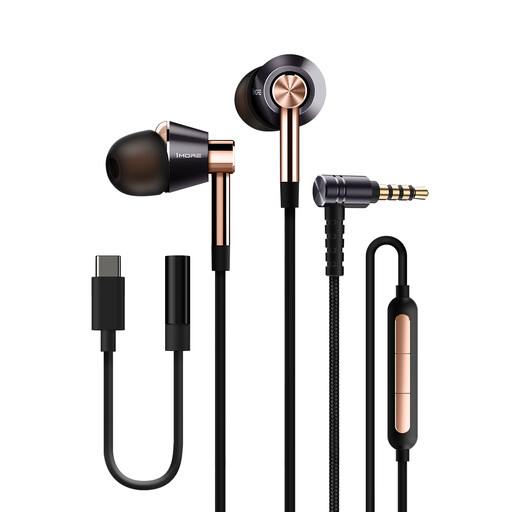
This wired in-ear option is relevant to replaying songs at home. Before choosing it for chord work, assess the ear-tip seal, your device connection and how familiar chords sound to you.
 No image available
A wired option to consider for replaying passages while you work out chords at home. Check its fit with suitable tips, confirm how it connects to your playback device and try familiar chord-heavy recordings before relying on it for tonal analysis.
Not necessarily: a well-sealed in-ear monitor can reduce incoming household sound passively. Etymotic and Shure publish passive attenuation claims for specific models, but start by checking whether the tips seal comfortably in your own ears.
It can be a useful starting point if you want to hear notes without choosing a deliberately bass-emphasised presentation, but a neutral or flat claim is not a guarantee. Try familiar passages at a comfortable volume and listen for both bass movement and notes higher in the chord.
That depends on your device's audio output. Shure specifies a 3.5 mm connection for the SE215, as do Sennheiser for the IE 200 and Audio-Technica for the ATH-E40; if your device has no matching socket, confirm that you have a compatible audio adaptor or interface.
Keep the recording only as loud as you need to hear it comfortably rather than raising it to overcome household noise, as the Royal Free London NHS Foundation Trust advises. If the seal is poor, address the fit instead of increasing the volume; take breaks during extended listening.