Podcast listeners distracted by office chatter
You want to follow presenters and plant names over nearby conversations, printers or ventilation, and your work allows you to use a sealed in-ear fit.


Choose a wired in-ear model whose tips fit securely and whose connector works with your device; a good seal can make speech easier to follow without simply raising the volume. Strong passive isolation suits a desk where you do not need to hear colleagues or alerts and workplace rules permit its use. Otherwise, put awareness and comfort ahead of the highest stated isolation figure.
You want to follow presenters and plant names over nearby conversations, printers or ventilation, and your work allows you to use a sealed in-ear fit.
You need tips that stay comfortable through several listening blocks and a cable arrangement that does not get in your way. The strongest possible seal is not your only priority.
You may need to respond to colleagues, visitors, alerts or instructions. For you, isolation has to be weighed against communication needs and workplace rules.
Start by deciding what you must still hear at work, then check tip fit and your device connection before comparing manufacturers’ isolation figures.
| Concern | What to check | Who this matters to |
|---|---|---|
| Speech over office noise | Look for tips that seal reliably and, if isolation is a priority, check any stated attenuation figure. A manufacturer’s figure does not guarantee the same result in your ears. | If nearby conversations cover up plant names, I want a secure seal rather than having to turn up the podcast. Around 42% of consumers put speech clarity against office noise first. |
| Comfort and fit | Check the included tip choices and whether the cable can sit comfortably during longer listening blocks. | For several listening blocks, I need tips that stay comfortable rather than the deepest possible seal. Around 33% of consumers put long-session fit first. |
| Connection and awareness | Match the plug to your device’s audio output, and check workplace rules if you need to hear people or alerts. | When I switch work devices or need to hear colleagues, a workable connection and awareness matter more than stronger isolation. Roughly 25% of consumers put device practicality and workplace awareness first. |
A strong seal may make a podcast easier to follow, but it can also make colleagues, alerts and instructions harder to notice.
Choose the level of isolation around what your role requires you to hear, and check your employer’s personal-audio rules before using highly isolating earphones.
Driver specifications do not tell you whether the tips will fit your ears. A loose or uncomfortable fit can let office noise intrude.
Check which tips come with the exact package and try suitable sizes according to the maker’s fitting instructions.
If the supplied tips do not fit, finding suitable replacements may take extra effort.
A 3.5 mm plug or USB-C connector will not necessarily carry audio from every phone or work device.
Check your device’s audio output against the exact earphone variant before ordering.
A compatible audio adapter may be needed when the earphones and device have different connections.
Listening level and duration both matter. The World Health Organization notes that safe exposure time falls as sound level rises.
Use the lowest volume at which speech remains comfortable to follow and take listening breaks. Seek professional advice if you develop persistent tinnitus or difficulty hearing speech.
The ER2XR is relevant if a sealed, wired fit and strong stated passive isolation are central to your choice.
The SE215 is a wired, over-ear option for listeners who want sleeve choices and a detachable cable.
The IE 200 is worth considering if tip choice and an adjustable over-ear fit matter more to you than selecting by a stated isolation figure.
The FH3 is relevant when trying several supplied tip types is an important part of finding a workable fit.
These wired in-ear options give you connections and fits to consider for podcast listening. Check each model against your device and the sounds you need to hear at work.
 No image available
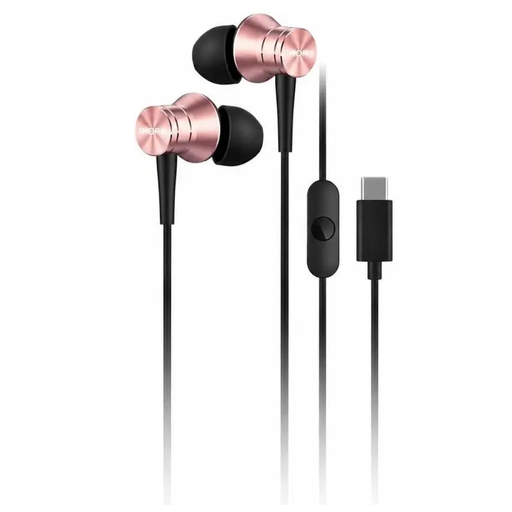
Consider this wired in-ear option for podcasts if your playback device supports audio through its USB-C port.
Check which tips come with this variant and whether its fit lets you hear the office cues your role requires.
 No image available
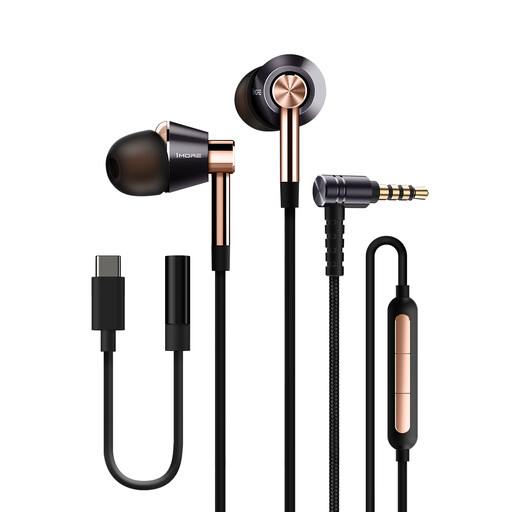
Consider this wired model if you want to assess an in-ear fit for listening at your desk.
Its triple-driver designation does not by itself establish podcast clarity. Check the connector against your device and the supplied tip options against your fit needs.
 No image available
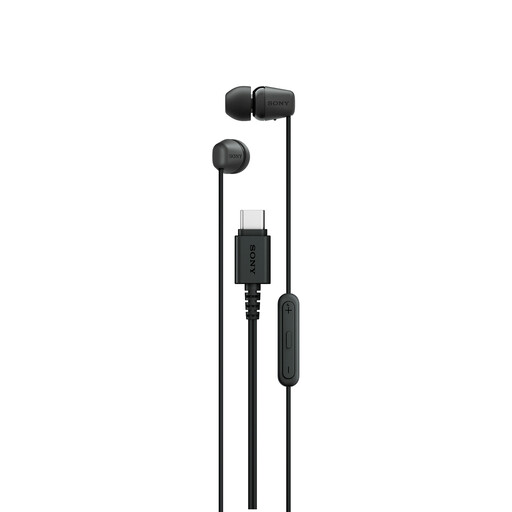
This wired in-ear model is an option for podcasts from a device that supports USB-C audio.
Check its fit and how much of your surroundings you can hear before relying on it in a busy office.
Choose strong isolation only if you can still meet your workplace’s communication and safety requirements. It may reduce distracting sound, but it can also make colleagues and alerts harder to hear.
Keep playback at the lowest level at which speech is comfortably intelligible, rather than turning it up to overcome office noise. The World Health Organization advises keeping device volume at no more than 60% of maximum; that setting is not a universal guarantee of safe listening. Royal Free London NHS Foundation Trust also advises a break of at least five minutes every hour.
A tip that seals comfortably can reduce competing office noise, which may make a podcast easier to follow without increasing volume. Try suitable supplied sizes using the maker’s fitting instructions; change the tip if it feels uncomfortable or will not stay in place.
They will work only when the earphones’ connector matches a supported audio output or you have a compatible adapter. Check the exact variant: a 3.5 mm plug and a USB-C plug are not interchangeable, and the presence of a USB-C port alone does not establish audio compatibility.
Check your employer’s personal-audio policy and what you need to hear to do your work safely. An office setting alone does not establish that it is appropriate to block out colleagues, visitors or alerts.