What to check before buying
Start with fit and the playback connection, then decide how much household sound you can safely block while following speech.
| Concern |
What to check |
Who this matters to |
| Speech amid household noise |
Check the supplied tip options and how well they seal. Treat descriptions of balanced or detailed sound as product claims, not proof that a particular recording will be clear. |
When an appliance competes with a lecture, I want to follow the words without continually raising the volume; around 36% of consumers put speech clarity first. |
| Fit and cable during movement |
Consider the housing shape, over-ear routing and tip sizes. Check cable length and connector type if cable replacement matters. |
If I am bending and reaching, I need the earpieces to stay seated without the cable getting in the way; roughly 29% of consumers prioritise a secure fit and manageable cable. |
| Comfort and listening habits |
Check tip materials and cleaning instructions, and use a comfortable volume rather than turning up playback to overcome noise. |
For a lecture spanning several chores, I need tips I can wear comfortably and maintain between sessions; around 21% of consumers put comfort and listening habits first. |
| Playback connection |
Confirm the IEM plug and your device’s audio output, including whether a compatible audio adapter or DAC is needed. |
Before listening from my phone or tablet, I need to know that its audio output will work with the earphones; about 14% of consumers make device compatibility their primary concern. |
Brands relevant to this choice
These model-specific features can help frame the choice; brand inclusion does not indicate that a particular model is available among the Joybuy products below.
Shure
The wired SE215 combines an over-ear fit, supplied sleeve options and a detachable 3.5 mm MMCX cable.
- Shure states that the SE215 blocks up to 37 dB of noise; the seal you achieve will affect your experience.
- Check that your playback device accepts its 3.5 mm connection, and avoid relying on strong isolation when you must hear the room.
Sennheiser
The IE 200 is a wired option with adjustable ear hooks, multiple tip adapters, an MMCX cable and a 3.5 mm plug.
- Sennheiser describes its sound as balanced and detail-revealing, a characterisation worth considering for speech rather than a speech-clarity test.
- A source device without a compatible analogue output needs another connection solution.
Etymotic
The ER2XR is an option to investigate when passive isolation is important and reduced awareness is acceptable.
- Etymotic states 35–42 dB attenuation for the ER2XR, depending on tips and insertion depth.
- That level of isolation may be unsuitable when you need to hear people or household alerts.
Westone Audio
The Pro X10 has a compact, low-profile design with silicone and foam tip options.
- Westone Audio describes the Pro X10 as designed for extended wear; individual comfort still depends on fit.
- If considering this model, check the seller, after-sales arrangements and connection with your playback device.
Wired in-ear options on Joybuy
These wired in-ear choices relate to listening to recorded lectures during housework. Compare their connection with your playback device and assess fit and household awareness separately; a product title alone cannot establish either speech clarity or a safe level of isolation.
 No image available
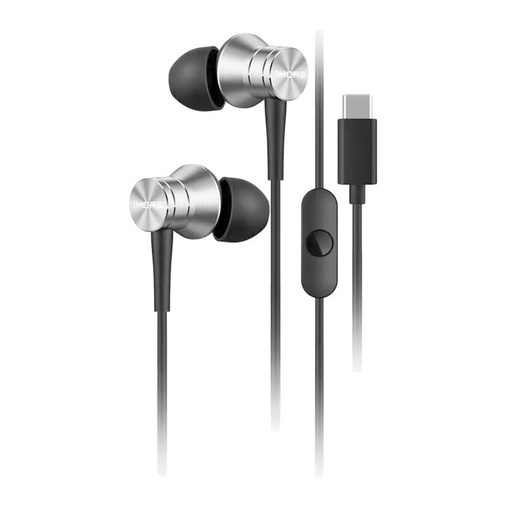
1MORE P10 Piston Type-C wired earphones (Silver)
For lectures played from a USB-C device, check that the device supports audio through its port. Confirm the supplied bundle contents and assess whether the ear tips stay seated during movement.
View on Joybuy
 No image available
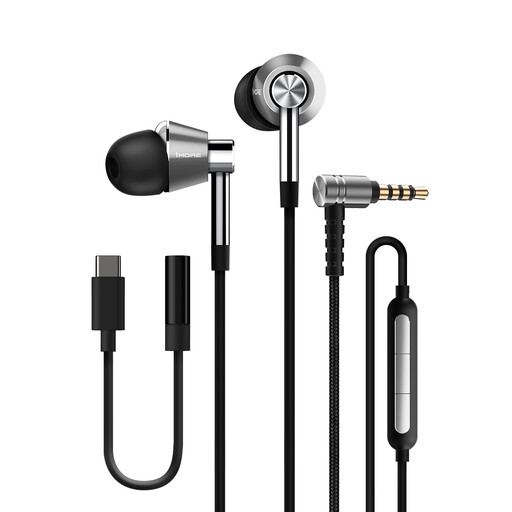
1MORE E100E Triple Driver in-ear earphones (Silver)
For recorded speech during chores, assess tip comfort and whether the seal stays stable as you move. Confirm the wired plug against your playback device before buying, and pause when you need to hear household signals.
View on Joybuy
 No image available
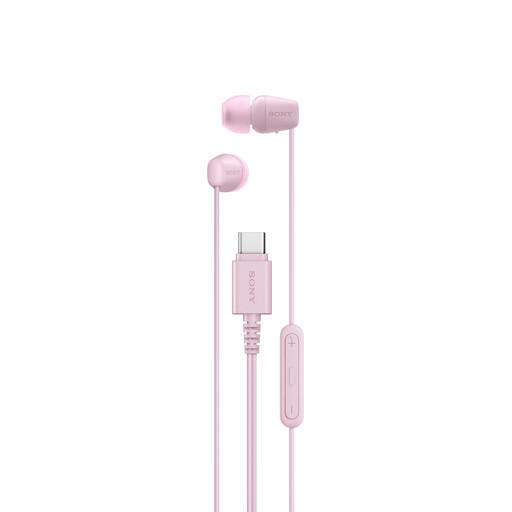
Sony IER-EX15C USB-C wired earbuds (Pink)
For lectures from a USB-C source, confirm that your device supports USB-C audio. Check the fit during movement and pause playback or remove an earpiece when you need to hear what is happening around you.
View on Joybuy
Frequently asked questions
Should I choose the strongest-isolating IEM for housework?
Choose stronger passive isolation only for tasks where reduced awareness of your surroundings is safe. A good fit may reduce the urge to raise playback volume, but pause or remove an earpiece when you need to hear a person, doorbell or alarm.
How loud should I play a recorded lecture?
Keep playback at a comfortable level rather than using a device volume percentage as a safety measure. The World Health Organization explains that listening risk depends on both level and duration; its examples allow up to 40 hours a week at 80 dB but four hours at 90 dB. Take particular care if appliance noise prompts you to turn the lecture up.
How should I clean the ear tips?
Follow the instructions for your specific model and let tips dry fully before reuse. Shure’s SE215 guide says its sleeves can be removed, gently rinsed in warm water and air-dried, with foam sleeves requiring longer to dry; inspect them for damage as well.
Will a 3.5 mm IEM connect directly to my phone or tablet?
It will connect directly only if the device has a compatible analogue audio output. The Shure SE215 and Sennheiser IE 200 use 3.5 mm connections; for a device without that output, check which compatible audio adapter or DAC it needs and whether you require microphone or remote functions.
What product-safety checks are useful when ordering online?
Check the seller’s identity, keep your order details and look for manufacturer registration or recall information where available. GOV.UK notes that some electrical products have a manufacturer-registration option; that general guidance does not establish the status of an individual listing.


