Quiet-hour mix checkers
If loudspeakers would disturb someone sharing the bedroom, you need a private way to hear level, EQ and edit changes. A repeatable ear-tip seal matters because a changing fit can change what you hear.


Choose a wired in-ear monitor that seals consistently, remains comfortable and has a sound you can learn with familiar tracks. A manufacturer-stated flat response is relevant if tonal changes are your priority; passive isolation matters more if household noise interrupts quiet checks. In-ear listening provides a private reference, but check panning and the near-final mix on another familiar playback system when possible.
If loudspeakers would disturb someone sharing the bedroom, you need a private way to hear level, EQ and edit changes. A repeatable ear-tip seal matters because a changing fit can change what you hear.
If room acoustics or changing locations make loudspeaker checks inconsistent, an in-ear monitor can provide a familiar private reference. Sound On Sound also cautions that headphone listening does not fully replace loudspeaker checks when judging a mix.
For repeated checks or longer sessions, comfort and a stable fit deserve attention alongside sound. Tip choices and a detachable cable may also matter if you expect to maintain the earphones over time.
Start with the obstacle that most affects your own checks—household noise, tonal judgement, fit or mix translation—then make sure the earphones work for the other three needs too.
| Concern | What to check | Who this matters to |
|---|---|---|
| Private listening | Check the stated passive isolation and whether the supplied tip options let you achieve a comfortable, repeatable seal; manufacturer figures are not a promise of your own result. | If household noise masks a small change, I need to hear it without simply raising the level. Roughly 29% of consumers might make private listening and noise control their primary concern. |
| Tonal reference | Look at how the manufacturer describes the response, then use familiar tracks to learn its sound; a response claim alone does not establish mix translation. | When comparing subtle EQ or balance changes, I need a sound character I can recognise from session to session. For around 29% of consumers, a learnable tonal reference might come first. |
| Fit and upkeep | Check tip sizes and materials, cable design and the terms for replacing parts; a detachable cable does not solve an uncomfortable fit. | If the seal shifts or my ears become uncomfortable during repeated checks, I cannot rely on the same listening position. About 18% of consumers might prioritise fit and upkeep above the other concerns. |
| Mix translation | Plan to revisit panning and a near-final mix on another familiar playback system when practical. | I want private detail checks, but I also need to know whether spatial decisions hold up elsewhere. Avoiding an IEM-only judgement might be the primary need for roughly 24% of consumers. |
Sound On Sound explains that headphone stereo differs from loudspeaker crossfeed and room interaction. Panning that seems clear in-ear can therefore need another check.
Use the in-ear monitors for private detail work, then revisit panning, balance and a near-final mix on another familiar playback system when practical.
Published attenuation describes a product under stated conditions, not the seal or comfort you will achieve in your own ears.
Check the included tip options and the seller’s applicable return terms before buying, and assess comfort and seal stability before relying on the earphones for mix decisions.
Etymotic describes the ER2SE as flat-response, whereas Shure describes the SE215 as having deep bass. Neither description substitutes for learning how a particular fit sounds to you.
Choose for your reference goal and compare several familiar tracks before making subtle EQ decisions.
Hinckley & Bosworth Borough Council advises against raising headphone volume to block out noisy surroundings and recommends limiting high-volume listening time.
Set a comfortable level in a quiet room, check the seal rather than increasing volume to mask noise, and take breaks.
The ER2SE is worth examining if a manufacturer-stated flat response and passive isolation match your priorities for quiet mix checks.
The SE215 is a route to consider when sleeve choices, cable replacement and UK warranty information matter.
The IE 100 PRO is a professional in-ear monitoring option to examine if foam and silicone tip choices matter to your fit.
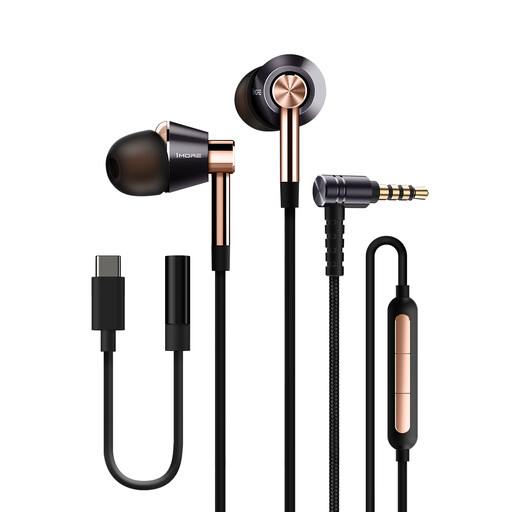
This wired in-ear option is relevant to private mix-change checks if you can establish a repeatable fit and learn its tonal character with familiar tracks.
 No image available
Consider this wired in-ear model for private checks if it fits securely and you are willing to learn its sound with familiar reference tracks.
The E1001 name identifies a triple-driver design; the listed variant is Gold and includes a MEMS microphone. Check fit and tonal suitability for subtle EQ decisions, and assess final panning on another familiar playback system when practical.
In-ear monitors can serve as a consistent private reference for hearing changes, but do not assume they reproduce loudspeaker stereo imaging. Sound On Sound notes the difference in crossfeed and room interaction; check extreme panning and a near-final mix on another familiar playback system when possible.
No—not without checking fit and the earphones’ sound. A stable seal, comfort and a tonal character you can learn all matter for mix-change checks; compare tip options and the seller’s applicable return terms.
Set a comfortable level in a quiet environment instead of turning up the sound to mask household noise. Hinckley & Bosworth Borough Council advises limiting high-volume headphone listening; check the seal and take breaks during extended sessions.
Correction software is optional, and only worth considering if it supports your exact in-ear monitor and fits your workflow. Sound On Sound reported that ARC On-Ear 1.5 added profiles for 50 IEM systems; confirm model support before choosing that route, and still check the mix on another familiar playback system.