Choose a wired in-ear monitor with tips you can wear comfortably and a connector that works with the museum receiver or your own device. A good seal can help you follow narration at a restrained volume, but the strongest advertised isolation is not necessarily useful in an already quiet shared space, where you may also need to hear staff or nearby visitors.
Who these earphones suit
Quiet-space talk listeners
You want to follow dialogue and guide narration at a modest volume, rather than choose earphones chiefly for a bass-heavy presentation. A comfortable ear-tip seal is worth prioritising: Shure notes that fit affects sound quality, while the World Health Organization advises keeping listening levels down.
Listeners who need a comfortable fit
You expect to wear the earphones through a talk or study session and want to try different tip sizes or materials. Shure and Sennheiser list multiple tip options for the SE215 and IE 200 respectively; the right fit still depends on your ears.
Audio-guide compatibility checkers
You plan to use a museum receiver, laptop or phone and need to match its audio output to the earphones. The Shure SE215 and Sennheiser IE 200 have 3.5 mm wired connections, so check the device and any necessary adapter before buying.
What matters when choosing
For a spoken talk in a quiet shared space, check the listening level and fit, then confirm the connection to the device you will actually use. These concerns describe consumers according to the need they would put first.
| Concern |
What to check |
Who this matters to |
| Speech at a restrained volume |
Look for tip options that help you achieve a comfortable seal; assess narration at a low volume rather than relying on bass claims. |
If I struggle to follow a quiet recording, I want the words to remain clear without repeatedly turning it up. Around 33% of consumers would put speech clarity at a restrained volume first. |
| Comfort throughout the talk |
Check the supplied tip sizes and materials, and avoid a fit that needs to be forced. |
For a longer talk, I need the earpieces to stay in place without uncomfortable pressure; roughly 27% of consumers would make sustained comfort their primary concern. |
| Device compatibility |
Check the exact receiver or phone output against the earphone plug and any adapter needed for audio playback. |
I may switch between an audio guide and my own device, so I need a connection that works with the one I will use. Device compatibility would come first for around 27% of consumers. |
| Manageable use and care |
Consider cable routing and storage, and follow the maker’s instructions for cleaning and replacing tips. |
When moving between a talk and a quiet workspace, I want an easy-to-store setup that I can keep clean. For roughly 13% of consumers, manageable use and care would be the leading need. |
Buying pitfalls
-
Choosing the highest isolation figure by default
Shure says isolation depends on the ear canal, sleeve and fit; a published figure is not the amount every wearer will experience. A very close seal may also feel uncomfortable or leave you less aware of a quiet shared space.
Start with a fit you can tolerate and enough isolation to follow speech at a restrained volume. If you cannot assess fit before buying, check the applicable return conditions.
-
Assuming a wired plug fits every audio guide
The Shure SE215 and Sennheiser IE 200 use 3.5 mm connections, but that alone does not establish compatibility with a particular receiver or phone.
Inspect the device’s audio output and check the required adapter’s audio compatibility before choosing earphones.
You may need a separate compatible adapter.
-
Turning up the volume to compensate for a poor seal
Shure says fit can substantially affect sound quality. The World Health Organization advises keeping listening levels down because louder, longer listening increases hearing-risk exposure.
Try another supplied tip size or material and reseat the earpiece before increasing the volume. Use sound-level monitoring if your device provides it.
-
Continuing to use earphones when your ears hurt
Ear pain, discharge or hearing difficulty calls for attention to your ears, not a tighter seal. The NHS lists these among symptoms that can accompany ear infections.
Stop forcing the fit and seek appropriate medical or pharmacy advice, particularly if symptoms persist.
Brands to consider
These examples show different fit and connection considerations for wired listening; assess the particular model rather than assuming that every earphone from a brand has the same features.
Shure
The SE215 suits listeners considering an over-ear cable route, detachable cable and a choice of foam or soft-flex sleeves.
- Shure lists a 3.5 mm cable and carrying case for the SE215, and states sound isolation of up to 37 dB.
- Shure says actual isolation depends on the sleeve and fit. Check that the 3.5 mm connection works with your listening device.
Sennheiser
The wired IE 200 is an option for listeners interested in the balanced, detailed presentation described by Sennheiser and a choice of silicone or memory-foam tips.
- Sennheiser lists adjustable ear hooks and a 3.5 mm plug for the IE 200.
- The plug needs a compatible output or a suitable adapter; the brand’s sound description is not a speech-intelligibility test for museum recordings.
Etymotic
The ER2SE is relevant if you specifically want a deep-fitting design with substantial passive attenuation.
- Etymotic claims 35–42 dB passive attenuation for the ER2SE.
- The result depends on tips and insertion, and a deep fit may not suit listeners who are sensitive to in-ear pressure.
final
The wired E500 offers another model to assess for fit and source compatibility; final positions it for binaural games and VR, not specifically for museum narration.
- final lists five supplied tip sizes and a 1.2 m cable for the E500.
- Its published positioning does not establish an advantage for understanding spoken museum talks.
Wired options on Joybuy
These wired in-ear options are relevant if you are assembling a compact setup for spoken talks. Check the connection and fit details of each model against your receiver or personal device before choosing.
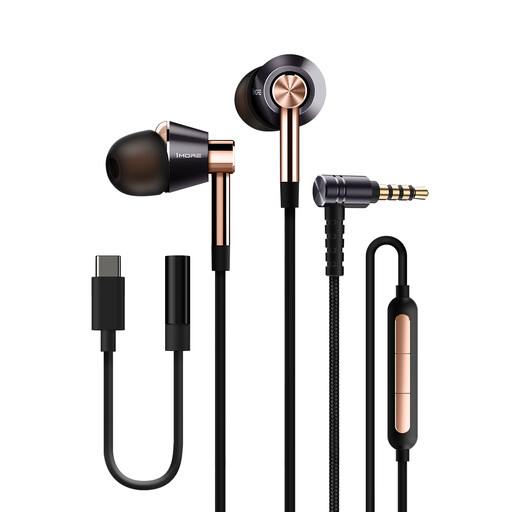 Image unavailable
1MORE E1001 Triple Driver wired in-ear earphones, Gold
Consider this wired option if you want to try different seals for talk listening. The product description lists silicone and foam tips and a carrying case; confirm the plug type against your audio-guide receiver or personal device before buying.
View on Joybuy
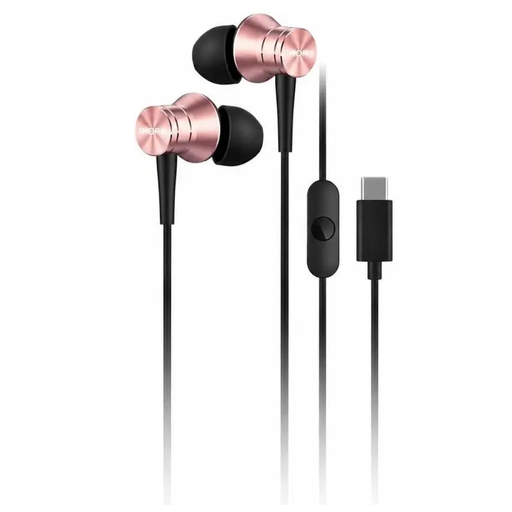 Image unavailable
1MORE P10 Piston Type-C wired earphones, Pink
Consider this model if the device you intend to use has a compatible Type-C audio output. The product description mentions supplied silicone tips; check audio playback compatibility with the exact receiver or phone. Its advertised bass emphasis does not establish how clearly it will reproduce your museum recording.
View on Joybuy
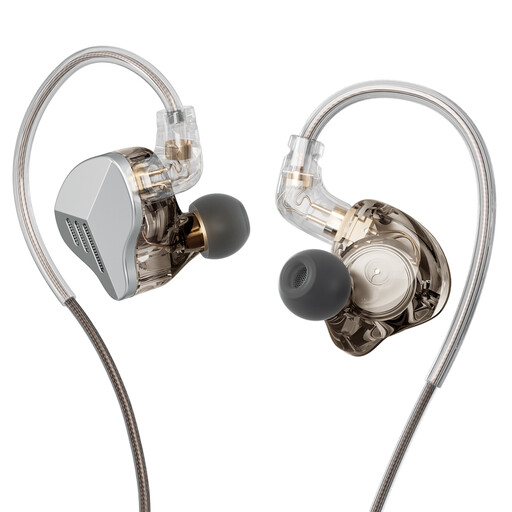 Image unavailable
HIFI WALKER A20 Pro wired in-ear monitors
This is a wired in-ear option if you prefer a cable for talk listening. Check its connector against your source and confirm the available ear-tip choices before relying on it for a comfortable seal; a general sound description cannot establish speech clarity at your preferred volume.
View on Joybuy
Common questions
Do I need strong isolation for a talk in a quiet library?
Not necessarily: choose enough isolation to follow the recording at a restrained volume while retaining the awareness you need in the space. Shure says fit affects isolation, so a published maximum is not a guaranteed result for your ears.
How should a sealing in-ear monitor fit?
It should feel stable and let you hear clearly without painful pressure. Try the supplied tip sizes at a low volume; Shure advises against pushing a sleeve beyond the ear-canal opening.
Will a 3.5 mm in-ear monitor work with any museum audio guide?
No: it connects directly only if the particular guide has a compatible 3.5 mm audio output. The Shure SE215 and Sennheiser IE 200 use 3.5 mm wired connections, but you should check the receiver or phone and any adapter it requires.
How can I keep the listening volume moderate?
Begin at a low level and adjust the fit before turning the volume up to overcome a poor seal. The World Health Organization advises setting a device to no more than 60% of its maximum volume and, where sound-level monitoring is available, staying below an 80 dB average.


