Focused documentary listeners
You want office chatter and keyboard noise to interfere less with narration, and your work does not require you to hear nearby colleagues or alerts continuously.


Choose well-fitting wired in-ear monitors if office chatter makes documentary speech difficult to follow, but do not assume a published isolation figure is what you will experience. If you also take calls, check the microphone and device connection; where you need to hear warnings or colleagues, workplace safety requirements take priority over isolation.
You want office chatter and keyboard noise to interfere less with narration, and your work does not require you to hear nearby colleagues or alerts continuously.
You move between documentary playback and work calls, so a microphone, accessible controls and a compatible connection matter alongside fit and isolation.
You care about the presentation of voices and quieter documentary details, and are willing to try different tips rather than choosing solely by an advertised isolation figure.
For consumers choosing in-ear monitors for radio documentaries in a busy office, establish whether it is safe to tune out surrounding activity before comparing call features, sound and fit.
| Concern | What to check | Who this matters to |
|---|---|---|
| Following speech through chatter | Try the supplied tips for a secure seal in your usual office; do not treat a stated attenuation figure as your personal result. | If nearby conversations obscure narration, I need a seal that lets me follow speech without repeatedly rewinding. Roughly 43% of consumers put this need first. |
| Moving between listening and calls | Confirm that the cable has a microphone and that its connector and controls work with your device. | When a work call interrupts a documentary, I want to use the same earphones without changing my setup. For around 29% of consumers, call compatibility is the primary concern. |
| Sound and fit over longer sessions | Consider the available tip options and try the fit; check the connection to your listening device. | If office noise is manageable, I would rather focus on voices, quieter details and a fit I can tolerate for the session. About 28% of consumers prioritise sound and fit. |
Shure says isolation varies with ear-canal shape, sleeve, model and seal. A poor fit can leave speech masked despite a strong published figure.
Try the supplied tip options and assess the seal in your usual listening conditions.
The Health and Safety Executive warns that excessive attenuation can make communication and warning signals harder to hear.
Check your employer’s rules and risk controls before using isolating earphones where alerts, vehicles, machinery or colleagues need your attention.
Noise isolation for listening does not establish suitability as hearing protection; Shure says its earphones are not intended for that purpose.
If your workplace requires hearing protection, follow its specified controls rather than relying on an in-ear monitor’s listening features.
A standard audio cable need not provide a microphone or controls, even if the earphones themselves fit well.
Check the supplied cable, connector, microphone and compatibility with your work device before ordering.
A compatible communication cable or audio adapter may be needed to use the same setup for calls.
The ER2XR is relevant when reducing office chatter is the main aim and surrounding awareness is not essential.
The SE215 and AONIC 215 lines are worth considering when you want sound-isolating earphones and a cable arrangement suited to your workday.
The wired IE 200 is an option to examine if sound presentation and fit matter more to you than choosing by an attenuation figure.
These wired in-ear options are relevant to listening to documentaries at a work device. Check the connection and fit for your own setup rather than assuming either will block a particular level of office noise.
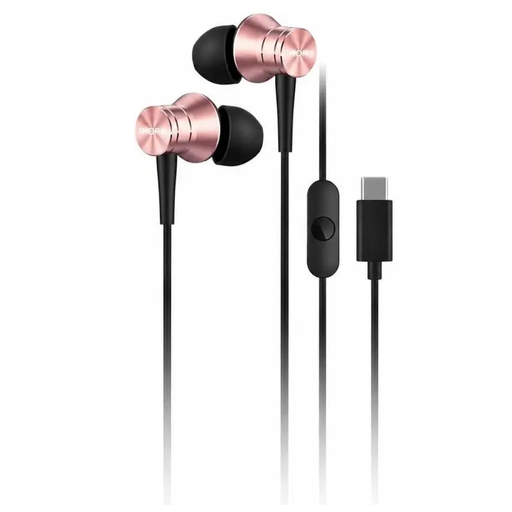 Image unavailable
A wired Type-C option for documentary listening from a compatible device. Confirm that your device supports audio through its Type-C port and check the included quantity before ordering.
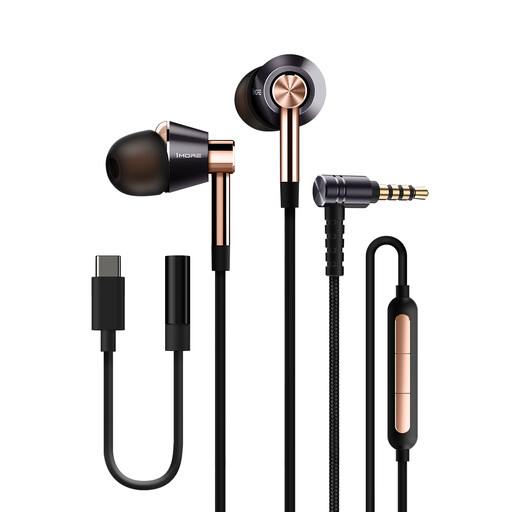 Image unavailable
A wired in-ear option to consider if you listen to documentaries and also want a microphone for calls. Check that its connector and microphone work with your device, and try the fit in your usual office conditions.
Choose strong isolation only if it helps you follow speech and your work does not require you to hear nearby activity. The Health and Safety Executive warns that excessive attenuation can interfere with communication and warning signals, so check workplace requirements before prioritising it.
Do not rely on ordinary listening earphones for required workplace hearing protection. Shure says its earphones are not intended as hearing-protection devices; follow your employer’s specified noise controls where protection is required.
Try the supplied tip options and check for a secure, comfortable fit. Shure notes that achieved isolation depends on the ear canal, sleeve, model and seal, so a published figure cannot replace a fit check.
You need a microphone-equipped setup if you want to take calls through the same earphones. Shure’s wired AONIC 215 has a communication cable with a remote and microphone; whatever model you choose, confirm its connector and microphone work with your device.