Choose an in-ear monitor that seals comfortably before deciding which sound balance you prefer: a useful seal can make household noise less intrusive without simply turning up the volume. For wired listening, Etymotic’s ER2XR has a manufacturer-stated passive attenuation range, Sennheiser describes the IE 200 as neutral and precise, and Shure offers the SE215 and AONIC 215 with detachable cables and supplied fit options. Those descriptions are not a comparison of how the models will sound or fit in your ears.
Who this choice affects
Listeners distracted by household noise
If conversation, a television or appliances interrupt quieter passages, start with a comfortable seal rather than relying on a high volume setting. The World Health Organization advises using well-fitted headphones to reduce the need to raise volume in noisy surroundings.
Listeners focused on voices and orchestral balance
If following a singer against a full orchestra matters most, compare the stated tuning of exact models and, where possible, listen with familiar recordings. Tip fit still affects what you hear, so a tuning description alone cannot settle the choice.
Listeners settling in for a complete opera
Long sessions make tip pressure, secure placement and cable routing important. Check the supplied fit options and whether the connection works with the device you intend to use.
What to prioritise
Start with fit and the noise you need to manage, then consider sound balance and the connection to your listening device. A stated attenuation figure describes a model under particular fitting conditions, not the result every ear will achieve.
| Concern |
What to check |
Who this matters to |
| Household noise |
Check the supplied tips and whether you can obtain a comfortable seal. Treat any stated attenuation as model-specific, not a promise about your own fit. |
When background noise masks a quiet phrase, I want to hear it without continually increasing the volume. Around 36% of consumers put isolation first. |
| Tonal balance |
Compare exact-model tuning descriptions and, if you can audition, use familiar recordings with solo voice, chorus and full orchestra. |
I care most about following the singer and the instruments without a sound balance I find distracting; around 29% of consumers put tonal detail first. |
| Long-session fit |
Compare included tip sizes and materials, insertion depth and cable routing. Do not continue using tips that cause persistent discomfort. |
A complete opera is too long to spend readjusting an uncomfortable earpiece. For around 21% of consumers, sustained fit is the primary concern. |
| Source connection |
Check your device’s output or compatible adapter, and confirm the exact connector before choosing a replacement cable. |
I want the earphones to connect to the device I actually use and to be able to find the right cable later; around 14% of consumers prioritise connection and cable options. |
Buying pitfalls
-
Assuming an isolation claim applies to every ear
Passive isolation depends on the seal. Shure supplies multiple sleeves for the SE215 and AONIC 215, while Sennheiser supplies silicone and memory-foam tips for the IE 200; having options does not guarantee that any one tip will fit comfortably.
Try the included sizes at a low volume. If you cannot achieve a comfortable seal, check the retailer’s applicable return terms rather than compensating by turning the volume up.
-
Choosing by driver count instead of the exact model
A driver count does not tell you whether a model’s tuning or fit suits your opera listening. Sennheiser describes the IE 200 as neutral and precise; Etymotic describes the ER2XR as having flat mids and highs with enhanced bass. Neither description is an independent listening verdict.
Compare exact-model information, then use familiar recordings to judge which presentation you prefer if auditioning is possible.
-
Turning up the volume to compete with the room
Household noise can tempt you to increase playback volume. The World Health Organization advises a well-fitted pair of headphones to reduce that need in noisy surroundings.
Improve the fit or reduce the room noise where possible; use available volume or sound-exposure controls and take breaks during long sessions.
-
Overlooking the device connection
The cited Shure and Sennheiser wired models use 3.5 mm cables. A listening device without a suitable output needs a compatible connection, while a replacement cable must match the exact earpiece connector.
Check the source device and the model’s cable details before ordering.
Using a device without a 3.5 mm output may also mean carrying an adapter or compatible audio accessory.
Brands to consider
These particular wired models offer different starting points; a brand name alone cannot establish fit, isolation or your preferred sound balance.
Etymotic
The ER2XR is a model to examine if stated passive isolation is your leading requirement.
- Etymotic states a 35–42 dB passive attenuation range for the ER2XR and describes flat mids and highs with enhanced bass.
- That figure does not establish what you will achieve with your own fit. Consider whether you tolerate its deep-sealing tips for a full listening session.
Sennheiser
The IE 200 is worth examining if its maker’s neutral, detail-oriented tuning description appeals to you.
- The IE 200 includes a 3.5 mm cable and silicone and memory-foam tip options, according to Sennheiser.
- Do not assume its isolation will match another model’s stated attenuation. Assess the seal and comfort on their own terms.
Shure
The SE215 and AONIC 215 offer wired, detachable-cable options with supplied sleeves.
- Shure states that these models block up to 37 dB of noise when fitted effectively.
- Shure describes a sound with deep bass rather than claiming neutral tuning. Check whether that balance and the over-ear fit suit you.
Joybuy product choices
These in-ear options offer two different ways to approach this listening setup: a wireless noise-cancelling model and a wired model. Check their fit and the features that matter to you rather than treating them as substitutes for the wired models discussed above.
 Image unavailable
Sony WF1000XM5 Wireless Noise-Cancelling Earphones, Silver
Consider this wireless option if you want noise cancellation while listening at home. Check whether its tips seal comfortably and whether its noise reduction is sufficient in your room; the listing’s descriptions of vocal detail are not an independent opera-listening assessment.
View on Joybuy
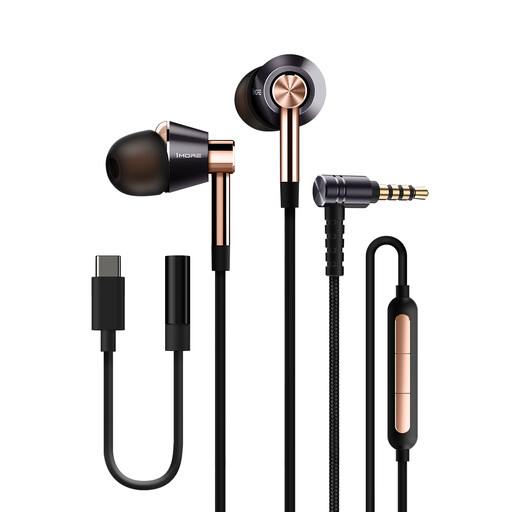 Image unavailable
1MORE E1001 Triple Driver Wired Earphones, Gold
Consider this model if you prefer a wired in-ear connection and want to assess tip fit for listening at home. The product name identifies a triple-driver design and MEMS microphone; check the exact plug against your device and assess the seal rather than assuming a particular level of isolation.
View on Joybuy
Common questions
Do I need active noise cancellation for opera in a noisy home?
Not necessarily: a well-fitting passive in-ear monitor can reduce outside sound without active noise cancellation. Start by assessing seal and comfort, then evaluate noise cancellation on any specific model you are considering rather than assuming that the feature name predicts how it will perform in your room.
What if household noise makes me want to turn the volume up?
Improve the fit or reduce the background noise before increasing playback volume. The World Health Organization recommends well-fitted headphones to reduce the need to raise volume in noisy settings; volume controls, exposure monitoring where available and breaks can also help you manage a long session.
What should I check before connecting a wired IEM?
Check the plug against your phone, tablet or computer’s output, or confirm that you have a compatible adapter. The cited Shure SE215 and Sennheiser IE 200 use 3.5 mm cables with MMCX connections at the earpieces, so replacement cables must also match the exact model.


