What matters when choosing?
Choose for a comfortable seal first, then judge the spoken-word sound and confirm the connection you will use on the flight.
| Concern |
What to check |
Who this matters to |
| Cabin-noise isolation |
Try the supplied tip sizes in both ears. Treat any stated attenuation as dependent on the model, tip and personal fit, not as hearing protection. |
I want quiet lines to remain audible over cabin noise without relying on higher volume, though a firm seal must still feel comfortable; around 29% of consumers put isolation first. |
| Comfort and stable fit |
Check tip choices, shell pressure and cable routing while seated for an extended period. |
For a long reading, I need the earpieces to stay put without becoming uncomfortable; comfort is the primary concern for around 29% of consumers. |
| Spoken-word sound |
Use manufacturers' tuning descriptions as a starting point and, where possible, try familiar narration before deciding. |
I listen closely to articulation and pauses, so I would favour a presentation I find clear over extra bass; roughly 24% of consumers prioritise spoken detail. |
| Source compatibility |
Confirm your player's output and the seat-back socket. A dual-prong adapter is relevant only to the matching two-socket aircraft connection. |
I need my earphones to connect to the device I will actually use, without finding the wrong adapter in my bag; about 18% of consumers place connection compatibility first. |
Wired options on Joybuy
These wired in-ear models offer different connections and fit choices to consider for poetry playback from a personal device or a compatible seat-back system. Check the seal and the connection for your own journey rather than assuming every model will isolate cabin noise equally.
 No image available
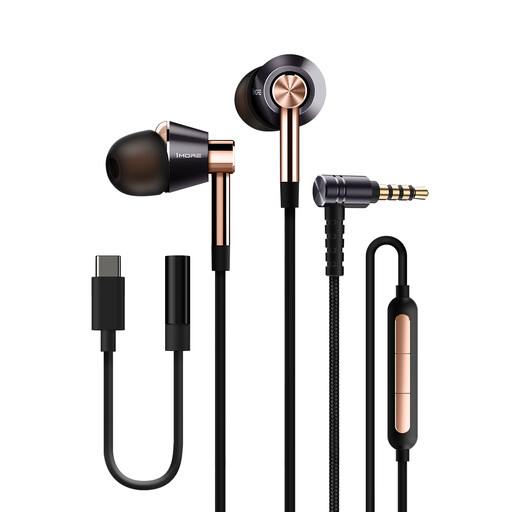
1MORE E1001 Triple Driver wired earphones – Gold
Consider these if you want several ways to find a comfortable tip fit and plan to check your in-flight connection before travelling.
The product listing states that nine sets of ear tips and a dual-prong airline adapter are included. Its deep-bass description does not establish spoken-word clarity; confirm the earphones' plug suits your playback device.
View on Joybuy
 No image available
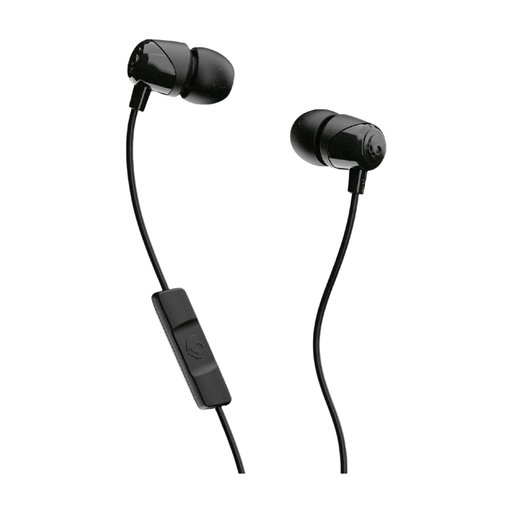
Skullcandy Jib 3.5 mm in-ear earphones – Black
These suit a listener using a standard 3.5 mm output who wants to try the supplied ear-gel sizes for a comfortable fit.
The listing specifies small and medium silicone ear gels and describes them as noise-isolating. Check whether either size seals comfortably for you; the stated enhanced bass does not establish how poetry readings will sound, and an aircraft socket may need an adapter.
View on Joybuy
 No image available
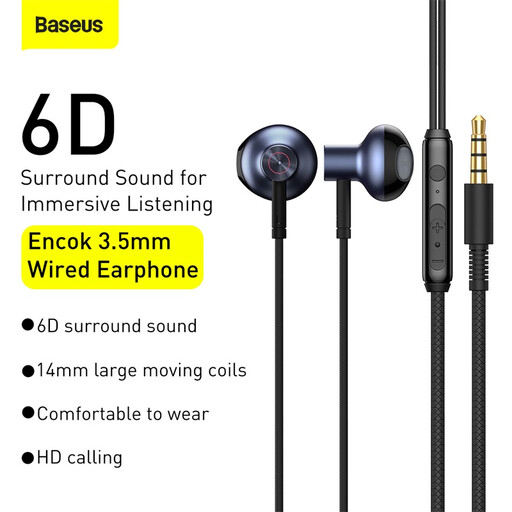
Baseus H19 Encok 3.5 mm wired earphones – Black
Consider this model if your chosen source has a standard 3.5 mm output and you can check the in-ear fit before relying on it for a long flight.
The listing specifies a 3.5 mm connector and describes the fit as secure and comfortable. Confirm the supplied tip options and your own seal; the listing's bass emphasis does not establish spoken-word clarity or cabin-noise isolation.
View on Joybuy
Frequently asked questions
Should I choose neutral-sounding IEMs for poetry readings?
A neutral or balanced sound description is a reasonable starting point if vocal detail matters more to you than enhanced bass. Sennheiser and Etymotic describe particular models in detail-oriented terms, but those descriptions do not guarantee clearer speech; try a familiar recording if you can.
Do I need an airline headphone adapter?
You need a dual-prong adapter only if the seat-back output has the matching two-socket connection and your earphones use a compatible standard stereo plug. The adapter described by CPC UK connects a stereo 3.5 mm headphone plug to two 3.5 mm mono aircraft sockets; check your assigned system before bringing one.
How can I avoid turning up the volume during a long flight?
Try a comfortable seal first, then use only as much volume as you need and take listening breaks. Royal Free London NHS Foundation Trust advises keeping headphone volume below 60% of maximum and taking at least a five-minute break after each hour of use; hearing risk also depends on loudness and exposure time.
Can I use wired IEMs throughout a flight?
Follow the crew's instructions and your airline's current device policy, especially during safety-critical phases. The UK Civil Aviation Authority notes that rules for personal electronic devices vary internationally, so a wired connection alone does not settle when a device may be used.
Does a quoted isolation figure mean the IEMs protect my hearing?
No. Shure says its earphones are not intended as hearing-protection devices and do not carry a Noise Reduction Rating. It also says the isolation you experience depends on the earphone model, sleeve, ear-canal shape and fit.


