Dialogue-first comedy listeners
If you mainly listen at home or at a desk, you may care most about catching quieter exchanges and changes of voice without an uncomfortable seal becoming a distraction.


For radio comedy, start with an in-ear monitor that fits comfortably and lets you follow familiar dialogue at your normal volume, rather than choosing by bass emphasis or driver count alone. Passive isolation can help when outside noise interrupts speech, but it also reduces awareness of your surroundings. Before ordering, check that the connector works with the radio, phone or laptop you actually use.
If you mainly listen at home or at a desk, you may care most about catching quieter exchanges and changes of voice without an uncomfortable seal becoming a distraction.
On a train, bus or in a busy shared space, outside sound can compete with dialogue. An isolating fit may help, provided you can pause or remove the earphones when you need to hear your surroundings.
If you switch between a phone, radio and laptop, the connection may decide which earphones you can use directly. Check the output on your main device and whether you need inline controls.
Begin with speech and fit at your usual listening volume, then consider how much outside sound you need to hear. Check the connection against your main playback device before choosing a model.
| Concern | What to check | Who this matters to |
|---|---|---|
| Following dialogue | Try familiar spoken content at your normal volume; judge voices by listening rather than driver count or frequency-range figures. | If punchlines or quieter exchanges are hard to catch, I want voices to remain distinct without turning up the volume. Around 31% of consumers put dialogue clarity first. |
| Outside noise | Try the supplied tip sizes for a seal, and consider whether you must still hear announcements or nearby people. | When travel noise interrupts speech, I want less distraction but still need to notice what is happening around me. Noise management comes first for around 31% of consumers. |
| Fit through a programme | Check the tip choices and wearing style, then assess comfort over a realistic listening session. | If an earpiece presses or works loose before the programme ends, I would prioritise a stable, comfortable fit. Around 23% of consumers put long-session fit first. |
| Device connection | Identify your device's audio output and confirm the plug, any required adapter and the controls you need. | When I listen on a particular phone, radio or laptop, the earphones need to work with that device. For around 15% of consumers, connection and controls are the primary concern. |
Shure says isolation varies with ear-canal shape, sleeve, model and fit. A published figure cannot tell you exactly how much outside sound you will hear, and strong isolation may be unsuitable when you need awareness.
Try the supplied tip sizes with spoken content and assess both comfort and awareness. Do not treat ordinary sound-isolating earphones as hearing protection.
A 3.5 mm plug needs a suitable headphone output or audio adapter; a USB-C connection is a different route and does not establish compatibility with every device.
Check the output on the device you use most, the earphone connector and whether any adapter supports audio output.
If you need an adapter, it is another item to obtain and carry.
Isolation does not make a high listening volume safe. Royal Free London NHS Foundation Trust advises keeping headphone volume at no more than 60% of maximum when listening to music.
Find a comfortable seal or move to a quieter setting, then use only the volume needed to follow speech and take breaks during long sessions.
Descriptions such as balanced sound are model-specific manufacturer statements, not proof that every presenter or recording will be equally clear to you.
Listen to familiar comedy dialogue during the applicable return period where possible, and check the seller's terms before ordering.
The wired IE 200 is relevant if you want to assess a manufacturer-described balanced presentation with a 3.5 mm connection.
The SE215 and wired AONIC 215 are relevant if tip choice, isolation and a detachable cable matter to you.
The wired ER2SE is an option to investigate if you are comfortable assessing a more deeply inserted fit.
The CHU II and JIU illustrate two connection choices: conventional 3.5 mm wired audio and direct USB-C audio.
These wired in-ear choices offer different connections and tip options for listening to radio comedy. Choose by your playback device and fit; neither listing establishes how clearly every listener will hear dialogue.
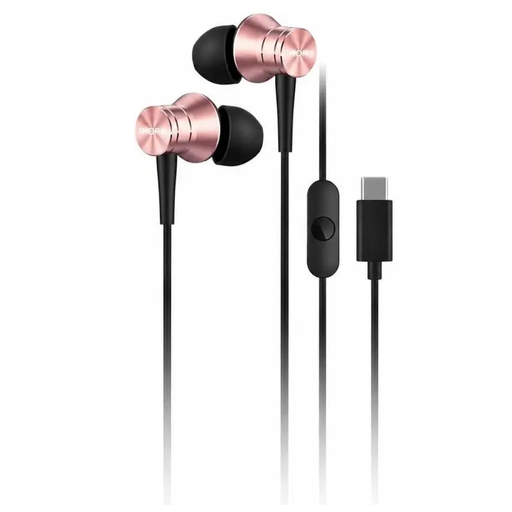 No image available
Consider these if your main playback device supports audio through USB-C and you want to try different tip fits.
The listing describes extra silicone tips, a built-in microphone and an inline remote. Confirm compatibility with your exact device, and try familiar dialogue to judge the sound and fit for yourself.
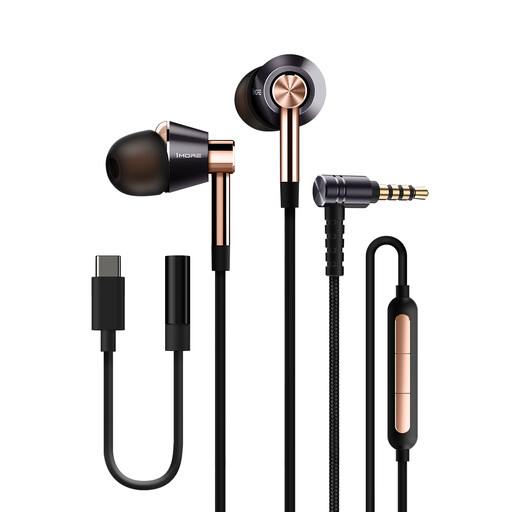 No image available
Consider these if you prefer wired in-ear listening and want silicone and foam tips to compare for comfort.
The listing describes an inline microphone and remote. Confirm the connector before ordering, and use familiar dialogue to decide whether the sound and fit suit a full programme.
No: bass emphasis need not be your first priority when following dialogue. Start by checking how familiar voices sound at your normal volume; Sennheiser describes the IE 200 as balanced, but that description does not guarantee clarity for every listener or recording.
Use only the volume you need to follow speech and take breaks during longer listening sessions. Royal Free London NHS Foundation Trust advises keeping headphone volume at no more than 60% of maximum when listening to music; a secure fit or quieter setting can help you avoid raising the level to compete with noise.
It needs a functioning 3.5 mm headphone connection or a suitable audio-output adapter. Shure describes its wired AONIC 215 communication cable as compatible with Apple and Android devices that have a 3.5 mm connection; check your particular phone and any adapter before buying.
No: the connector alone does not settle audio compatibility. MOONDROP says its JIU connects by USB-C to phones, laptops and computers, but you should check your exact device, operating system and protective case before ordering a USB-C model.