Voice-detail listeners
If unfamiliar terms and guest voices are your priority, look for a sound balance you find clear and tips that seal comfortably, rather than choosing by bass emphasis alone.


For science podcasts in a quiet library, choose an in-ear monitor that seals comfortably and presents voices clearly at a moderate volume; maximum isolation is not automatically necessary. Stronger passive isolation becomes more relevant if surrounding noise makes you turn speech up. Before buying a wired pair, check its connector against your playback device.
If unfamiliar terms and guest voices are your priority, look for a sound balance you find clear and tips that seal comfortably, rather than choosing by bass emphasis alone.
If intermittent activity around your library seat prompts you to raise the volume, you may value a secure passive seal. Comfort still matters, and the World Health Organization notes that listening risk rises with sound level and duration.
If you listen through a phone or laptop while studying, check both extended-wear comfort and the connection your device accepts. Detachable parts may also matter if you want to replace a cable later.
Start with a comfortable seal and a voice presentation you like, then decide whether your surroundings call for stronger isolation. Check the wired connection before settling on a model.
| Concern | What to check | Who this matters to |
|---|---|---|
| Spoken-word clarity | Consider the stated sound balance and try available tip sizes; a tuning description cannot guarantee clarity for every recording or listener. | When a podcast moves between narration and unfamiliar terminology, I want voices to remain easy to follow without turning up the sound. Around 42% of consumers put spoken-word clarity first. |
| Comfortable isolation | Check the supplied tip sizes and whether you can achieve a comfortable seal without inserting the tips too far. | If nearby activity interrupts a quiet session, I want less outside sound rather than a louder podcast. For around 33% of consumers, isolation at a comfortable listening level is the primary concern. |
| Fit and connection | Confirm the plug or USB-C audio compatibility with your device, and consider whether the fit and cable arrangement suit longer sessions. | During a long study session, I need earphones that stay comfortable and work with the device I brought. Fit and connection are the main priority for around 25% of consumers. |
In a quiet library seat, stronger isolation may add little to your listening experience, and a highly isolating fit may not feel comfortable to everyone.
Prioritise a comfortable seal and listening level. Consider stronger passive isolation if surrounding activity actually makes speech difficult to follow.
The researched Sennheiser IE 200 and Shure AONIC 215 have 3.5 mm connections, which will not plug directly into a device without a matching socket.
Check your phone, tablet or laptop output and confirm that any adapter supports its audio connection.
A device without a matching headphone socket may require a separate compatible adapter or DAC.
Shure says sleeve fit can substantially affect sound quality. The World Health Organization notes that higher sound levels and longer listening increase hearing-loss risk.
Try another supplied sleeve size and reseat the earphone before adjusting volume; keep both listening level and duration in mind.
Shure warns that twisting a detachable connector or pulling its cable can damage the connection.
For the Shure SE-style connection, hold the earphone and connector close to their join and pull straight apart when disconnection is necessary.
The IE 200 is a wired option for listeners interested in the neutral sound balance described by Sennheiser.
The wired AONIC 215 combines a detachable communication cable with a choice of sleeve sizes.
The ER2XR is a model to consider if passive isolation is a priority and you are comfortable testing its fit carefully.
These wired in-ear choices offer different connections and controls for podcast listening. Check the connector and the sound balance you prefer; inclusion here does not establish how clearly any pair will reproduce every voice recording.
 No image available
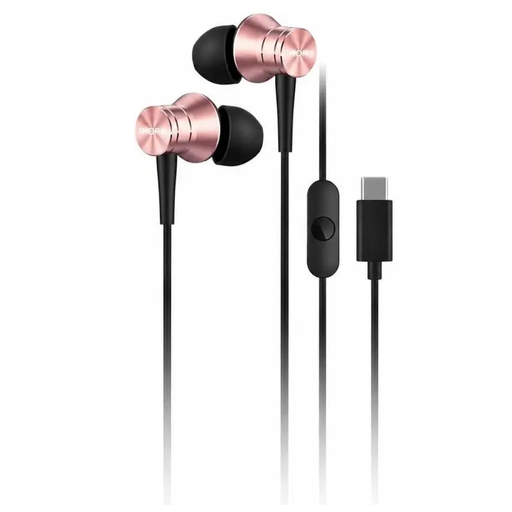
Consider this pair if you want wired listening from a device that supports audio over USB-C. Check the included quantity and whether its voice presentation suits your podcasts before buying.
 No image available
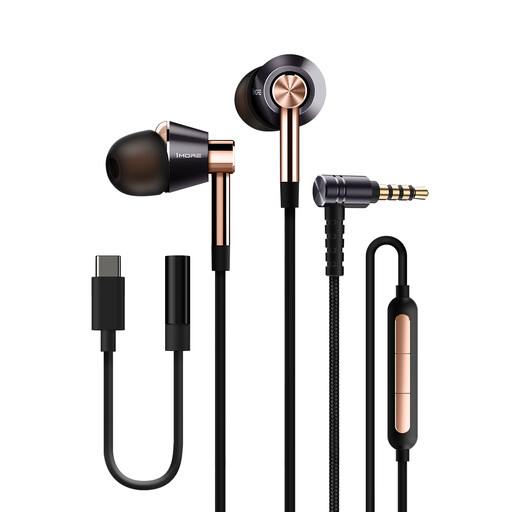
Consider this wired pair if an in-line microphone is useful alongside podcast listening. The title specifies a MEMS microphone; confirm the connector fits your playback device and assess whether the stated deep-bass sound balance suits speech.
 No image available
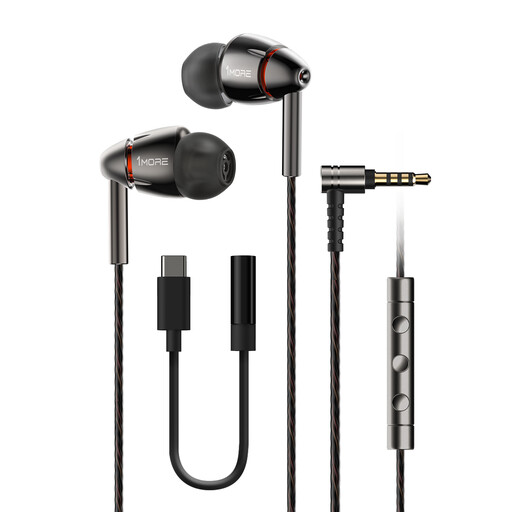
Consider this wired pair if you also want an in-line remote and MEMS microphone. Confirm its connector against your device and decide whether the stated deep-bass sound balance suits spoken podcasts.
Keep the level moderate: the World Health Organization advises using no more than 60% of a device's maximum volume and, where an app monitors sound, staying below an 80 dB average. Listening risk also depends on duration and frequency, so a good seal is not a reason to listen louder or longer.
A suitable tip should be comfortable, easy to insert and easy to remove while providing a secure seal. Shure advises trying the supplied sleeve sizes and not pushing a sleeve beyond the ear-canal opening.
It will work only if its connection matches an audio output on your device or a compatible adapter. The Sennheiser IE 200 and wired Shure AONIC 215 use 3.5 mm connections; check other models' exact connectors rather than assuming all wired pairs use the same plug.
For the Shure SE-style connection, hold the earphone and connector near their join and pull straight apart. Shure advises against twisting the connector, pulling the cable or using tools.