Office listeners distracted by nearby conversation
If speech and other desk activity make you lose words in a story, start by assessing the ear-tip seal and how much outside sound you still need to hear.


Start with a wired in-ear monitor whose tips give you a comfortable seal: passive isolation can help you follow narration amid office chatter, but the result depends on fit. Decide how much awareness of colleagues and warning sounds your work requires, then check comfort over long chapters and whether the connector works with your listening device.
If speech and other desk activity make you lose words in a story, start by assessing the ear-tip seal and how much outside sound you still need to hear.
If you listen for extended stretches, consider how the tips, earpieces and cable feel while seated. Fit also affects the sound and isolation, as Shure explains in its guidance on earphones.
If you switch between a laptop, phone or player, check each device’s audio output before choosing a wired connector. Consider whether a detachable cable matters to you as well.
For historical fiction in a busy office, settle the awareness question before seeking stronger isolation. Then assess the seal, long-session fit, spoken-word presentation and connection to your devices.
| Concern | What to check | Who this matters to |
|---|---|---|
| Passive isolation | Try the available tip sizes for a secure seal. Treat stated attenuation as fit-dependent, not as a promise of what you will hear at your desk. | If nearby conversation keeps masking the narrator, I want fewer interruptions without simply turning up the volume; around 31% of consumers put office-noise reduction first. |
| Fit over long chapters | Assess tip pressure, earpiece position and cable routing during more than a brief fitting. | When a chapter runs on, I need the earpieces to stay comfortable and secure; roughly 25% of consumers make sustained fit their primary concern. |
| Narration presentation | Listen to familiar speech if possible, rather than judging voice clarity from a driver count or a tuning description alone. | I want to follow dialogue without finding the sound tiring over time; around 25% of consumers prioritise the presentation of voices. |
| Wired connection | Check the device’s audio output and any adapter needed. For a detachable cable, confirm the replacement connector type. | If I move between work and personal devices, I need the earphones to connect reliably to both; roughly 19% of consumers put connection and upkeep first. |
Shure says isolation changes with ear shape, sleeve, model and fit. A poor seal can affect both the sound and how much office activity reaches you; Shure also says its isolation figures are not hearing-protection ratings.
Try suitable tips and follow the fitting instructions. Do not use a consumer earphone’s isolation claim as evidence that it meets workplace hearing-protection requirements.
Reducing outside sound can be unsuitable when you must hear colleagues or warning signals. The Health and Safety Executive cautions against hearing protection that interferes with communication or warning-signal detection.
Check your workplace requirements, and pause listening or remove the earphones whenever your duties require reliable awareness of your surroundings.
A wired plug will not connect directly unless the device has a compatible audio output. For example, Shure lists a 3.5 mm cable for the SE215, and Sennheiser lists a 3.5 mm plug for the IE 200.
Check your work and personal devices before ordering. If you need an adapter, confirm that it carries audio and supports any call functions you intend to use.
Using a device without the required socket may mean carrying a compatible adapter or digital-to-analogue converter.
Tips that no longer fit securely can undermine the seal. Shure advises cleaning and inspecting its sleeves and replacing damaged ones.
Follow the instructions for your model, allow cleaned tips to dry fully and check that replacements fit the exact earpiece.
The wired SE215 combines an over-ear arrangement, supplied sleeves and a detachable 3.5 mm cable with an MMCX connection.
The ER2XR represents a deep-sealing wired option for listeners who place particular importance on passive isolation.
The wired IE 200 has compact earpieces, adjustable ear hooks, tip adapters and a 3.5 mm plug, according to Sennheiser’s UK product information.
These wired in-ear choices offer different device connections and fitting considerations for office listening. Check each one against your need to hear your surroundings; a product’s presence here does not establish how much office noise it will reduce for you.
 No image available
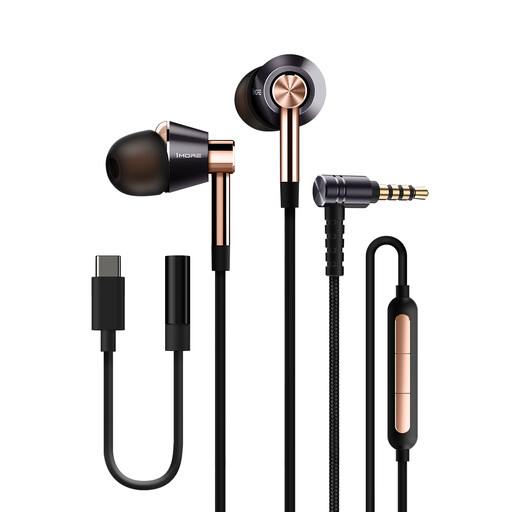
If a wired fit is what you want for office listening, assess the seal in your own ears before relying on it to lessen distractions.
The Gold variant is listed with a MEMS microphone. Check its connector against your device and listen to spoken audio if bass emphasis matters to you.
 No image available
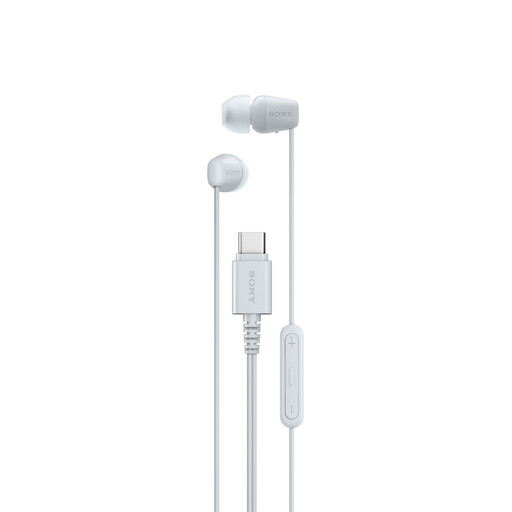
Consider this wired option if your listening device supports audio through USB-C; check that function on each device you intend to use.
Assess the ear-tip fit and how well you can follow narration amid office activity before depending on passive isolation.
 No image available
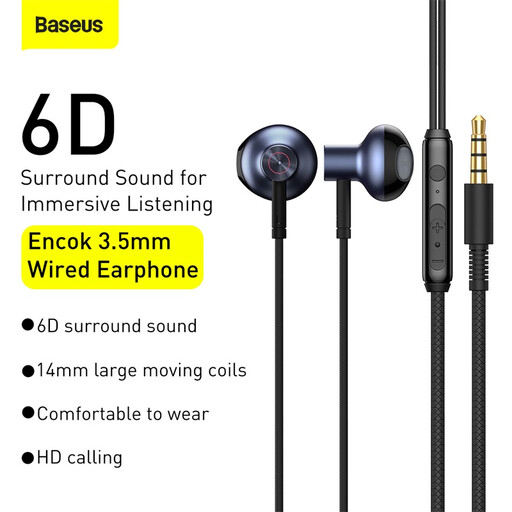
This wired option is worth checking if you use a device with a 3.5 mm audio output or an appropriate adapter.
Try the fit and seal for spoken-word listening at your desk rather than assuming that the in-ear design will block surrounding conversation.
Not necessarily: a well-sealing in-ear monitor can reduce outside sound passively. Fit is decisive, so assess the tips and comfort rather than treating a stated passive-isolation figure as an equivalent measure of active noise cancellation.
Highly isolating earphones may be unsuitable when you must hear people or warning sounds reliably. Check your employer’s requirements and pause listening or remove the earphones when your work calls for awareness of your surroundings.
It will connect directly only if the device has a functioning 3.5 mm audio output. Otherwise, check that an adapter or digital-to-analogue converter supports audio from that particular device, along with any microphone function you need.
Follow the instructions for your particular model and replace tips that are damaged or no longer secure. For its own sleeves, Shure advises keeping them clean and dry, allowing washed removable sleeves to air-dry fully and avoiding alcohol-based disinfectants.
Do not choose ordinary listening IEMs as a substitute for protective equipment selected for occupational noise. Shure says its earphones are not hearing-protection devices; if noise protection is required for your job, follow your employer’s assessment and equipment instructions.