
24/7 全天候客户支持

免费退货

当日/次日达

品质保障

开启新人专享福利: 全场免邮 | 低至 2 折 | 免费试用 30 天 JoyPlus 会员
下载 Joybuy
Bladder leaks can happen during commuting, exercise, work, pregnancy recovery or everyday activities. The right incontinence pads should match the amount and timing of leakage without feeling bulky or irritating. However, product packaging can make comparison difficult, particularly when similar-looking pads are designed for very different uses.
Before buying, watch for three common pitfalls:
Start by identifying whether you need light, moderate or heavy bladder leak protection.
Absorbency descriptions are useful guidance, but personal requirements vary. If a pad becomes saturated quickly, shifts position or leaks at the edges, moving up one protection level may be more practical than simply buying a larger pack.
Women’s incontinence pads are commonly shaped to sit in the gusset of close-fitting underwear. Men’s incontinence pads often have a cup or shield shape designed for the male anatomy and are worn inside ordinary underwear.
Look for:
A pad that fits securely can be more useful than one with a higher stated absorbency but poor positioning.
For regular use, check the materials and care instructions on the packaging. Breathable outer layers, soft topsheets and fragrance-free designs may be worth prioritising if your skin is sensitive. Products described as dermatologically tested should still be checked for their listed materials, as individual reactions can vary.
Odour-control systems may help manage odours within the pad, but they do not replace regular changing. Used pads should be wrapped and placed in a household waste or sanitary bin. Do not flush incontinence pads, breast pads or sanitary pads, as they can contribute to blockages.
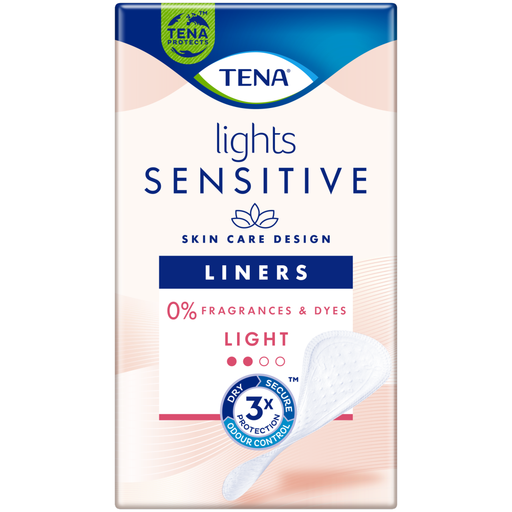
Why This Fits Their Persona: A practical starting point for adults managing occasional light leaks during work, shopping or short journeys around the UK.
Its stated 15cm length and 3mm thickness make the intended light-leakage use clear, rather than encouraging buyers to treat a slim liner as heavy protection.
28 individually listed pads; fragrance- and dye-free specification; individually wrapped for carrying.
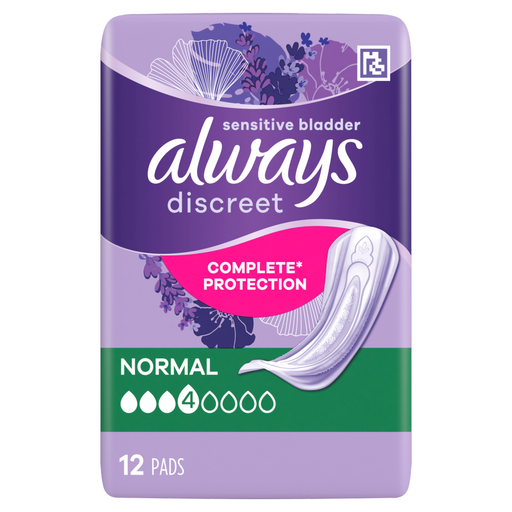
Why This Fits Their Persona: Suits women seeking a slim everyday pad for light to moderate bladder leaks, including some postnatal routines.
The product is explicitly described for urinary incontinence, helping separate it from ordinary sanitary pads.
RapidDry core; OdourLock feature; dermatologically tested; individually wrapped 12-pad pack.
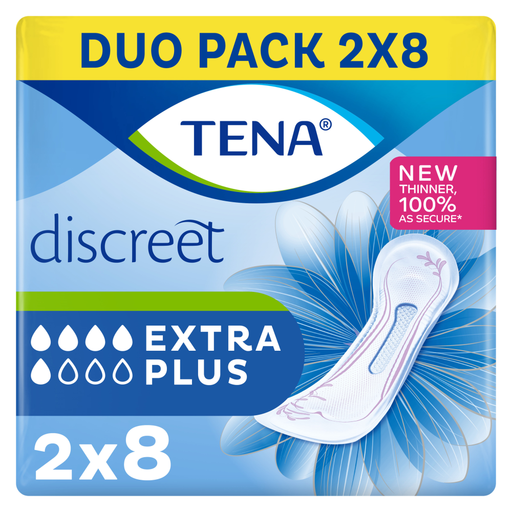
Why This Fits Their Persona: Designed for women who need more coverage for medium to heavy bladder weakness or less predictable leaks.
Its “Extra Plus” positioning and contoured shape signal a higher protection level than a thin light-leak liner.
InstaDRY absorbent core; elasticated sides; fragrance-free specification; 16-pad pack.
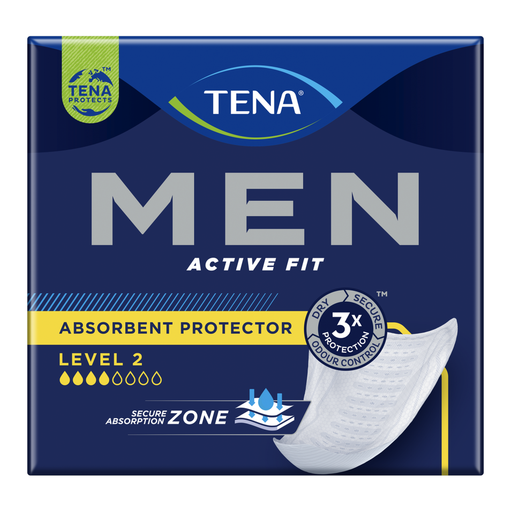
Why This Fits Their Persona: A male-specific option for commuting, walking, gym visits and other active daily routines where a close fit matters.
The anatomical cup shape and Level 2 designation address fit and protection level instead of relying on a generic pad shape.
4mm stated thickness; adhesive strip; secure absorption zone; individually wrapped 10-pack.
We have compiled a complete, real-time list of products that fully satisfy these strict selection criteria and UK safety regulations.
People searching for maternity breast pads need products designed to absorb breast milk inside a bra, such as individually wrapped nursing pads. These are not suitable for urinary leakage. Likewise, sanitary pads are intended for menstrual flow, with daytime and overnight shapes that may include wings and longer coverage. Always check the product description before substituting one type for another.
For postnatal users, urinary leakage and breast leakage are separate needs, so two different products may be required. Persistent pain, irritation, blood in urine or changes in bladder control should be discussed with a GP or other healthcare professional.
Change a pad when it becomes wet, soiled or uncomfortable, and follow the product instructions. Some light pads may need changing several times during a working day. Wearing a pad for longer than its intended use can increase discomfort and skin irritation.
This depends on leakage, changing frequency and pack size. A 20-pad pack used once daily could last around 20 days, while someone changing several times daily will use it more quickly. Compare the cost per pad, not only the shelf price.
Some longer or higher-absorbency products are designed for extended protection, but no pad should be treated as a guarantee against overnight leakage. Choose a suitable absorbency level, position it carefully and check the stated maximum wearing time. Never flush used pads down the toilet.