Gym-bag treat seekers
If you want to carry shortbread without opening a whole box, look for an explicit count of sealed inner packets and check how many biscuits each contains.


For a sealed shortbread treat to carry after the gym, compare the weight and number of biscuits in each inner packet rather than the size of the outer box. Walker's Shortbread lists a 35g single finger and a 40g twin pack, while Dean's lists a 25g pack containing two thins. If you want food with both carbohydrate and protein before your next meal, check the biscuit's nutrition label alongside the rest of what you plan to eat; individual wrapping does not answer that question.
A sealed inner packet is useful when you want to take one portion out of a larger box without opening the biscuits you leave at home.
If you want to carry shortbread without opening a whole box, look for an explicit count of sealed inner packets and check how many biscuits each contains.
If shortbread is part of what you eat after exercise, check the inner portion's size and compare its nutrition label with the rest of your snack or meal.
Check the current packet's ingredients and precautionary allergen statements before choosing a biscuit to carry. Do not assume two shortbread products have the same allergen information.
Start with the inner packet, then consider its nutrition and the number of portions you would need to buy.
| Priority | What to check | Your needs |
|---|---|---|
| Sealed servings | Look for an explicit inner-pack count and the number of biscuits per packet. Walker's Shortbread lists one finger per 35g packet and two fingers per 40g packet. | I want to take one sealed serving from the box and leave the other biscuits unopened. |
| Portion and nutrition | Compare the inner-pack weight, then read protein and saturated fat per 100g on the product label. Walker's Shortbread lists 18.9g saturates per 100g for its giant finger; Dean's lists 16.2g per 100g for its 25g thins. The NHS food-label guide describes more than 5g saturates per 100g as high. | A biscuit might be a treat after exercise, but I also want to know what the rest of my snack or next meal provides. |
| Ingredients and allergens | Read the current packet's ingredient list and precautionary statements. Check wheat, milk and any nut statement for the particular product you intend to eat. | Before it goes in my bag, I need to know whether this particular packet suits my ingredient requirements. |
| Outer-box quantity | Compare the number of inner packs as well as their weight: Walker's Shortbread lists boxes of 24 or 40 packets, while Dean's lists approximately 80 packs for its 25g thins. Confirm the exact variant and delivery details before ordering. | I would rather choose a quantity I can store and use than judge the purchase by the weight of one serving alone. |
A bag of small biscuits is not the same format as a box with sealed inner packets. The M&S and Waitrose mini-shortbread listings give airtight-storage instructions for an opened pack.
If separate servings matter, look for a stated inner-pack count and check whether each packet holds one biscuit or several.
A portable portion tells you how it is packed, not how its nutrition fits with what else you plan to eat. The checked Walker's Shortbread giant finger and Dean's thins list 5.6g and 5.9g protein per 100g respectively.
Read the portion size and nutrition label, then consider the biscuit alongside your next snack or meal rather than treating the wrapper as a nutrition claim.
A small packet can be sold in a much larger display box or foodservice case.
Check both the weight of each packet and the number of packets you would receive.
A box of 24 or 40 packets, or a case of approximately 80, also needs space to store the unused portions.
These examples distinguish manufacturer-listed inner packets from supermarket bags; they do not indicate which products are sold on Joybuy.
Its manufacturer listings describe a 35g single-finger packet in a 40-packet display box and a 40g two-finger packet in a 24-pack box.
Its foodservice range includes wrapped shortbread formats; the Steven Brown Art thins listing describes approximately 80 packs of 25g, with two thins per pack.
Its 125g Mini Shortbread Fingers bag is an option when you are willing to portion biscuits yourself rather than requiring a stated sealed inner pack.
Its 125g Mini Shortbread listing gives nutrition per 100g and per four biscuits, a useful distinction when portioning from a bag.
Its shortbread category includes fingers and other supermarket formats for buyers comparing biscuits beyond display boxes.
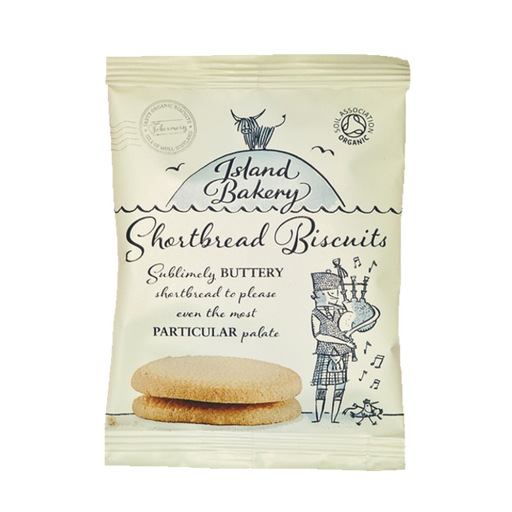
This 25g shortbread is an option to consider for a gym-bag treat. Check its current packaging if you need a factory-sealed individual serving.
 No image available
For a shortbread treat to carry after the gym, check that the 25g pack has the individual seal you need. Read the current ingredient, allergen and nutrition labels before choosing it for your snack.
The wrapper only tells you about the serving format. Compare the biscuit's carbohydrate, protein and fat label with the rest of what you plan to eat. University College London Hospitals NHS Foundation Trust discusses carbohydrate-and-protein exercise snacks in guidance for people with diabetes; that guidance should not be treated as a personal nutrition prescription for everyone.
Follow the instructions on the pack you buy. Walker's Shortbread says to keep its giant fingers in a cool, dry place; M&S and Waitrose advise airtight storage after opening their mini-shortbread bags. A sealed inner packet and an opened bag call for different checks.
Check the weight and biscuit count of each inner packet as well as the total number of packets, then confirm availability and delivery details for the exact variant. The manufacturer listings describe Walker's Shortbread boxes of 24 and 40 packets and a Dean's case of approximately 80 packs of 25g thins.
Use the current label on the product you receive, including its ingredients and any precautionary allergen statement. Check wheat, milk and any nut statement for that particular shortbread rather than transferring details from another brand or variant.
For food provided in state-funded schools in England, Department for Education school-food standards distinguish biscuits served as lunchtime desserts from snacks offered at other times; the standards do not permit biscuits as those other school-day snacks. Proposed updated standards remain subject to Parliamentary approval for September 2027. These school-food rules do not govern an adult's post-gym shortbread purchase.