
24/7 Customer Support

Free returns

Same-day & Next-day Delivery

Quality Guaranteed

Unlock Your Welcome Offers: FREE Delivery | Up to 80% OFF | Free 30-day JoyPlus trial
Download the APP
An indoor clothes airer can be a practical alternative to outdoor drying or a tumble dryer, particularly in flats, rented homes and households without a garden. However, choosing the wrong design can lead to blocked walkways, unstable frames and laundry that takes too long to dry.
Before buying, look beyond the number of bars or the phrase “large capacity”. The useful question is whether the airer suits your available floor space, typical laundry load and preferred drying method.
A product may advertise many rails, but closely positioned bars can leave little room for airflow. Thick jumpers, towels and bedding need more separation than shirts or underwear. Check the stated drying length, dimensions and layout rather than relying on the bar count alone.
A folding clothes airer may look compact in a product photograph but occupy considerable floor space when fully opened. Measure the area where you plan to use it, including clearance around doors, radiators and walkways. Then check the folded dimensions to make sure it can fit behind a door, in a cupboard or under furniture.
A heated airer uses electricity, so its running cost depends on its power rating, drying time and how often it is used. It may use less electricity than some tumble-dryer cycles, but this should not be treated as a universal guarantee. Compare the wattage and calculate:
Power in kW × hours used × your electricity tariff = approximate running cost
A non-heated clothes horse may suit shoppers prioritising low running costs, while a heated model can be useful when faster indoor drying is more important.
Capacity is often shown in kilograms, metres of drying space or both. These measurements are not interchangeable. For example, a frame with 9 metres of rail space may be suitable for a smaller weekly load, while 13 metres gives more flexibility for towels, trousers and mixed garments.
Look for a clear maximum load and distribute clothing evenly. Overloading one side can make a laundry drying rack unstable, even when the stated total capacity has not been exceeded. Protective or non-slip feet are useful on laminate, tile and wooden flooring, but the airer should still be placed on a level surface.
A 3 tier clothes airer uses vertical space and can be a sensible choice for narrow rooms. A winged clothes airer generally provides a wider hanging area and can accommodate longer garments when the wings are raised. Concertina frames are useful when you need a foldable indoor airer that stores almost flat.
For a small flat or student room, compare both the open width and depth. An extendable clothes airer can provide extra space when required, but retract the side sections before storing it. If the airer will remain in a hallway or bedroom, a space-saving clothes airer with a relatively narrow footprint may be more practical than a wider model.
A standard indoor washing line or airer relies on ventilation and room conditions. Leave space between garments, use a well-ventilated room and avoid placing wet laundry directly against a radiator, as this can restrict airflow and contribute to condensation.
A heated airer adds gentle warmth through its rails. It still needs safe operation: use it indoors on a flat surface, follow the manufacturer’s instructions, keep controls clear and do not cover it completely unless the supplied instructions specifically permit it. Keep cables away from wet areas and inspect the plug, cord and frame before use.
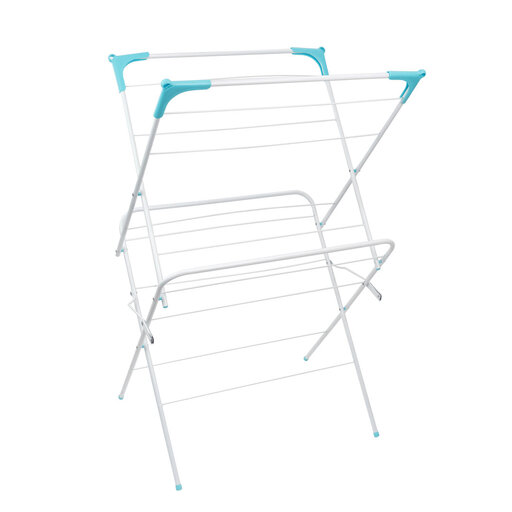
Why This Fits Their Persona: A practical option for renters, students and smaller households needing a straightforward clothes horse without a powered function.
Its open and folded dimensions are stated clearly, helping you check whether the concertina frame suits your room and storage space.
Provides 9 metres of drying space, holds up to 7kg and folds to approximately 5cm deep.
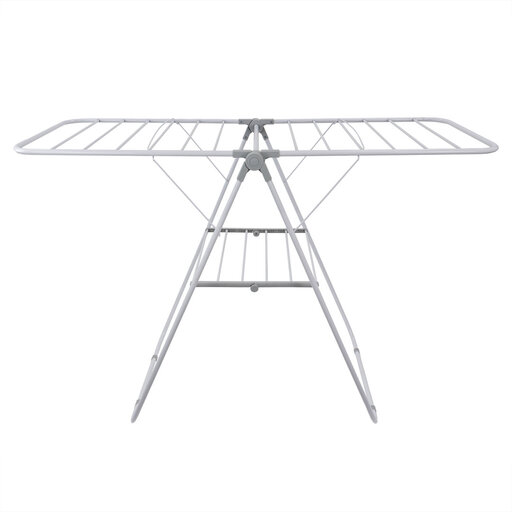
Why This Fits Their Persona: Suitable for households wanting a robust, versatile winged clothes airer for regular mixed laundry.
The multi-position wings allow longer items to hang higher, while the stated 12kg limit helps set a clear loading boundary.
Offers 13 metres of drying space, 21 bars, protective feet and a powder-coated iron frame.
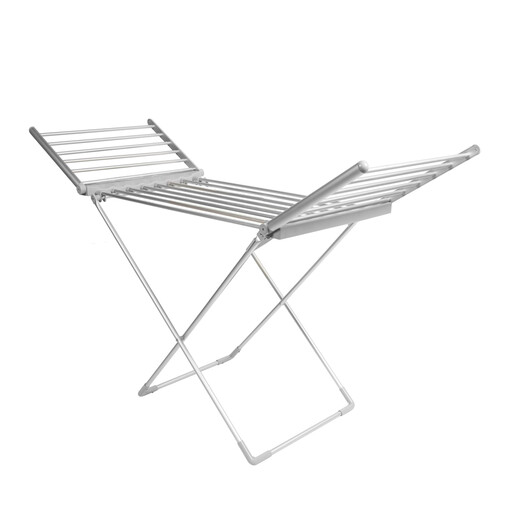
Why This Fits Their Persona: Designed for families or households that regularly dry larger loads indoors and want a heated option for colder or wetter periods.
The product gives a defined 12kg capacity and includes an ON/OFF switch, so buyers can assess the electrical function rather than relying on vague speed claims.
Includes 20 heated bars, non-slip feet, a fabric cover and a fold-flat design.
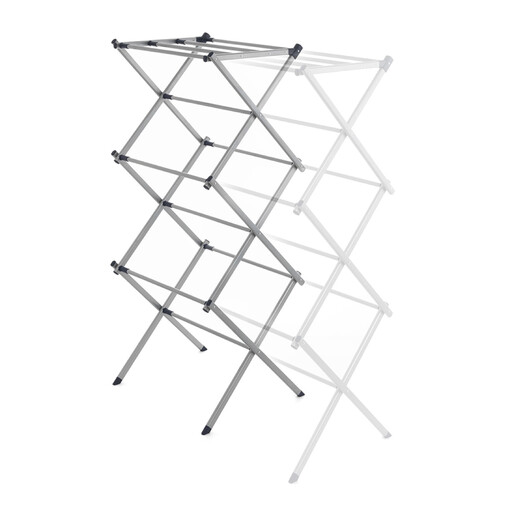
Why This Fits Their Persona: A useful fit for flats, utility areas and homes where the airer must adapt to changing floor space.
Its width adjusts from approximately 44cm to 72cm, making the usable footprint clear before purchase.
Three tiers, extendable side sections, a powder-coated steel frame and fold-flat storage.
We have compiled a complete, real-time list of products that fully satisfy these strict selection criteria and UK safety regulations.
Use a level floor, fully engage the locking mechanism and distribute laundry across both sides and all tiers. Place heavier towels lower down where possible, and never exceed the stated load capacity. Keep the frame away from areas where it could be knocked by people, pets or opening doors.
Lifespan depends on frequency of use, load weight, storage and exposure to moisture. Powder-coated steel can be suitable for regular household use, but inspect joints, hinges, feet and rails periodically. Stop using the airer if the frame bends, locking parts fail or the coating has deteriorated enough to create sharp edges.
There is no single answer because appliances differ in wattage, programme length, load size and electricity tariff. Calculate the heated airer’s approximate cost using its power rating and running time, then compare it with your tumble dryer’s energy information. A non-heated airer has no electricity cost, although it may take longer and requires adequate ventilation.