
24/7 Customer Support

Free returns

Same-day & Next-day Delivery

Quality Guaranteed

Unlock Your Welcome Offers: FREE Delivery | Up to 80% OFF | Free 30-day JoyPlus trial
Download the APP
An indoor exercise bike can make regular cardio easier to fit around work, family life and unpredictable UK weather. However, the wrong model may become an expensive clothes hanger if it is noisy, unstable or uncomfortable after a few sessions.
As the Joybuy Product Recommendation Officer, I focus on practical details rather than relying on impressive-sounding marketing. Before choosing a magnetic exercise bike or spin bike for home, watch for these common buying pitfalls.
A heavier flywheel can contribute to smoother momentum, but it is not the only factor that affects the ride. The resistance mechanism, belt drive, frame construction and adjustment range also matter. Some listings highlight flywheel weight while providing little information about stability or rider fit.
Check the complete specification rather than selecting a bike based on one headline number.
A quiet exercise bike normally uses a belt drive and magnetic or electromagnetic resistance, avoiding the direct friction associated with some traditional systems. Even then, noise can come from loose bolts, an uneven floor, worn components or an incorrectly tensioned belt.
For a flat or upstairs in a UK home, look for a non-contact magnetic system, belt drive and adjustable levelling feet. Place the bike on a suitable exercise mat and periodically check fasteners.
“Adjustable” may only mean that the seat moves up and down. A suitable adjustable exercise bike should provide enough saddle and handlebar movement for your height and preferred riding position. A poor fit can make longer sessions uncomfortable and may discourage consistent use.
Look for four-way saddle adjustment where possible, plus handlebar height or reach adjustment. Always compare the stated user-height range with your own measurements.
A magnetic exercise bike uses magnets to alter resistance without direct contact with the flywheel. This generally supports smooth transitions and reduced mechanical noise. Electromagnetic systems can offer digitally controlled levels, which may be useful for structured workouts.
Manual magnetic systems are often straightforward: turn a resistance knob to increase or decrease intensity. An electromagnetic bike may provide numbered resistance levels and app-based control, but it may also require a power source. Decide whether simple manual adjustment or connected training better suits your routine.
A stationary exercise bike should remain stable during seated riding and faster intervals. Review the frame material, base design, levelling feet and maximum user weight. The maximum load is not a suggested target; it is a limit that should not be exceeded.
Also consider the bike’s footprint. A compact indoor cycling bike may suit a flat, spare bedroom or home office, while transport wheels make it easier to move after use. Allow additional space around the bike for mounting, dismounting and handlebar movement.
An exercise bike with LCD monitor may show time, speed, distance, calories and sometimes heart rate. These figures can help you monitor a session, but readings may vary between models and should be treated as workout guidance rather than medical data.
An exercise bike with APP, Bluetooth exercise bike or connected model can offer workout tracking, progress records and guided sessions. Check whether the app is free, whether all features require a subscription and which phone or tablet operating systems are supported. A tablet holder can be useful if you prefer streamed classes or entertainment without relying on a built-in screen.
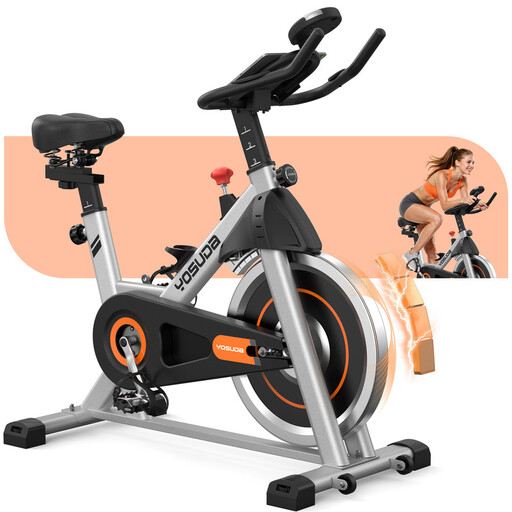
Why This Fits Their Persona: A practical choice for beginners or households wanting a home cardio equipment option with app connectivity, an LCD display and a relatively straightforward set-up.
The listing specifies a V-belt drive, magnetic resistance, adjustable foot pads and multiple saddle and handlebar positions rather than relying on a single headline feature.
39 kg resistance system; Bluetooth APP connectivity; HD LCD display; approximately 80% pre-assembled.
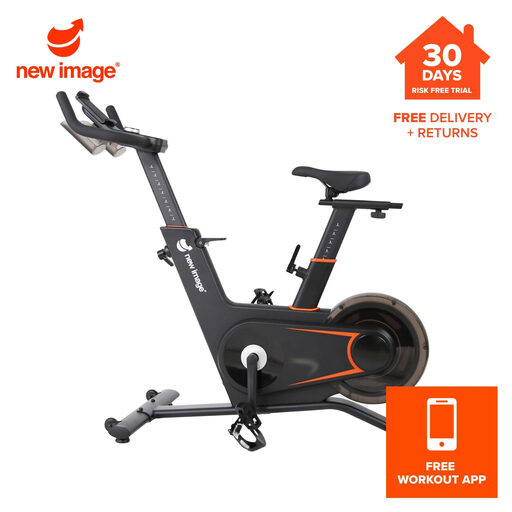
Why This Fits Their Persona: Suitable for users who want digitally controlled resistance and a more structured indoor cycling set-up for regular home training.
Its electromagnetic system provides 16 stated resistance levels, making the control method clearer than an unspecified resistance dial.
Belt-driven flywheel; stainless steel frame; adjustable seat and handlebars; phone and tablet holder.
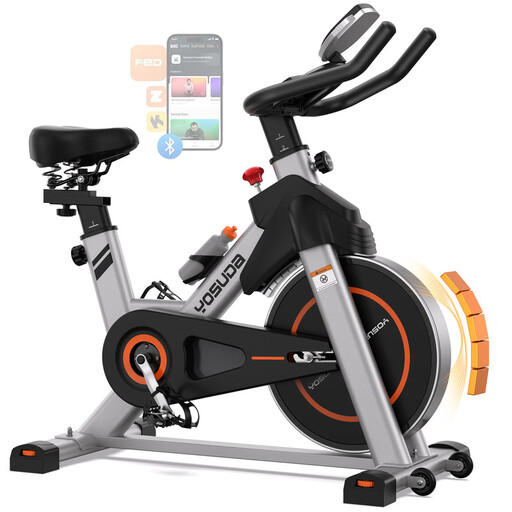
Why This Fits Their Persona: Designed for users who prioritise a reinforced frame, a higher stated load capacity and resistance suited to varied cardio sessions.
The product information states the maximum load, reinforced steel frame, non-contact magnetic system and flat-surface safety requirements, giving key limits to check before purchase.
8 kg magnetic flywheel; stated 160 kg maximum load; four-way wide saddle adjustment; transport wheels and Bluetooth APP connectivity.
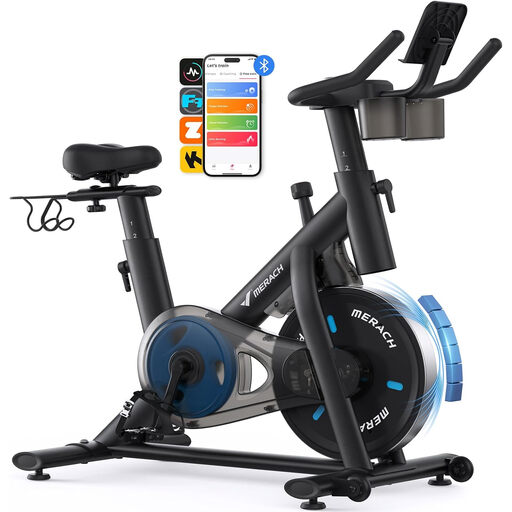
Why This Fits Their Persona: A connected option for users who want real-time workout tracking, guided sessions and a stable frame for repeated indoor rides.
The listing specifies app pairing, third-party app synchronisation, adjustable contact points and a stated noise level of no more than 30 dB.
Four-way soft seat adjustment; LCD display; bottle and accessory holders; approximately 70% pre-assembled.
Before assembly, choose a stable, level surface with enough clearance around the pedals and handlebars. Tighten all bolts as instructed and confirm that the saddle, handlebars and foot pads are locked before riding. Keep children away during assembly and operation.
Most belt-driven magnetic bikes use little or no mains electricity when resistance is adjusted manually. Models with electronic displays or app functions may use batteries, while electromagnetic systems can require a power connection. Check the product specification for the stated power source.
To support a longer service life, wipe sweat from the frame after use, keep the bike dry and inspect bolts, pedals and adjustment points regularly. Stop using the bike if unusual movement, damage or persistent mechanical noise appears. Do not exceed the stated maximum load.
We have compiled a complete, real-time list of products that fully satisfy these strict selection criteria and UK safety regulations.
A magnetic or electromagnetic bike with a belt drive is generally a practical choice where noise matters, including flats. Use a mat, keep the frame level and check that bolts remain tight. No home exercise bike is completely unaffected by floor vibration, so considerate riding intensity and placement are also important.
Lifespan depends on construction, frequency of use, rider weight and maintenance. A reinforced frame, protected bearings and belt drive may reduce routine wear, but inspect moving parts regularly. Follow the supplied assembly and maintenance instructions rather than assuming a bike is maintenance-free.
Cycling can contribute to energy expenditure when included in a consistent activity routine. Results vary according to workout duration, intensity, diet and individual circumstances. Select a bike you can use comfortably and regularly, with resistance and adjustment features that match your intended routine.