
24/7 Customer Support

Free returns

Same-day & Next-day Delivery

Quality Guaranteed

Unlock Your Welcome Offers: FREE Delivery | Up to 80% OFF | Free 30-day JoyPlus trial
Download the APP
An indoor fitness trampoline, or rebounder, is an increasingly popular choice for home exercise in the UK. It offers a fun, effective and joint-friendly way to get your heart rate up without needing the space for a treadmill or cross-trainer. However, the market is filled with options that look similar but differ wildly in quality. Many buyers find themselves with a product that is noisy, unstable or simply gathers dust because it’s too much of a hassle to use.
As the Joybuy Product Recommendation Officer, my role is to help you navigate these choices. We will look past the marketing claims and focus on the practical features that determine whether a rebounder will become a valued part of your fitness routine or a source of buyer's remorse.
Before jumping into a purchase, be aware of these common issues that can make a rebounder unusable:
To ensure you get a durable and effective piece of low-impact cardio equipment, focus on these three critical specifications.
The mechanism that creates the bounce is the heart of the trampoline. There are two main types:
The stability of a rebounder for home exercise depends entirely on its frame. Look for models constructed from heavy-duty steel with a powder-coated finish to resist corrosion. Equally important are the legs; they should be sturdy and fitted with non-slip rubber or silicone feet to protect your floors and prevent movement during use.
Pay close attention to the maximum user weight. A 120kg capacity rebounder is a good benchmark. Even if you weigh less, a higher capacity indicates a more robust and durable frame that can withstand intense, regular workouts without flexing or failing.
A mini trampoline for adults typically ranges from 40 to 42 inches (101 to 107 cm) in diameter. Before buying, measure your intended workout space, ensuring you have at least a foot of clearance on all sides and adequate overhead height. If storage is a priority, investigate how the trampoline folds. Look for simple, quick-release mechanisms rather than designs that require tools or the removal of multiple parts.
Based on these practical criteria, here are some options matched to different user needs.
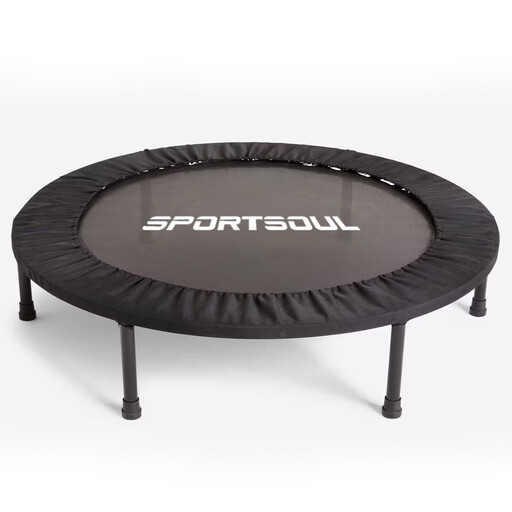
Why This Fits Their Persona: This is a great starting point for someone in a small flat or home. Its 40-inch diameter is compact, while the classic spring system provides the responsive bounce needed for an effective cardio session. It’s designed for straightforward home fitness without unnecessary complexity.
The 36 high-quality steel springs and heavy-duty frame offer durability and stability, avoiding the wobble and noise of cheaper alternatives. Its fold-and-store design is genuinely simple for practical, everyday storage.
No assembly is required, so it is ready to use straight out of the box. The silent, non-slip feet protect flooring, making it suitable for most indoor surfaces.
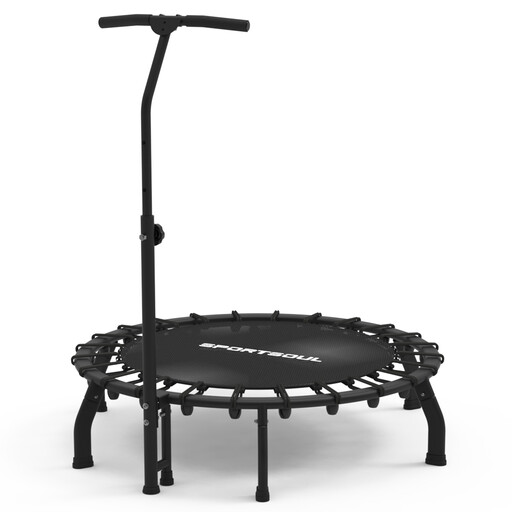
Why This Fits Their Persona: This model is for those who are serious about rebounding or need a lower-impact option. The elastic rope system is quieter and gentler on joints, while the higher 120kg capacity and included resistance bands allow for more intense and varied workouts.
The elastic rope system directly addresses the noise issue of cheap springs. Its robust steel frame and high weight limit provide the stability needed for confident, vigorous exercise, eliminating wobble.
The pre-assembled mat and elastic ropes simplify setup. The inclusion of resistance bands adds an upper-body workout dimension, offering more value and versatility.
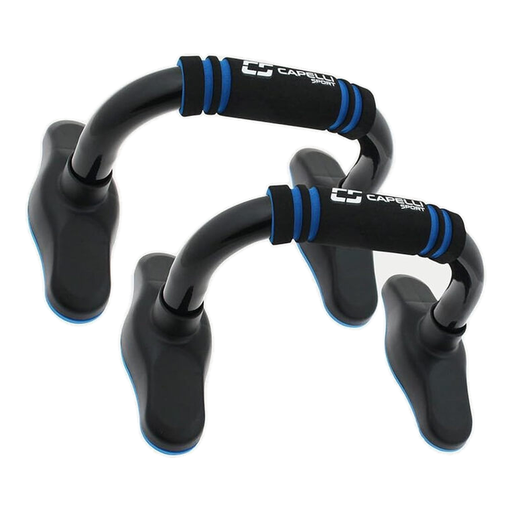
Why This Fits Their Persona: While rebounding is superb for cardio, a balanced routine includes strength. For those wanting to build upper-body and core strength without bulky weights, these portable push-up bars are an excellent, space-saving tool for floor workouts.
Unlike flimsy plastic bars, this set features a sturdy stainless steel structure and a large TPR rubber base. This ensures a non-slip, stable foundation on various floor types, preventing dangerous slips during exercise.
The foam grips reduce wrist strain, allowing for better form and preventing pain. It also includes a counter function to help you track your repetitions and progress over time.
We have compiled a complete, real-time list of products that fully satisfy these strict selection criteria and UK safety regulations.
For a typical 40-inch (102 cm) rebounder, a clear floor space of about 2x2 metres is advisable. This provides safe clearance from walls and furniture. Also, check your ceiling height; you should be able to stand on the trampoline with your arms fully extended upwards without touching the ceiling.
This depends entirely on the rebound system. Models with high-quality elastic bands or bungee cords are significantly quieter than those with metal springs and are the recommended choice for flat living. While well-made spring-based models are quieter than cheap ones, they will still produce some mechanical sound.
A well-maintained, high-quality rebounder can last for several years. The lifespan is determined by the durability of the frame, the jumping mat and the rebound system. Regularly inspect the mat for fraying, the frame for cracks and the springs or bands for signs of wear. Storing it indoors and adhering to the weight limit will significantly prolong its life.