
24/7 Customer Support

Free returns

Same-day & Next-day Delivery

Quality Guaranteed

Unlock Your Welcome Offers: FREE Delivery | Up to 80% OFF | Free 30-day JoyPlus trial
Download the APP
As a Joybuy Product Recommendation Officer, my role is to help you navigate the crowded market of home technology. Choosing the right indoor security camera can feel overwhelming, whether you're a new parent wanting a reliable baby monitor, a pet owner curious about your furry friend's daytime antics or a renter looking for a security solution that doesn't require drilling.
This guide is designed to simplify your decision. We will walk through the key features to consider and then present a few standout options that cater to different needs and living situations across the UK.
Before diving into specific models, understanding a few key features will help you identify what matters most for your home.
While 1080p (Full HD) has been the standard, many modern cameras now offer 2K security camera resolution (2560x1440 pixels). This provides a noticeably sharper and more detailed image, which can be crucial for identifying faces or reading text. Also, consider the camera's movement capabilities. A static camera is fine for a small room, but a pan tilt camera can rotate horizontally and vertically, allowing you to cover a much larger area with a single device.
Standard infrared night vision shows a black-and-white image. However, some newer models feature full colour night vision, which uses sensitive sensors and sometimes a small spotlight to capture footage in colour, even in low-light conditions. This can provide vital details, such as the colour of an intruder's clothing, that would be lost in a monochrome view.
Modern cameras are more than just recording devices. An AI security camera can differentiate between people, pets and general motion, reducing the number of false alerts you receive. A camera with two way audio allows you to listen and speak through the device, which is useful for calming a pet or instructing a delivery driver. For storage, look for a security camera with an SD card slot for local, subscription-free recording. Cloud storage is also a common option, offering off-site backup for a monthly fee.
Here are a few indoor security cameras that offer a compelling combination of features, performance and value for different user needs.
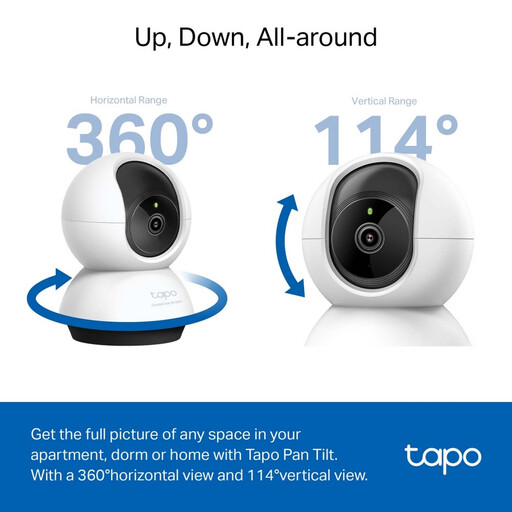
Why It Stands Out: The Tapo C220 is a versatile wifi security camera that covers all the bases for general indoor use. Its 2K QHD resolution delivers crisp, clear video, while the pan-and-tilt mechanism provides a full 360° horizontal view, eliminating blind spots. It’s a strong candidate for a baby monitor or pet camera, especially with its smart AI detection that can specifically notify you of a person, a pet or even the sound of a baby crying.
Pros:
Who is it for? This camera is an excellent choice for homeowners or tenants who need a flexible, high-quality camera to monitor a large living space, a nursery or to keep an eye on pets.
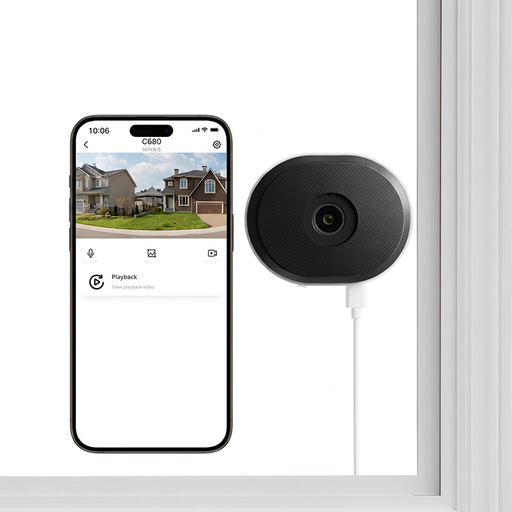
Why It Stands Out: Placing a standard security camera facing out of a window often results in useless footage due to glare and reflections. The ZOSI C680 is a purpose-built window security camera designed to solve this problem. It uses special lens technology to minimise reflections from the glass, providing a clear view of the outside from the safety of the indoors. Its installation is another major benefit, requiring no drilling or screws, making it a great security camera for renters.
Pros:
Who is it for? This is an ideal solution for those living in flats or rented properties who want to monitor the area outside their home—like a driveway or front garden—without installing an outdoor camera.
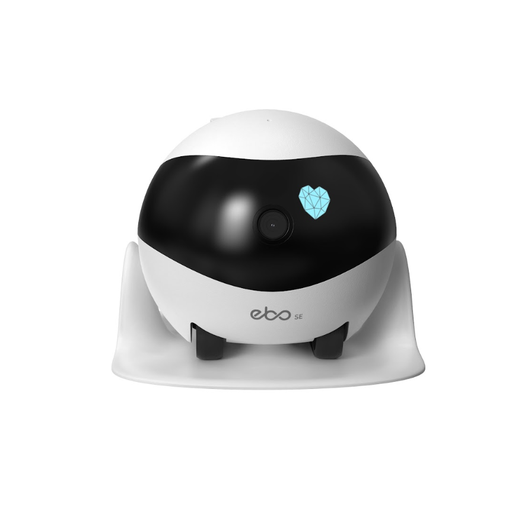
Why It Stands Out: The ENABOT SE takes the concept of a pet camera to the next level. Instead of a stationary viewpoint, this is a mobile robot that you can drive around your home remotely using a smartphone app. It can patrol your house on a schedule, check under beds and allow you to interact with your pets using two-way audio. It’s a fun and practical way to check in on your home and furry companions from anywhere.
Pros:
Who is it for? This is a perfect fit for dedicated pet owners who want more than just a static camera, or for anyone looking for a unique and interactive way to monitor their home.
If the models above don't quite fit your specific requirements, there are many other types of smart home camera solutions available. From devices with advanced privacy features to different form factors, you can find a wider selection to compare.
Explore our full range of Smart Home Electronic Devices to find the perfect match for your home.
1. Can indoor security cameras see in the dark? Yes, almost all modern indoor security cameras have night vision. Most use infrared (IR) LEDs to produce a clear black-and-white image in complete darkness. Some advanced models, like the ZOSI C680, offer full colour night vision by using more sensitive image sensors to see in colour in low-light conditions.
2. Do I need a subscription for a WiFi security camera? Not necessarily. Many cameras, including all the ones recommended above, offer a security camera with an SD card slot. This allows you to record footage locally without any monthly fees. Cloud storage subscriptions are typically offered as an optional extra, providing a secure off-site backup of your recordings that you can access from anywhere.
3. Is it difficult to install a security camera in a rented flat? It doesn't have to be. Many indoor cameras are designed for simple, non-permanent installation. They can be placed on a shelf or table. For wall or ceiling placement, some models come with adhesive mounting options. A window security camera like the ZOSI C680 is particularly suitable for renters, as it attaches directly to glass without any tools or damage to walls.