
24/7 Customer Support

Free returns

Same-day & Next-day Delivery

Quality Guaranteed

Unlock Your Welcome Offers: FREE Delivery | Up to 80% OFF | Free 30-day JoyPlus trial
Download the APP
Keeping an eye on your home, whether it’s for a new baby, a mischievous pet or an elderly relative, should bring peace of mind, not a headache. Yet, the market for indoor security cameras is filled with technical jargon and clever marketing that can easily lead to a purchase you'll regret. Many UK households invest in a device only to find it falls short when it matters most.
As a Joybuy Product Recommendation Officer, my role is to help you sidestep these common issues. Before you add any camera to your basket, let’s look at the three most frequent pitfalls that catch buyers out and how you can avoid them.
To make a smart choice, focus on the core specifications that determine a camera's real-world performance. Ignore the marketing fluff and check these three things first.
The detail a camera can capture is fundamental. While 1080p (Full HD) is a good baseline for general monitoring, a 2K or 4K resolution offers significantly more detail, allowing you to zoom in on faces or read text without the image turning into a blur.
More importantly, look for a security camera with audio and night vision that specifies its technology. Basic infrared (IR) provides black-and-white images. For superior clarity, look for models with full-colour night vision, which use sensitive sensors and sometimes supplementary white lights to capture a scene in colour, even in very low light. This can be the difference between seeing a shadowy figure and identifying a person clearly.
A stable connection is non-negotiable for any wifi security camera. Many UK homes have routers that broadcast on two frequencies: 2.4GHz (slower, but longer range) and 5GHz (faster, but shorter range). A camera that supports dual-band Wi-Fi can offer a more reliable and faster connection, especially if it's placed far from your router.
For storage, you have two main options:
A camera's field of view determines how much of a room it can see at once. A static camera might have a wide-angle lens, but it can still leave blind spots. For complete coverage, a 360 camera indoor model with pan and tilt functions is ideal. These can be controlled remotely via an app, allowing you to look around the entire room, making them excellent as a pet camera to follow a wandering dog or as a baby monitor camera to check the whole nursery.
To help you match a device to your specific needs, here are some recommendations based on different user profiles.
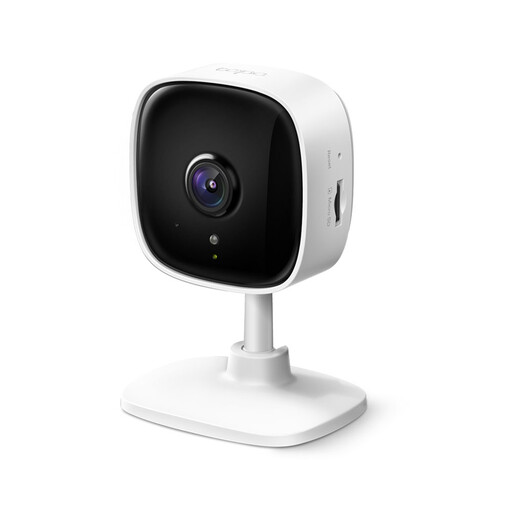
Why This Fits Their Persona: Ideal for those new to home security who want a reliable, straightforward device from a recognised brand. It covers all the essentials for monitoring a room without overwhelming features or hidden costs.
It directly counters the subscription trap by supporting local storage via a microSD card (up to 512GB), meaning no mandatory monthly fees are required to save and review footage.
Delivers clear 1080p video and has effective infrared night vision up to 10 metres. The two-way audio and motion detection alerts provide core security functions at an accessible price point.
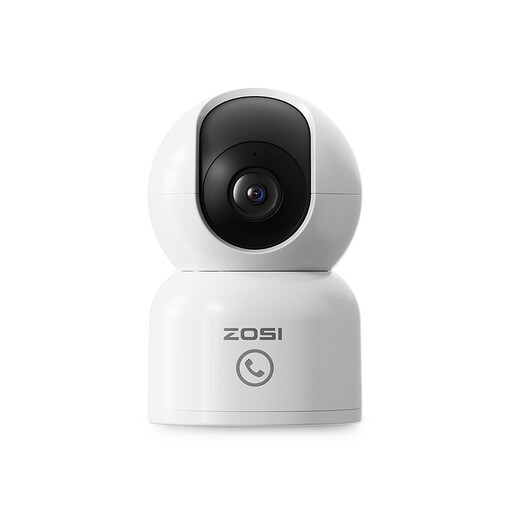
Why This Fits Their Persona: Designed for active monitoring. The 360° auto-tracking follows a moving child or pet around the room, while the one-touch call button lets family members easily initiate a call to your phone, making it a great nanny cam or device for checking on elders.
It offers flexible storage, supporting a local microSD card up to 256GB. This gives you control over your data and avoids mandatory cloud fees, while still offering a free trial for those who want to test cloud services.
The 2.5K (4MP) resolution provides sharper detail than standard 1080p. Its AI-powered human tracking and 360° pan-tilt functionality ensure you never miss the action, sending relevant alerts directly to your app.
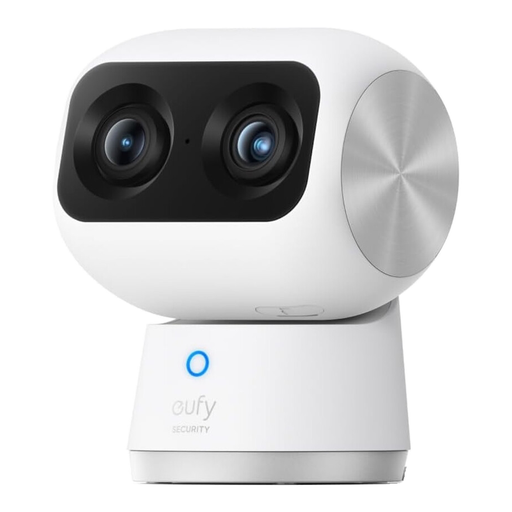
Why This Fits Their Persona: For the user who wants exceptional detail and advanced features. The dual-camera system provides both a wide-angle view and a telephoto lens for powerful zoom, ensuring no detail is missed, day or night.
It sidesteps the poor night vision pitfall with a large f/1.6 aperture sensor and high-powered infrared LEDs, delivering clear facial recognition up to 10 metres away in darkness, far surpassing basic models.
The standout feature is its dual-camera 4K UHD resolution and 8x hybrid zoom. It also includes dual-band Wi-Fi 6 for a fast, stable connection and AI-powered tracking to follow subjects smoothly.

Why This Fits Their Persona: This is more than a static camera; it's a mobile robot. Perfect for pet owners who want to interact and play remotely, or for those needing to check multiple rooms without installing a camera in each one. You can drive it around your home from your phone.
It eliminates blind spots entirely by being mobile. Unlike a fixed camera, it can be driven into any corner, under furniture or into different rooms, ensuring there are no unmonitored areas. It also includes a 32GB microSD card, avoiding subscription fees straight out of the box.
Its key advantage is mobility. The tracked wheels allow it to navigate different floor surfaces, and it automatically returns to its dock to charge. The 2K camera and two-way audio allow for high-quality remote interaction.
We have compiled a complete, real-time list of products that fully satisfy these strict selection criteria and UK safety regulations.
Not necessarily. Many of the most popular models of home security camera in the UK are designed to work perfectly without a subscription. The key is to choose a camera that supports local storage via a microSD card. This allows you to record, store and review footage without any monthly fees. Subscriptions are typically offered for optional cloud storage, which can be a good backup but should not be a requirement for basic functionality.
This depends on the camera's resolution and how much footage you want to save. As a general guide for a camera recording on motion detection:
This is a valid concern. To protect your privacy, always choose a camera from a reputable brand that provides regular security updates. You can significantly improve security by using a strong, unique password for your camera's account, enabling two-factor authentication (2FA) if available and ensuring your home Wi-Fi network is password-protected with WPA2 or WPA3 encryption.