What matters when choosing a hob?
For tomato chutney in a shared kitchen, establish which hob and pan the kitchen can accommodate before comparing controls for the long simmer. The concerns below focus on the primary issue that would decide each consumer’s choice.
| Concern |
What to check |
Who this matters to |
| Controlled simmering |
Compare usable low-heat settings and timer controls; seek model-specific simmering evidence rather than treating boost power as proof. |
I need to bring chutney to the boil, then keep it gently simmering while I stir. Around 33% of consumers put low-heat control first. |
| Installation and permission |
Check the exact plug-in or hardwired requirement, electrical supply and, for built-in models, the cut-out and ventilation instructions. Confirm permission before altering a shared kitchen. |
If I cannot change the worktop or electrical installation, the fitting route could decide which hob I can use. Roughly 27% of consumers prioritise installation and permission. |
| Shared use and clean-up |
Look for specified lock and residual-heat functions, and follow the model’s guidance for cleaning its surface. |
When others use the kitchen after me, I want hot surfaces and control settings to be clear, and sticky splashes to be manageable. About 20% of consumers make shared-use safety and clean-up their main concern. |
| Cookware compatibility |
Check the chutney pan’s base against the exact induction hob’s cookware and zone-size instructions; consider whether a ceramic hob lets you retain more of your pans. |
I want to keep using my current preserving pan rather than change cookware to suit a new hob. For around 20% of consumers, pan compatibility is the deciding need. |
Brands to consider
These brands provide model-specific examples of different installation and cookware considerations; the features described do not apply to every hob in a brand’s range.
Beko
A reference point if you want to assess a built-in induction model specified for a 13 A socket.
- Beko describes the HIIP64530UFT as a Plug&Play induction hob with nine power levels, a booster and a child safety lock.
- Its stated plug-in connection does not establish that the worktop, ventilation or kitchen electrical supply is suitable. Check the model’s installation instructions.
AEG
Useful for seeing why the electrical connection must be checked by model, even within one induction range.
- AEG specifies a UK moulded plug for the four-zone IBS6420SCB and a hardwired-only connection for the TN64IA00XB.
- The TN64IA00XB’s stated 7,350 W load and connection requirement must not be applied to the plug-in IBS6420SCB or to other AEG hobs.
NEFF
A model-specific reference when a larger preserving pan makes cooking-zone layout important.
- NEFF specifies a Combi Induction function on the T56FHS1L0 that combines two circular zones for larger cookware.
- Check the pan base, installation instructions and electrical requirements before assuming that this model suits your kitchen.
Joybuy hob options
These options cover portable induction cookers and built-in induction and ceramic hobs. For a shared kitchen, compare the pan, connection and installation requirements of each route before relying on its cooking controls.
 No image available
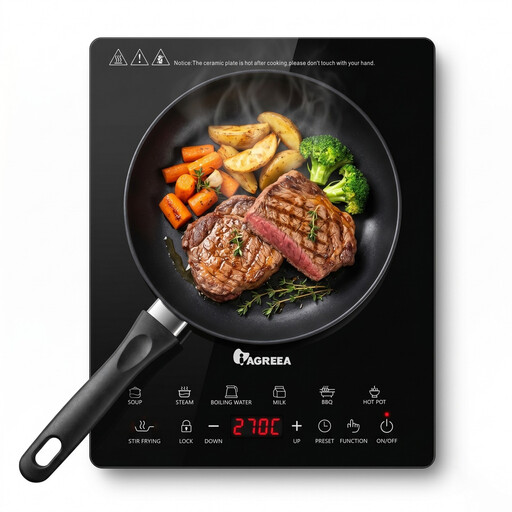
IAGREEA DF200-14V10 portable induction cooker
A portable option when fitting a hob into the worktop is unsuitable. The 2,000 W model is named with eight power levels, 60–270°C temperature control, a three-hour timer, a child lock and a stated 12–26 cm cookware range.
Check the supplied connection against the shared kitchen’s socket and electrical supply, confirm that your pan meets the cookware instructions, and look for evidence of gentle-simmer performance before relying on it for chutney.
View on Joybuy
 No image available
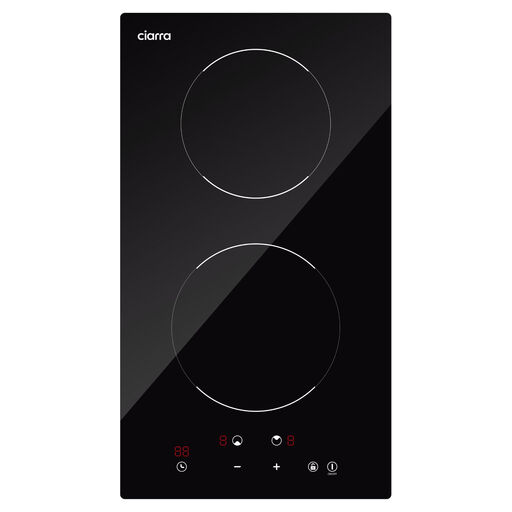
CIARRA CBBIH292T 29 cm built-in induction hob
A two-zone built-in induction option if the kitchen can accommodate an installation and your chutney pan is compatible. Its name specifies 2,900 W, nine power levels, a timer and a child lock.
Confirm the cut-out, ventilation, electrical connection, pan requirements and permission to alter the worktop. The listed controls alone do not establish how steadily it holds a gentle simmer.
View on Joybuy
 No image available
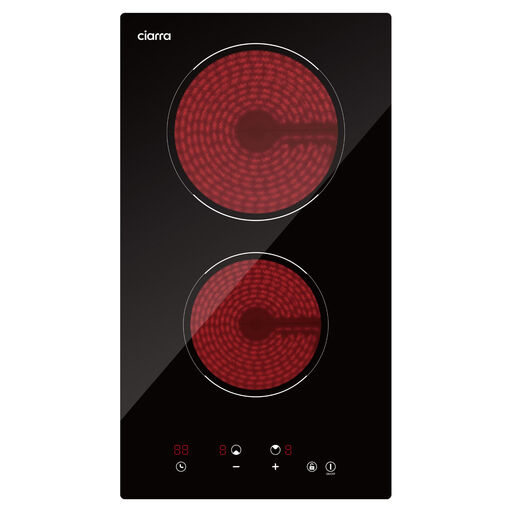
CIARRA CBBCH292T two-zone built-in ceramic hob
A built-in ceramic route to consider when retaining existing pans is a priority. The two-zone, 2,900 W model is named with nine power levels, a timer and a child lock.
Check pan and installation instructions, electrical requirements and worktop permission. The ceramic surface can remain hot after use, so follow its heat-warning and cleaning guidance; the listed settings do not establish simmer performance.
View on Joybuy
 No image available
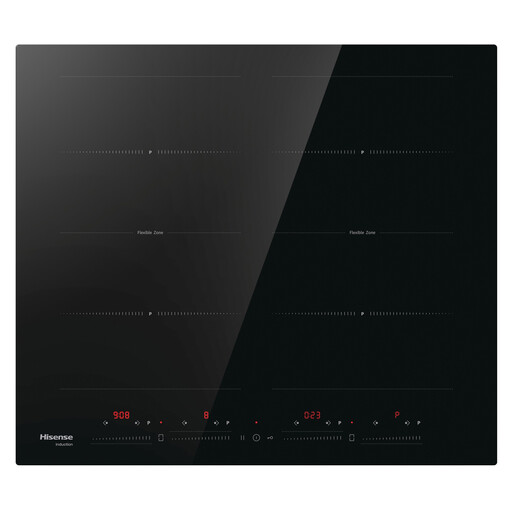
Hisense HI6442BSCE 60 cm induction hob with Area Flex
A built-in induction option to assess if the kitchen has room for a 60 cm hob and the pan suits its cooking areas. The model name identifies its Area Flex configuration.
Confirm the exact cut-out, ventilation, electrical connection and permission before choosing it. Check the manufacturer’s cookware instructions and model-specific low-heat behaviour for your chutney pan.
View on Joybuy
 No image available
ochama 2,000 W portable induction hob
A portable option when you need a cooking surface that does not require built-in worktop fitting. Its name specifies ten power settings, six functions and a safety lock.
Check the supplied electrical connection, your pan’s induction compatibility and whether its controls suit an extended simmer. If a timer is important to your routine, confirm that function before purchase.
View on Joybuy
Frequently asked questions
Does an induction hob have to be hardwired?
No; the connection depends on the exact model. Beko specifies a standard 13 A socket for its HIIP64530UFT, AEG lists a UK moulded plug for the IBS6420SCB, and AEG specifies the TN64IA00XB as hardwired only. Check the installation manual and kitchen electrical supply before choosing either route.
Will my current chutney pan work on induction?
It will work only if it meets the chosen induction hob’s cookware requirements. Which? advises checking pan compatibility, and the cited Joybuy portable induction listing calls for a flat, magnetic base. Check both the pan and exact hob instructions, particularly if your preserving pan is large.
What must I check before fitting a built-in hob in a shared kitchen?
Confirm permission to alter the kitchen, the model’s electrical connection, and its worktop cut-out, ventilation and clearance requirements. Bosch says installation measurements vary by model, so an advertised hob width is not a substitute for the installation instructions; seek a qualified electrician where the electrical work or supply needs assessment.
How should I clean burnt-on chutney from a glass hob?
Follow the specific hob’s cleaning and cooling instructions before tackling a sticky spill. Bosch describes its dedicated glass scraper as suitable for removing burnt-on spillages from compatible ceramic hobs; check that a tool is approved for your surface rather than assuming an abrasive scourer is suitable.


