What matters when choosing
Start with your saucepan, then consider how readily you can adjust heat while stirring and whether the hob fits your kitchen’s installation plans.
| Concern |
What to check |
Who this matters to |
| Heat response |
Check manual power adjustment and, where available, independent low-temperature simmering results. Do not treat a rapid-boil setting as a low-heat test. |
When custard thickens as I stir, I want to turn the heat down promptly rather than rely on rapid boiling. Around 42% of consumers put heat response first. |
| Saucepan compatibility |
Test the pan base with a magnet or check its maker’s induction guidance; compare ceramic if you need to keep a non-magnetic pan. |
I want to keep using my familiar custard saucepan without finding that it cannot heat on the new hob. For around 33% of consumers, keeping current cookware compatible is the primary concern. |
| Installation and space |
Check the exact model’s connection type and dimensions; for a built-in hob, also check its installation instructions and worktop cut-out. |
If a built-in replacement does not fit my kitchen plans, I need to assess the electrical work or a movable single-zone option before choosing. Installation and space come first for around 25% of consumers. |
Joybuy product choices
These choices cover built-in induction, portable induction and built-in ceramic hobs. Compare the saucepan and installation conditions first; the number of power levels alone does not establish how gently a model will heat custard.
 No image available
Bosch PIE631BB5E Series 4 60cm induction hob
Consider this built-in option if you use a magnetic saucepan and want to adjust the power while stirring custard.
The product name specifies a 60cm black-glass hob and hardwired installation. Confirm that its electrical and worktop requirements suit your kitchen.
View on Joybuy
 No image available
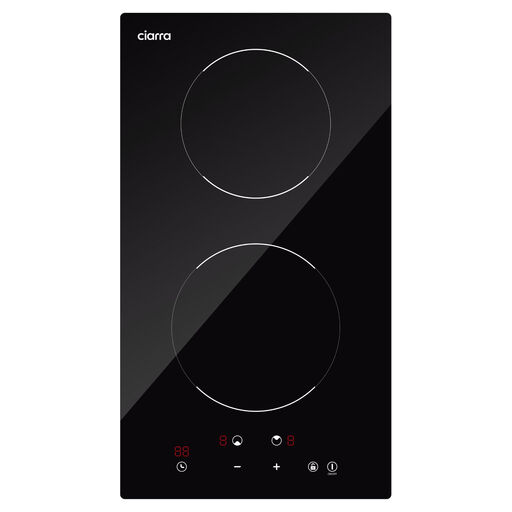
CIARRA CBBIH292T 29cm two-zone induction hob
The narrow built-in format may suit a kitchen where you want two zones and have an induction-compatible saucepan.
Its name specifies a 2900W rating, touch controls, nine power levels, a timer and a child safety lock. Check the electrical connection and installation instructions for your kitchen.
View on Joybuy
 No image available
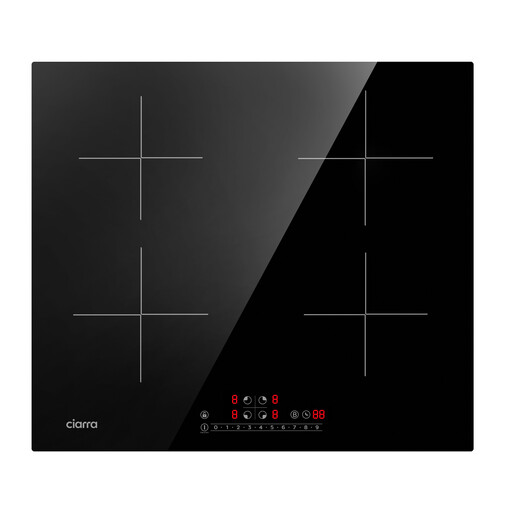
Ciarra four-zone built-in induction hob
Consider this layout if custard-making is one part of a meal that uses several pans and your cookware is magnetic.
The name specifies touch controls, nine power levels and a booster function. Check the installation and electrical requirements; the booster is not a substitute for assessing manual low-heat control.
View on Joybuy
 No image available
ochama 2000W portable induction hob
This movable, single-pan option is relevant if you do not plan to replace a built-in hob and have a magnetic custard saucepan.
Its name specifies 10 power settings, six functions, touch controls and a safety lock. Check the supplied plug, suitable pan sizes and ventilation instructions before use.
View on Joybuy
 No image available
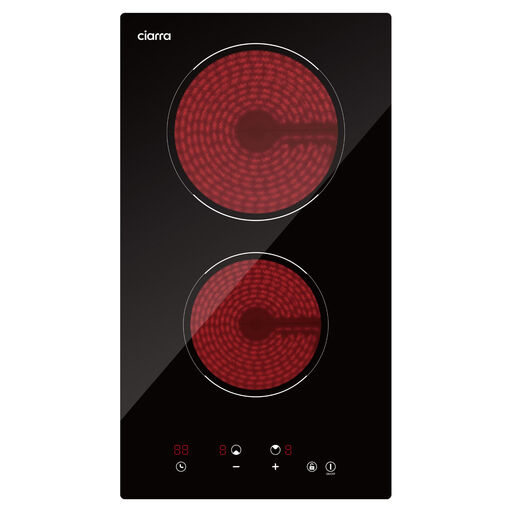
CIARRA CBBCH292T two-zone ceramic hob
Consider ceramic if keeping a non-magnetic custard saucepan is the deciding factor. Move the pan off the zone once the custard is thick enough, because ceramic glass can remain hot after switch-off.
The name specifies a 2900W rating, touch controls, nine power levels, a timer and a child lock. Confirm your pan’s suitability and the model’s electrical connection before buying.
View on Joybuy
Common questions
Should I choose induction or ceramic for custard?
Choose induction if your saucepan has a magnetic base and prompt heat adjustment is your priority; choose ceramic if retaining a non-magnetic pan matters more. Bosch says ceramic glass remains hot after switch-off, so move the pan away when the custard reaches the thickness you want.
Can a boil sensor control custard automatically?
Do not rely on a boil sensor as a custard programme unless the model’s instructions explicitly cover that use. AEG specifies water or water with potatoes for its SenseBoil function; for custard, assess the manual power controls and keep stirring.
Do built-in electric hobs always need hardwiring?
No: connection requirements depend on the model. Qualified-electrician hardwiring is advised for induction and ceramic hobs generally, while NEFF describes selected induction models designed for a standard 13-amp supply. Check the exact hob’s installation instructions and connected load; a plug-and-play model may share power between zones.
Which electrical rules apply when installing a built-in hob?
Check the rules applicable to your UK nation, property and proposed electrical work before altering a fixed circuit. GOV.UK’s Approved Document P addresses electrical safety in dwellings in England; it should not be treated as a single installation rule for every part of the UK.
What should I do after custard spills on a glass hob?
Follow the model’s cleaning instructions and allow the surface to cool as directed before cleaning. If the glass is cracked, stop using the hob: Arrange repair rather than continuing to cook on it.


