Careful gravy reducers
You regularly reduce gravy, pan sauces or stock and want to make small heat changes while stirring, so the liquid reduces without catching.


Choose an induction hob if your gravy pan is compatible and you want to adjust the heat quickly as the sauce reduces; look for low settings you can select easily while stirring. A radiant ceramic hob lets you keep non-magnetic pans, but its glass surface stays hot after switch-off. Check low-heat controls and installation requirements on the exact model rather than assuming a boil sensor will reduce gravy automatically.
You regularly reduce gravy, pan sauces or stock and want to make small heat changes while stirring, so the liquid reduces without catching.
You want an electric hob without replacing the pans you already use. Whether your gravy pan works on induction may decide which hob type suits you.
You are replacing a built-in hob and need its cut-out dimensions, connection type and electrical load to suit your kitchen.
For consumers choosing an electric hob chiefly to reduce gravy, check your pan before choosing between induction and ceramic. Then compare the exact model's low-heat controls and installation requirements.
| Concern | What to check | Who this matters to |
|---|---|---|
| Low-heat control | Check how readily you can select and adjust low power settings; consider whether a timer would prompt you to check the gravy. | When I reduce gravy slowly, I want to change the heat without losing track of the simmer. Around 36% of consumers put low-heat control first. |
| Pan compatibility | Check your gravy pan's induction marking or whether a magnet sticks to its base; a radiant ceramic hob does not rely on magnetic pan heating. | If I want to keep using my non-magnetic saucepan, that matters more than choosing induction. Keeping existing pans is the main concern for around 21% of consumers. |
| Installation fit | Compare the exact hob's cut-out dimensions, connection type and electrical load with your kitchen. | Before replacing a built-in hob, I need to know the new one will fit and can be connected appropriately. For around 29% of consumers, installation fit takes priority. |
| Safety and clean-up | Check the model's safety controls and residual-heat indicators; allow a ceramic surface to cool before wiping it. | With hot gravy on the hob, I want controls I can manage and a clear way to tell when the surface is still hot. Around 14% of consumers put safety and clean-up first. |
AEG's SenseBoil guidance describes a sensor for boiling water or water with potatoes, not an automatic gravy-reduction setting. Gravy still needs stirring and checks as it thickens.
Treat a boil sensor as a feature for its documented uses. For gravy, choose manual low settings you can adjust while you stay with the pan.
Induction requires compatible cookware. A frequently used non-magnetic saucepan could change which hob type makes sense for your kitchen.
Check the pan maker's induction marking or test whether a magnet sticks to the base of each pan you expect to use.
Connection requirements differ by model: AEG lists the TN64IA00XB as hardwired only with a 7,350 W total electrical load, while Bosch describes the PUG61RAA5B as Plug & Play.
Compare the exact model's installation drawing, cut-out, load and connection type with your kitchen before ordering.
A radiant ceramic hob heats elements beneath the glass, so its surface remains hot after switch-off.
Use residual-heat indicators where provided, keep pan handles positioned safely and let the surface cool before wiping it.
Bosch has both induction and radiant ceramic hob models, making it relevant when the choice depends on heat adjustment and existing cookware.
Selected AEG induction hobs offer boil-control features, while other models have different installation requirements.
Selected NEFF induction models offer flexible cooking areas that may be relevant when pan size or cooking several components affects the choice.
These built-in induction hobs are options to consider if your gravy pan is induction-compatible. Compare their controls and installation requirements with your kitchen; if keeping a non-magnetic pan is decisive, consider the radiant ceramic route discussed above instead.
 No image available
Consider this model if your gravy pan works on induction and you want selectable manual settings. Retailer the product information describes 17 power levels and a slow-simmer setting for the PIE631BB5E.
Check that its hardwired connection and installation dimensions suit your kitchen; the settings do not replace stirring and monitoring the gravy.
 No image available
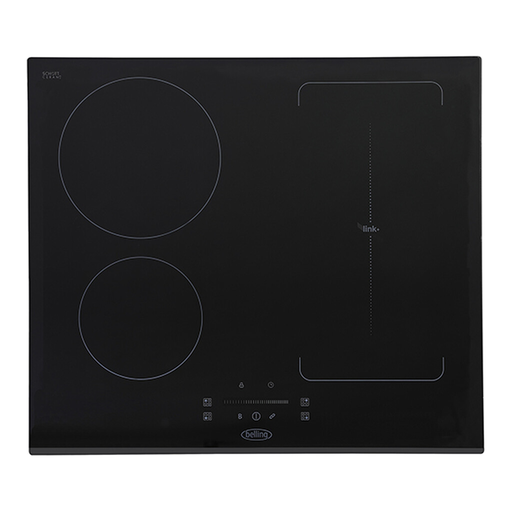
This 60 cm induction model is an option for reducing gravy with a compatible pan while adjusting the heat manually.
Confirm the cut-out and electrical connection requirements for your kitchen, and keep checking the sauce as it reduces.
 No image available
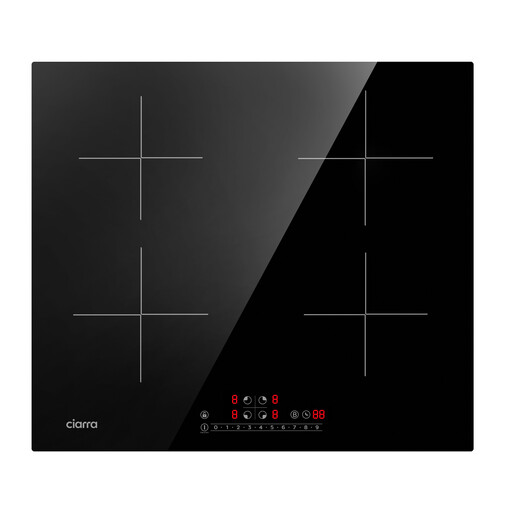
The touch controls and nine listed power levels give you manual settings to consider when reducing gravy in an induction-compatible pan.
This black ceramic-glass model also lists a booster function. Check its cut-out and electrical requirements rather than using the booster rating to judge low-heat behaviour.
 No image available
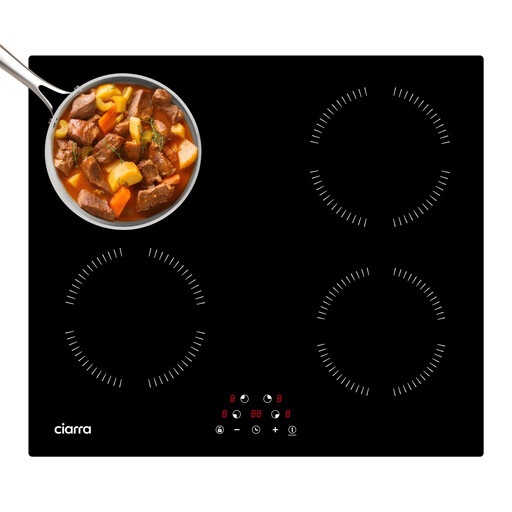
This built-in induction model offers a four-zone layout for a kitchen where you also cook other components alongside the gravy.
Joybuy lists 6,000 W total power for the CABBIH4-A. Check its cut-out and electrical requirements against your kitchen, and use a compatible pan while monitoring the reduction.
 No image available
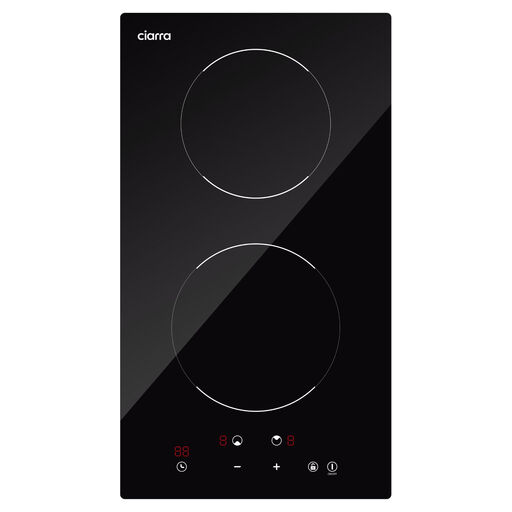
Consider this narrower built-in model if two zones suit your cooking and your gravy pan is induction-compatible.
Its listed features include 2,900 W, nine power levels, touch control and a timer. Check the cut-out and electrical requirements before ordering; a timer is a prompt to check the gravy, not a substitute for monitoring it.
Choose induction if your gravy pan is compatible and you want to adjust the heat quickly as the liquid reduces. A radiant ceramic hob is worth considering if keeping non-magnetic pans matters more; check the individual model's low settings and remember that its glass stays hot after switch-off.
Do not rely on it to do so. AEG's SenseBoil guidance describes its sensor for water or water with potatoes, not gravy; stir and judge the sauce's thickness yourself.
Look for the pan maker's induction marking or check whether a magnet sticks firmly to the base. Induction uses a magnetic field between the hob and compatible cookware, so check the pan you actually use for gravy before choosing that route.
No; connection requirements depend on the model. Bosch describes the PUG61RAA5B as Plug & Play, whereas AEG lists the TN64IA00XB as hardwired only with a 7,350 W total electrical load. Check the exact appliance instructions, cut-out and electrical installation before ordering.