Low-simmer rice-pudding cooks
If you make rice pudding on the hob, controllable low heat matters more than rapid boiling alone. Good Food’s stovetop instructions call for low heat and frequent stirring to prevent sticking or burning.


Choose induction if your pudding saucepan is compatible and you want heat generated directly in the pan; choose a ceramic electric hob if continuing to use a non-induction saucepan matters more. For either type, prioritise a manageable low setting and enough room for the pudding pan alongside the rest of the meal, then check the exact model’s dimensions and electrical requirements.
If you make rice pudding on the hob, controllable low heat matters more than rapid boiling alone. Good Food’s stovetop instructions call for low heat and frequent stirring to prevent sticking or burning.
If the pudding cooks alongside other dishes, check where each pan will sit and whether you can still reach the saucepan to stir it. Bosch and AEG offer combined or bridge zones on selected models, but these layouts are not standard on every hob.
If you are replacing a built-in hob, check your saucepan, worktop opening and electrical arrangement before settling on a model. Induction requires suitable cookware, while installation requirements vary by appliance.
Decide whether induction suits your existing saucepan before comparing low-heat controls, pan space and installation requirements. Good Food’s cooking instructions make the long, stirred low-heat stage more relevant to rice pudding than a hob’s boost setting.
Consider it: You have an induction-compatible saucepan and want heat generated directly in the cookware.
Check first: An unsuitable saucepan will not work as intended; combined zones are available only on models that specify them.
Consider it: Keeping a saucepan that is unsuitable for induction is a priority.
Bear in mind: Which? explains that ceramic hobs heat elements beneath the glass, rather than generating heat directly in the pan as induction does.
| Concern | What to check | Who this matters to |
|---|---|---|
| Manageable low heat | Check how the exact model selects low settings and whether it has a timer. A boost function does not establish how it cooks at low heat. | I need to stir a milk-and-rice mixture through a long, gentle cook without letting it stick; around 36% of consumers would put low-heat control first. |
| Usable pan space | Compare your saucepan base with the zone layout and check whether a combined zone is specified. | If other dishes need pans at the same time, I need a clear place for the pudding saucepan; around 29% of consumers would prioritise pan space. |
| Cookware and kitchen fit | For induction, confirm pan compatibility. For any built-in hob, compare the cut-out and connection instructions with your kitchen. | I do not want to choose a hob that my saucepan or kitchen cannot accommodate; around 21% of consumers would make compatibility their primary concern. |
| Safeguards and cleaning | Check the exact model’s lock, automatic shut-off and cleaning instructions; none replaces stirring and supervision. | With other meal preparations under way, I value controls that help prevent unintended changes and a surface I can clean after splashes; around 14% of consumers would put these conveniences first. |
Induction generates heat in suitable cookware, so the pudding pan needs to be compatible.
Check the pan’s induction marking or its manufacturer’s guidance before choosing the hob.
Keeping an unsuitable saucepan for other uses may mean obtaining a separate induction-compatible pudding pan.
Faster initial heating does not tell you how manageable a low setting will be during a long cook. Good Food’s instructions call for low heat and frequent stirring.
Check the low-setting controls on the exact model and treat boost as a feature for a different stage of cooking.
AEG specifies a 780 mm width and hardwired connection for its cited MultiBridge model. A wider layout is not automatically a straightforward replacement for a 60 cm hob.
Compare the appliance width, required opening and connection instructions with your kitchen before ordering.
A different opening or electrical arrangement may require worktop alteration or electrical installation work.
A milk-and-rice mixture can stick during a long cook. NEFF says its automatic shut-off activates after extended operation without setting changes, with timing dependent on the power level.
Continue to monitor and stir the pudding according to the recipe, even when the hob has a timer or safeguards.
Bosch has model-specific options for a basic induction layout, a plug-in approach and combined cooking zones.
NEFF is relevant if touch controls and a timer are priorities for a monitored cook.
AEG’s cited MultiBridge induction model illustrates a wider, bridge-capable layout for larger or longer cookware.
These choices include built-in induction and ceramic hobs, plus a portable single-area induction cooker. For a pudding pan alongside other dishes, compare the number and position of cooking zones; a single-area cooker serves a different kitchen arrangement.
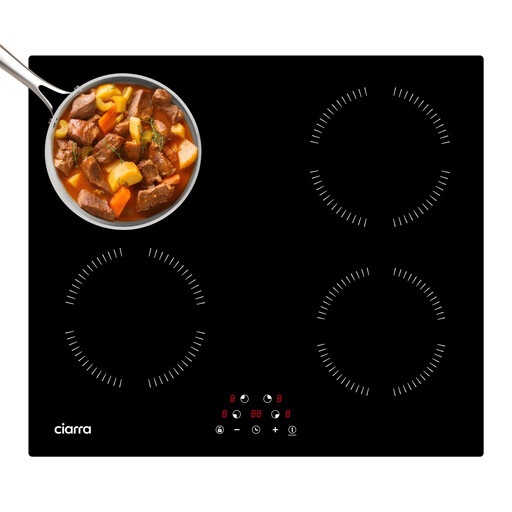 No image available
Its four-zone layout is worth considering when the pudding pan needs to share a built-in hob with other meal pans. Check that your saucepan is induction-compatible, and confirm the low-setting controls and installation requirements for this model.
 No image available
This built-in induction option suits a kitchen where a hardwired hob and an induction-compatible pudding pan are appropriate. Check the exact cut-out, electrical instructions and low-setting controls before choosing it for a long simmer.
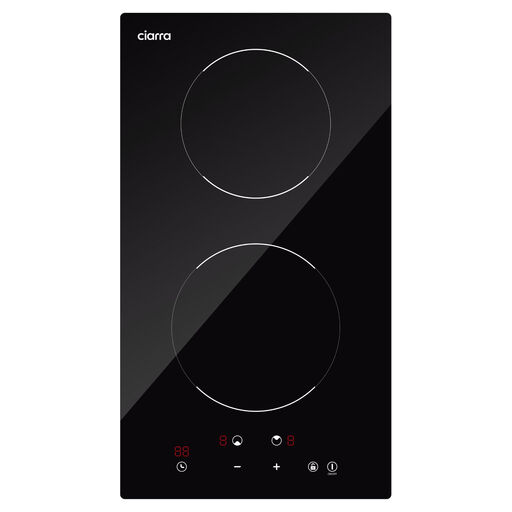 No image available
This narrower built-in option has two zones, so check whether it leaves enough room for the other family-meal pans. Its named features include nine power levels and a timer; confirm how its low settings operate, along with saucepan and installation fit.
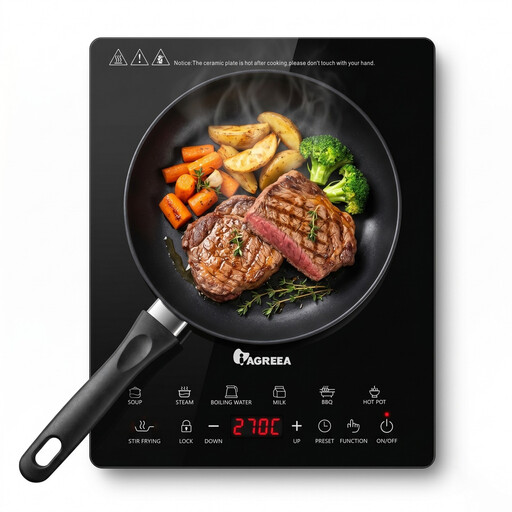 No image available
This portable, single-area cooker could hold the pudding pan, but other dishes would need another cooking area. The title specifies 2,000 W, eight power levels, a timer of up to three hours and suitable cookware measuring 12–26 cm; check pan compatibility, low-setting behaviour and connection instructions.
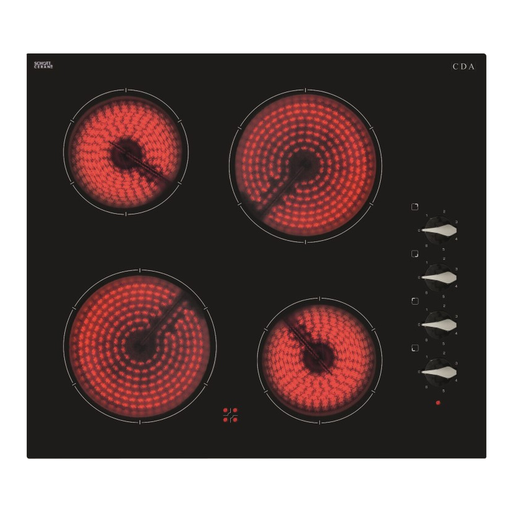 No image available
This four-zone ceramic option is worth considering if you want to keep a saucepan that is unsuitable for induction while cooking other dishes. Confirm the exact model’s low-setting controls, timer provision and installation instructions before ordering.
Only if the saucepan is suitable for induction. Bosch’s induction guidance explains that heat is generated directly in the cookware; check the pan’s marking or its manufacturer’s guidance before choosing an induction hob.
Not necessarily: a round saucepan may fit an appropriately sized standard zone. Consider a combined or bridge zone if your cookware is unusually wide or long, or its placement interferes with other pans; Bosch and AEG specify these functions on particular models.
No. Good Food’s stovetop instructions call for low heat and frequent stirring to prevent sticking or burning. NEFF says automatic shut-off on its hobs responds to extended operation without setting changes, with timing dependent on power level; it does not stir or monitor the pan.
Check the model’s cut-out dimensions and electrical connection instructions, then discuss the proposed work with a competent installer. GOV.UK’s Approved Document P provides electrical-safety guidance for dwellings in England; for Wales, Scotland or Northern Ireland, check the locally applicable requirements rather than assuming the England guidance applies.