Choose induction if your preserving pan is compatible and you want to adjust the heat promptly as chutney thickens. A ceramic hob is worth considering if keeping a non-induction pan matters more, but its glass surface retains heat; for larger batches, check the pan against the exact cooking-zone layout before choosing either type.
Who is choosing a hob?
Frequent chutney batch cook
If you make chutney regularly, you may value a usable low setting, prompt heat adjustments when the mixture thickens and a surface you can clean after sticky splashes. Induction heats the pan directly, while ceramic elements heat the glass.
Large-pan preserver
If you use a wide preserving pan, compare its base with the usable cooking area rather than relying on the hob’s overall width. Bosch describes CombiZone as combining zones, while NEFF describes its Flex Induction area as accommodating different pan sizes; the exact model and pan dimensions still matter.
Existing-cookware keeper
If you want to keep your current preserving pan, check it before committing to induction. AEG Support UK advises using iron or iron-based cookware with a flat base for induction; ceramic is an alternative to consider if your pan is unsuitable.
What matters when choosing?
Check your pan and kitchen installation first, then compare low-heat control and the cooking area available for your usual batch size.
| Concern |
What to check |
Who this matters to |
| Simmer control |
Look for usable low settings and controls you can adjust while cooking; do not treat a boost function as a simmer setting. |
When chutney thickens, I need to turn the heat down before it catches. Around 31% of consumers put controlled simmering and prompt adjustment first. |
| Large-pan fit |
Compare your pan base with the exact zone layout and the model’s supported pan sizes. |
For larger batches, I need a cooking area that suits my preserving pan rather than just a wide hob. Roughly 25% of consumers make pan fit their primary concern. |
| Cookware compatibility |
Test the actual pan base for induction suitability and check the hob manufacturer’s cookware guidance. |
I would rather keep my existing pan than choose a hob it cannot use. About 19% of consumers put cookware compatibility first. |
| Kitchen installation |
Check the worktop cut-out, electrical load and whether the exact model is plug-in or hardwired. |
Before changing hobs, I need one that fits my worktop and can be connected appropriately. Around 25% of consumers prioritise installation fit. |
Mistakes to avoid
-
Assuming every electric hob will work with your pan
An induction hob needs suitable cookware; a favourite preserving pan may not work if its base is not appropriately magnetic and flat.
Test the actual base with a magnet, then check the chosen hob’s guidance on pan dimensions.
-
Choosing by hob width alone
Hobs of the same overall width can have different zone layouts. A wide pan may not match the usable area of an individual zone.
Measure the pan base and compare it with the exact model’s zone layout before relying on a combi or flex feature.
-
Assuming every hob is plug-in
Connection requirements differ by model: Bosch markets its PUG61RAA5B as Plug & Play, while AEG specifies a hardwired connection for the HK614000CB.
Check the installation instructions and kitchen circuit before ordering. Electrical Safety First recommends using a registered electrician for electrical work.
-
Wiping a ceramic zone before it has cooled
A ceramic hob heats the glass, which can retain heat after you lower the setting or switch it off.
Heed any residual-heat indicator and let the zone cool before cleaning chutney splashes or placing jars and cloths nearby.
Brands to consider
Bosch
Models to compare if you are considering standard induction, a combined-zone layout or a plug-in design.
- Bosch describes CombiZone on the PWP611BB5B as combining two cooking zones and markets the PUG61RAA5B as Plug & Play.
- Check the connection type and usable zone layout of the particular model; those features are not shared by every Bosch hob.
NEFF
Relevant when the footprint of a larger preserving pan makes a flexible induction area worth investigating.
- NEFF describes its Flex Induction area as accommodating pans of different sizes within that area.
- Confirm the chosen model’s flex-area dimensions and cookware guidance against your pan.
AEG
Its HK614000CB provides a ceramic example to compare with induction when keeping existing cookware matters.
- AEG specifies four zones in three sizes and residual-heat indicators for the HK614000CB.
- That model requires a hardwired connection, and its ceramic surface needs time to cool after use.
Joybuy hob choices
These choices cover built-in induction and ceramic hobs, plus a portable induction cooker. Match the cooking area to your preserving pan and check the installation or connection requirements for the model you prefer.
 No image available
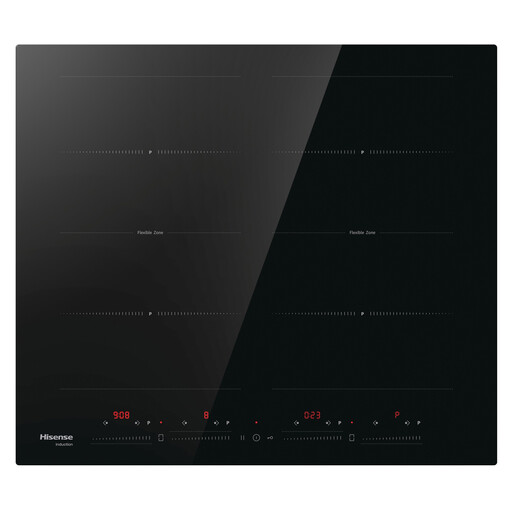
Hisense HI6442BSCE 60cm induction hob with Area Flex
Consider this built-in induction hob for a larger chutney pan if its Area Flex cooking space suits the pan base. Check the usable dimensions, induction cookware compatibility, worktop cut-out and electrical requirements before choosing it.
Joybuy
 No image available
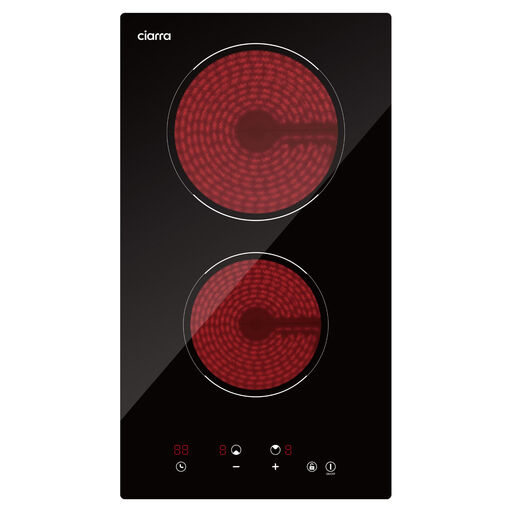
CIARRA CBBCH292T two-zone built-in ceramic hob
This ceramic option is worth examining if keeping a current pan and fitting a narrower built-in hob are priorities. Its title specifies 2900W, nine power levels, touch controls, a timer and a child lock; check the pan-size guidance, cookware instructions, cut-out and electrical connection before ordering.
Joybuy
 No image available
ochama 2000W portable induction cooker
Consider a portable cooking unit if a built-in hob is not what you need. The product title specifies ten power settings and touch controls; check that your pan is induction-compatible, fits the cooking surface and meets the unit’s connection requirements.
Joybuy
 No image available
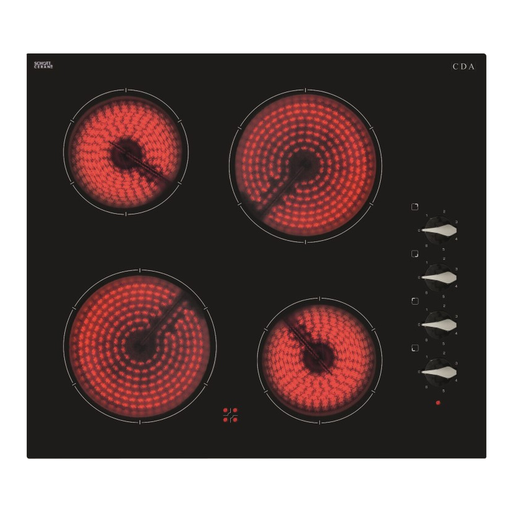
CDA HC6212FR 60cm four-zone ceramic hob
This built-in ceramic hob is an option to examine if retaining non-induction cookware matters. Compare your preserving pan with the individual zones, confirm the worktop fit and electrical connection, and allow the glass to cool before cleaning after a batch.
Joybuy
Common questions
Will my preserving pan work on an induction hob?
It will work only if it is suitable for induction and meets the hob’s pan-size guidance. AEG Support UK advises an iron or iron-based pan with a flat base; test your actual pan base with a magnet and check the pan manufacturer’s guidance if you are unsure.
Can I plug any electric hob into a socket?
No: the connection depends on the model and your kitchen circuit. Bosch markets the PUG61RAA5B as Plug & Play, whereas AEG specifies that the HK614000CB is hardwired; check the installation instructions, and use a registered electrician where electrical work is needed.
Can I wipe a ceramic hob as soon as I turn it down?
Wait until the cooking zone has cooled. Ceramic elements heat the glass, so lowering the setting does not immediately remove the heat; heed any residual-heat indicator before cleaning splashes or putting items near the zone.


