For a flat, magnetic stockpot, an induction hob is a sensible starting point if its cooking zone fits the pot base: it offers responsive heat adjustment after the stock comes to the boil. Choose ceramic if keeping non-magnetic pans matters more; for a wide or oval pot, consider induction only where the exact model has a suitable bridge or flexible area. Whichever route you choose, check the worktop opening and electrical requirements before buying.
Who each choice suits
Frequent stock makers with induction-ready cookware
If you regularly bring stock to the boil and then reduce it to a gentle simmer, induction is worth considering when your pot has a flat, magnetic base that fits the model’s stated cooking-zone sizes.
Small-kitchen replacement buyers
If an existing built-in hob is being replaced, measure the worktop opening and check clearances and the electrical supply before choosing cooking features. A hob’s advertised width does not establish its installation fit.
Cooks using wide or awkwardly shaped pots
If your stockpot has a wide or oval base, compare its flat contact area with the stated cooking area. A bridge or flexible zone may be more relevant than the number of separate zones.
What matters when choosing
Decide whether cookware compatibility or the pot’s shape points you towards a particular hob type, then check the exact model against the worktop and electrical installation.
Standard-zone induction
Consider it when: Your flat, magnetic stockpot fits a stated zone and you want responsive heat adjustment after boiling.
Keep in mind: Four separate zones do not establish that a wide or oval pot will fit a usable cooking area.
Bridge or flexible-zone induction
Consider it when: Your pot’s flat base needs the larger cooking area that the exact model says its zones can form.
Keep in mind: A combined zone does not remove the need to check cookware dimensions and installation fit.
Ceramic electric
Consider it when: Keeping non-magnetic cookware matters most; Bosch’s UK guidance distinguishes ceramic from induction on this point.
Keep in mind: The surface remains hot after switch-off, and simmering performance should be assessed for the particular hob.
| Concern |
What to check |
Who this matters to |
| Boiling and simmering |
Look beyond a boost setting: check the exact hob’s heat controls and independent simmering assessments where available. |
If I make stock often, I want to turn the heat down reliably once it boils. Around 31% of consumers put boiling and simmer control first. |
| Worktop and electrical fit |
Compare the installation drawing with the opening and clearances; check the connection method and electrical loading. |
When replacing a built-in hob, I need it to fit the kitchen and its electrical arrangement before its cooking features matter. For around 25% of consumers, installation fit is the primary concern. |
| Stockpot and zone fit |
Measure the pot’s flat base and compare it with the stated zone or combined-area dimensions. |
My wide or oval stockpot needs a cooking area suited to its base, not just a hob with four zones. Around 25% of consumers place pot and zone fit first. |
| Existing cookware |
Test the stockpot’s base with a magnet before choosing induction; consider ceramic if important pans are non-magnetic. |
I want to keep using the pans I own rather than change cookware to suit a new hob. Keeping existing cookware is the first priority for around 19% of consumers. |
Mistakes to avoid
-
Ordering induction without checking the stockpot
Induction needs a magnetic cookware base, and the pot must suit the model’s stated zone sizes. An unsuitable pot may need replacing.
Test the flat base with a magnet and compare its dimensions with the exact hob manual before ordering.
-
Assuming every 60 cm hob fits the same opening
The advertised width is not the required cut-out. A mismatch may mean worktop alteration or a different hob choice.
Measure the existing opening, worktop depth and available clearances, then compare them with the model’s installation drawing.
-
Counting zones instead of measuring the pot base
Four separate round zones do not necessarily provide an area suited to a wide or oval stockpot.
Measure the pot’s flat base and check whether the manufacturer states that a bridge or flexible area accommodates its shape and size.
-
Assuming the hob plugs into an existing socket
Connection requirements differ by model. AEG specifies a hardwired-only connection for its TO64IA00FB, so the kitchen’s supply needs checking before purchase.
Check the chosen model’s connection instructions and electrical loading, and arrange a qualified assessment where needed.
Circuit assessment or installation work can add a separate task to the replacement.
Brands to consider for these hob types
Bosch
Bosch offers guidance on induction and ceramic cookware compatibility. Its Series 4 PUE611BB5E is a four-zone induction example measuring 592 × 522 mm overall.
- Bosch lists TouchControl, a child lock and PowerBoost for the PUE611BB5E.
- That model is described with ring zones; do not assume it has a bridge area for an oval pot.
AEG
AEG provides installation dimensions for its 60 cm induction models and offers both standard-zone and bridge-zone examples.
- AEG specifies a 560 × 490 mm cut-out and hardwired connection for the TO64IA00FB; it states that the SO64IB0BFZ can combine two zones.
- The bridge function does not establish that a particular pot or existing electrical installation is suitable; check the chosen model’s requirements.
Samsung
Samsung’s NZ64B5066KK/U1 is a Dual Flex Zone induction model to consider when the cookware base is large or unusually shaped.
- Samsung describes two rectangular flexible areas intended to accommodate a range of cookware sizes and shapes, including long dishes.
- Check the usable cooking-area dimensions against your stockpot; a model’s flexible-zone name alone does not establish fit.
Joybuy product choices
These hob choices cover flexible-zone induction, standard-zone induction and a ceramic option. Compare each one with your stockpot, worktop opening and electrical arrangement rather than treating the advertised width as an installation measurement.
 No image available
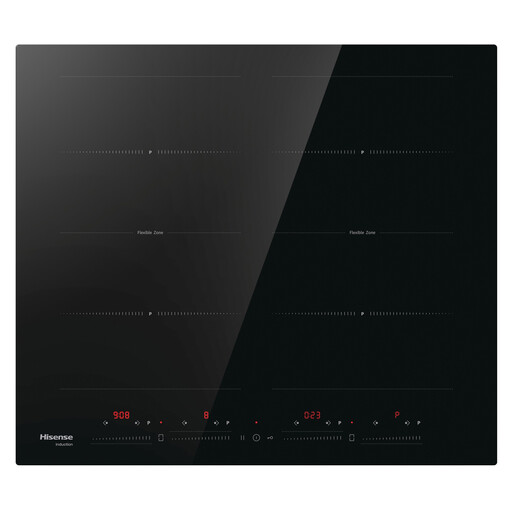
Hisense HI6442BSCE 60 cm induction hob with Area Flex
Consider this induction model if you want to assess a flexible cooking area for a larger stockpot.
Compare the pot base with the usable Area Flex dimensions, and confirm the cut-out and electrical requirements before choosing it.
View on Joybuy
 No image available
Bosch PIE631BB5E Series 4 60 cm induction hob
Consider this hardwired induction model if your magnetic stockpot suits a standard cooking zone.
Check the permitted pot-base sizes and installation dimensions, and have the electrical connection assessed for the kitchen.
View on Joybuy
 No image available
Hoover HI642BCB 60 cm four-zone induction hob
This is a standard-zone induction choice for a magnetic stockpot that fits one of its cooking zones.
Compare your worktop opening with the model’s installation requirements, and check zone sizes and electrical loading before ordering.
View on Joybuy
 No image available
Ciarra built-in 60 cm four-zone induction hob
Consider this built-in induction model if you are matching a magnetic stockpot to a standard zone.
Confirm the cookware limits for the individual zones and check the installation instructions against the worktop and electrical supply.
View on Joybuy
 No image available
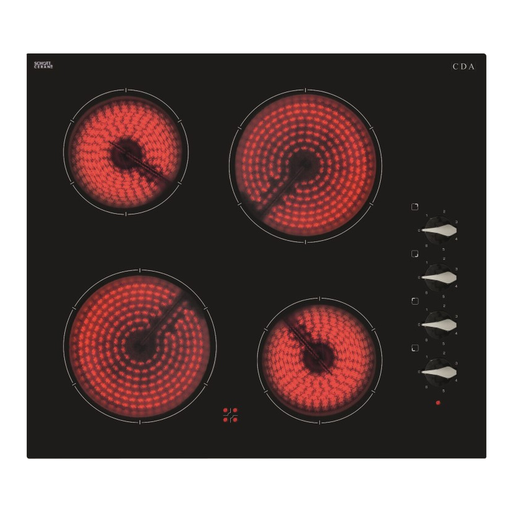
CDA HC6212FR frameless four-zone ceramic hob
Consider this ceramic model if keeping non-magnetic cookware is more important to you than choosing induction.
Confirm the exact model’s dimensions, worktop cut-out and electrical requirements, and assess whether its heat control meets your simmering needs.
View on Joybuy
Common questions
Will my existing stockpot work on an induction hob?
It can work if its base is magnetic and suits the hob’s stated cookware dimensions. AEG recommends checking the base with a magnet; also compare the pot’s flat base with the exact model’s zone-size guidance.
Should I choose induction or ceramic for frequent stock making?
Choose induction if your pot is compatible and responsive heat adjustment is a priority; consider ceramic if keeping non-magnetic pans matters more. Bosch’s UK guidance distinguishes the two by cookware compatibility, while simmering performance still needs to be judged for the particular hob.
Will any 60 cm hob fit my existing worktop opening?
No: advertised width does not specify the cut-out. AEG’s TO64IA00FB, for example, measures 590 × 520 mm overall but specifies a 560 × 490 mm built-in opening. Measure the worktop and compare it with the installation drawing for the exact model.
What should I check before arranging a replacement hob installation?
Check the chosen hob’s connection method, electrical loading and installation instructions alongside the existing supply. Some models require a hardwired connection; ask a qualified installer to assess the proposed work and the requirements that apply where the property is located.


