
24/7 Customer Support

Free returns

Same-day & Next-day Delivery

Quality Guaranteed

Unlock Your Welcome Offers: FREE Delivery | Up to 80% OFF | Free 30-day JoyPlus trial
Download the APP
An induction hob promises a faster, safer and more energy-efficient way to cook. Yet, many UK households find their new appliance falls short of expectations. The market is filled with technical jargon and features that sound impressive but can lead to buyer's remorse. Before you commit, it's crucial to understand the common pitfalls that can turn a kitchen upgrade into a costly mistake.
As a Joybuy Product Recommendation Officer, my role is to help you navigate these choices with clarity, focusing on the practical details that matter for everyday use in a British kitchen.
Many shoppers are drawn in by appealing marketing claims, only to be disappointed by the reality. Here are three frequent issues to watch for:
easy clean hob is a major selling point. While it's true that spills don't bake on as they do with ceramic hobs, the design of the controls and edges makes a huge difference. Hobs with raised bezels or physical buttons can trap grease and food particles, making them difficult to clean properly. Similarly, overly sensitive or poorly laid-out touch controls can be a daily annoyance.To ensure your new hob meets your cooking needs, focus on these three non-negotiable specifications.
This is the single most important decision and dictates the hob's performance.
Consider the type of cookware you use most often.
While most people look for a built-in induction hob, other options exist.
We've matched some models to common user profiles to help you find a suitable fit.
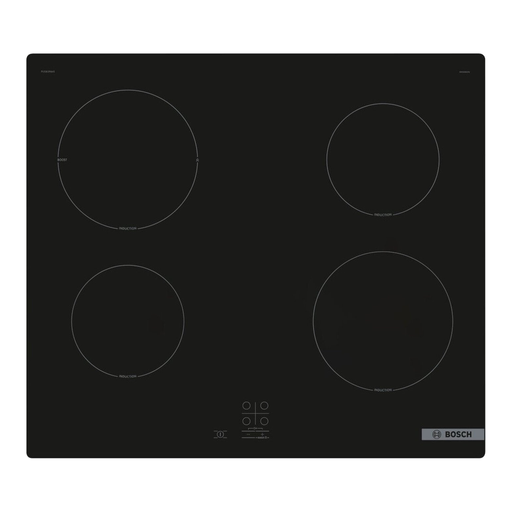
Why This Fits Their Persona: This model is designed for maximum convenience. It comes with a pre-fitted 13A UK plug, eliminating the cost and hassle of hiring an electrician, making it a great choice for renters or those undertaking a straightforward kitchen refresh.
It directly addresses the 'Plug and Play' power cap pitfall with an intelligent Power Management system. This feature clearly manages the 3.0kW load, setting realistic expectations for performance when multiple zones are active.
Installation is as simple as fitting it into the worktop and plugging it in. It also includes a PowerBoost function for rapid heating on a single zone.
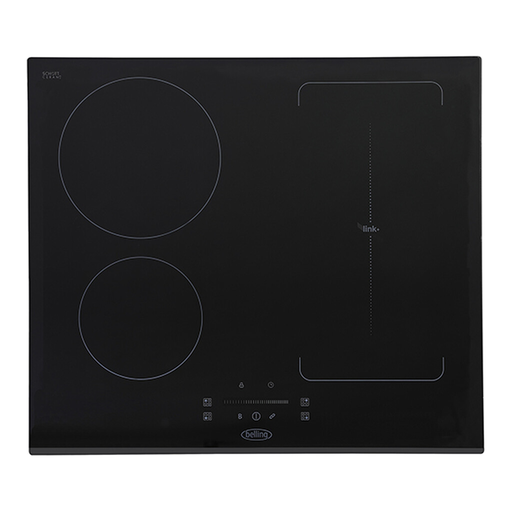
Why This Fits Their Persona: For the cook who wants to do more than just boil and simmer. This hardwired hob delivers high power (7.4kW) and the versatility needed for more adventurous cooking, fitting into a standard 60cm space.
It solves the restrictive nature of fixed zones with its Link+ flexible cooking area. This allows two zones to be combined, providing even heat for griddle pans or large pots, directly countering the 'uneven heating' pitfall.
High total power output and a dedicated bridge zone for flexible cooking. The slider touch controls are intuitive and the Schott Ceran glass is durable and genuinely easy to clean.

Why This Fits Their Persona: Perfect for those who don't need a full built-in hob. Its ultra-thin, lightweight design makes it ideal for small kitchens, student accommodation or as an extra cooking surface for parties. It offers the benefits of induction without the permanent installation.
This is a dedicated portable induction hob, not a compromised built-in model. It delivers up to 2000W to a single zone, providing ample power for boiling and frying without the power-sharing issues of a 13A multi-zone hob.
No installation required, just plug it in. It features multiple power levels, preset cooking functions and a timer, offering great control in a compact and storable format.
We have compiled a complete, real-time list of products that fully satisfy these strict selection criteria and UK safety regulations.
1. Do I need to buy special pans for an induction hob? Yes, you do. Induction hobs work by creating a magnetic field that heats the pan directly. Therefore, your cookware must have a ferromagnetic base. A simple way to check your existing pots and pans is to see if a magnet sticks firmly to the bottom. If it does, it will work on an induction hob. Cast iron, enamelled iron and many types of stainless steel cookware are compatible.
2. Is an induction hob cheaper to run than gas or ceramic? Generally, yes. Induction cooking is the most energy-efficient method. According to studies by organisations like the Electric Power Research Institute, induction technology transfers around 85-90% of its energy to the food in the pan. This compares to about 75-80% for a ceramic hob and only 40-55% for a gas hob, where a significant amount of heat is lost to the surrounding air. This efficiency can translate to lower energy bills over the appliance's lifetime.
3. How long should an induction hob last? The lifespan of an induction hob can vary depending on the brand, build quality and usage. Most are designed to last for many years, often measured in operating hours rather than just years. A well-regarded model from a reputable manufacturer, properly installed and cared for, can reasonably be expected to provide reliable service for a decade or more. Key components like the ceramic glass top (e.g., Schott Ceran) are very durable, but the electronic components are what ultimately determine the appliance's longevity.