
24/7 Customer Support

Free returns

Same-day & Next-day Delivery

Quality Guaranteed

Unlock Your Welcome Offers: FREE Delivery | Up to 80% OFF | Free 30-day JoyPlus trial
Download the APP
Switching to an induction hob can transform your kitchen experience, offering speed, safety and energy efficiency. However, the market is filled with technical jargon and features that can be misleading. Many UK households invest in a new hob only to face disappointment from power limitations or features that don't live up to their marketing.
As a Joybuy Product Recommendation Officer, my role is to help you see past the hype. Before you commit, let's look at the common pitfalls that can lead to a poor purchase.
To ensure your new hob meets your daily cooking needs, focus on these core specifications rather than just the marketing claims.
This is the most critical decision and dictates the hob's overall power and performance.
The right layout can make all the difference in your daily cooking workflow.
These are not luxuries; they are fundamental for a safe and user-friendly experience.
We've matched some models to different user needs, helping you find a hob that aligns with your lifestyle and avoids the common traps.
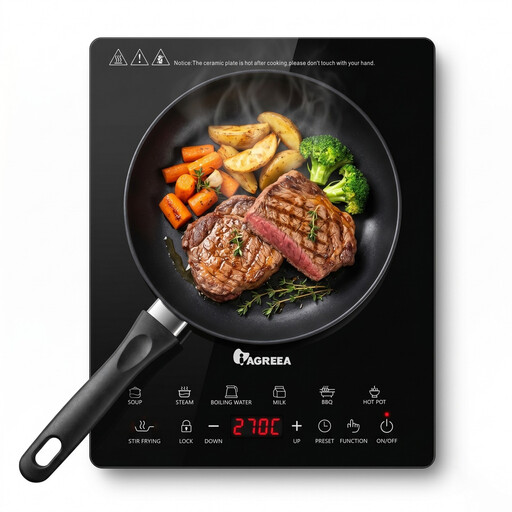
Why This Fits Their Persona: This ultra-thin portable induction hob is ideal for those in rental properties, student accommodation or with limited kitchen space. It provides a powerful 2000W cooking zone without any permanent installation, and its compact size makes it easy to store away when not in use.
As a single-zone unit, there is no misleading "power sharing" issue. You get the full advertised power for one pan, making it a straightforward and honest cooking solution.
Features 8 power levels, a 3-hour timer and a child safety lock, offering precise control and safety features not always found on portable models.
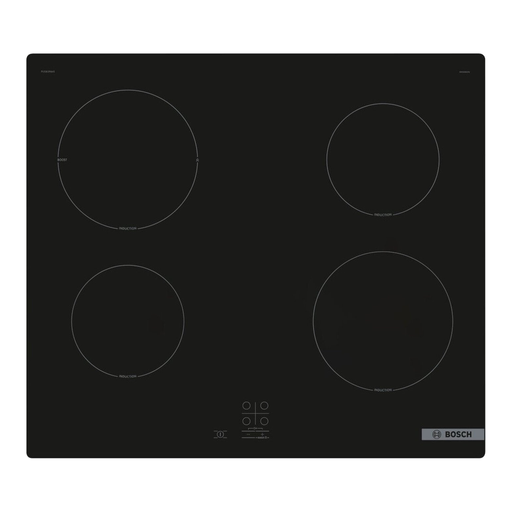
Why This Fits Their Persona: Perfect for those wanting the benefits of a built-in induction hob without the cost and hassle of hiring an electrician. This Bosch induction hob fits a standard 60cm space and comes with a 13A plug for straightforward DIY installation.
This model is transparent about its power handling. It includes an intelligent Power Management system that ensures it operates safely within the 13A limit, avoiding the trap of unexpected power throttling.
Features a PowerBoost function for rapid heating and QuickStart for automatic pan recognition, bringing premium features to the convenient plug-and-play format.
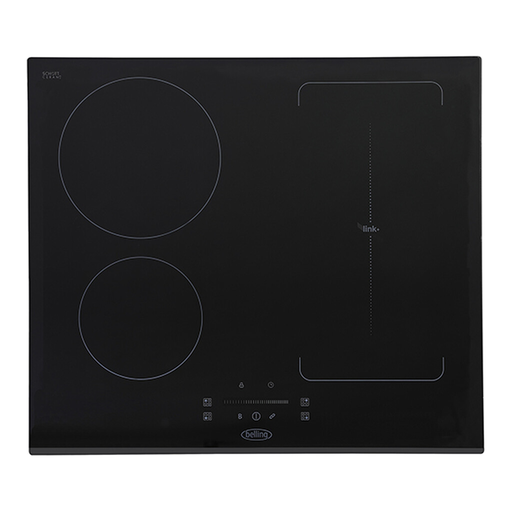
Why This Fits Their Persona: This hardwired Belling induction hob is for the serious cook who needs power and genuine flexibility. Its Link+ feature creates a true bridge zone, perfect for accommodating large griddle pans or fish kettles for more adventurous cooking.
It delivers a genuine flexible cooking area, avoiding the "illusion" trap. The Link+ technology ensures even heating across the entire bridged surface, unlike models that just group two small zones.
The high total power load (7.4kW) and boost mode on all four zones provide the raw power needed for rapid boiling and searing. The durable Schott Ceran glass is designed for longevity.
We have compiled a complete, real-time list of products that fully satisfy these strict selection criteria and UK safety regulations.
Yes, absolutely. You must use induction hob pans with a ferromagnetic base. An easy way to check your existing cookware is with a fridge magnet. If the magnet sticks strongly to the bottom of the pot or pan, it will work on an induction hob. Materials like cast iron (such as this Guihe Enamelled Cast Iron Pot), carbon steel (like this MAXCOOK Carbon Steel Wok) and magnetic stainless steel are all suitable. Aluminium, copper and glass cookware will not work unless they have a specific magnetic plate bonded to the base.
In general, induction hobs are more energy-efficient than both gas and ceramic hobs. This is because the electromagnetic field heats the pan directly, with very little energy wasted heating the surrounding air or the glass surface itself. According to the Energy Saving Trust, induction is around 84% efficient, compared to 74% for ceramic and only 40% for gas. While your exact savings will depend on your usage and local energy tariffs, the technology itself is designed to use less energy to achieve the same, or faster, cooking results.
A well-maintained induction hob from a reputable manufacturer can be expected to last for a considerable time, often between 2,500 and 10,000 cooking hours. For a typical UK family, this translates to a lifespan of 10 to 15 years. Longevity depends on factors like the quality of the internal components, proper installation with adequate ventilation to prevent overheating and careful use (e.g., not dropping heavy items on the glass). Cleaning the black glass hob surface with appropriate non-abrasive cleaners will also help maintain its condition.