
24/7 Customer Support

Free returns

Same-day & Next-day Delivery

Quality Guaranteed

Unlock Your Welcome Offers: FREE Delivery | Up to 80% OFF | Free 30-day JoyPlus trial
Download the APP
An induction hob can make everyday cooking faster, quieter and easier to clean, but choosing the wrong model can create expensive problems. UK shoppers need to compare more than appearance and wattage: installation requirements, pan compatibility, zone layout and electrical load all affect whether a hob suits the home.
As the Joybuy Product Recommendation Officer, I focus on practical specifications rather than broad marketing promises. The following guide explains the common buying traps, the measurements worth checking and which types of induction hob match different households.
Induction uses a magnetic field, so aluminium, copper, glass and some stainless-steel pans may not heat unless they have a ferromagnetic base. A simple magnet test on the underside of a pan can help: if it sticks firmly, the pan is more likely to be compatible.
Also check the recommended pan diameter. A hob may recognise a pan but heat less evenly if it is substantially smaller or larger than the marked cooking zone.
A model advertised as a 2000W induction cooker may be suitable for boiling, frying and simmering on one portable zone. However, a built-in hob with several zones may share its total electrical load between zones.
Boost functions can temporarily increase heat on a selected zone, but they are not designed to run continuously. Check the product’s power-management features and electrical requirements before ordering.
A portable induction cooker normally plugs into a suitable socket and can be stored when not in use. A built-in induction hob, by contrast, needs accurate worktop cut-out dimensions, ventilation and an appropriate electrical connection.
Several built-in models in this guide specify installation by a qualified electrician. Do not assume that a standard plug is suitable for a hardwired appliance, and check the manufacturer’s instructions before cutting the worktop.
A 2-zone induction hob can suit a studio flat, student accommodation, small kitchen or occasional-use set-up. A 29cm model takes less worktop space and can still support two pans at once.
A 60cm induction hob generally provides four zones and is a familiar replacement size for many UK kitchens. Measure the existing cut-out rather than relying only on the advertised width. For example, several 590mm-wide models use a cut-out of approximately 560mm by 490mm.
A 4-zone induction hob is useful for family meals and batch cooking, but it needs more worktop space and may require a higher-rated electrical connection.
Look for clearly stated power levels, zone outputs and timer settings. A touch control induction hob is easy to wipe clean because there are fewer raised controls, while slider controls can make heat adjustment quicker.
An induction hob with booster can provide a short burst of additional power for boiling water or heating a large pan. An induction hob with timer can switch a zone off after a selected period, although it should not replace supervision.
Portable models such as the IAGREEA DF200-14V10 provide 100W–2000W adjustment, eight power levels, temperature control from 60°C to 270°C and a timer of up to three hours. These settings are useful where one cooking surface needs to handle several different tasks.
Useful features include pan detection, no-pan shut-off, residual heat indicators, overheat protection and a child lock. A child-safe induction hob should still be supervised around children, as the cookware and glass surface can remain hot after cooking.
A black glass induction hob is straightforward to wipe clean, but cracked or damaged glass should not be used. Keep ventilation openings clear on portable appliances and follow the required clearance around built-in models.
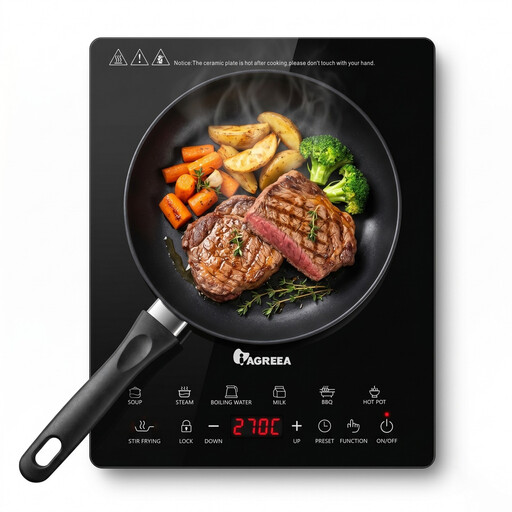
Why This Fits Their Persona: A practical option for tenants, students, small kitchens or anyone needing an additional cooking surface without permanent installation.
Its cookware range is clearly stated as 12–26cm, while no-pot detection and auto shut-off reduce the risk of leaving an empty surface switched on.
2000W output, eight power levels, seven preset functions, a three-hour timer and a 44.5mm-thick portable design.
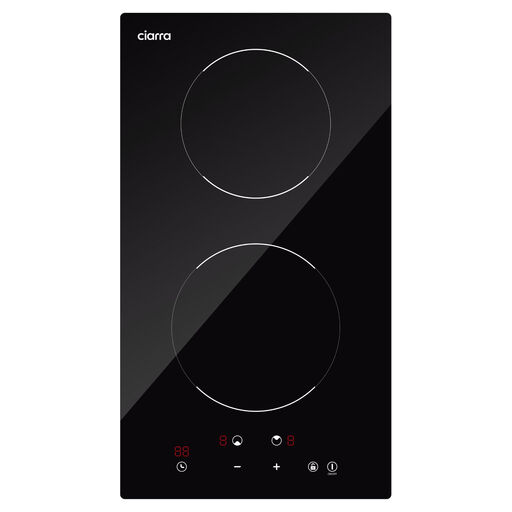
Why This Fits Their Persona: Its compact built-in format suits flats and kitchens where a full-width hob would reduce valuable preparation space.
The cut-out size, 16A fuse specification and pan-size references are listed, helping buyers check compatibility before installation.
Two independent zones, nine power levels, individual timers and child lock, residual heat and overflow protection.
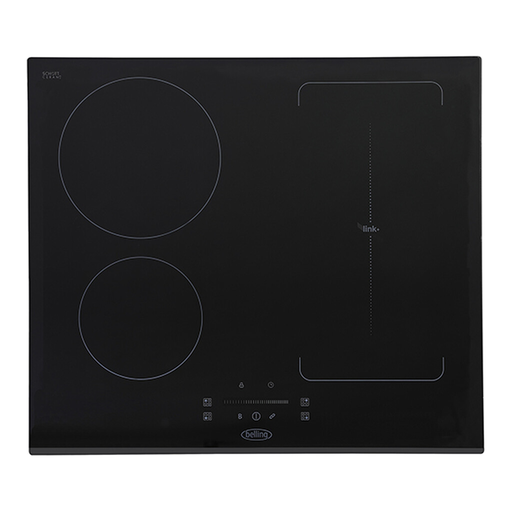
Why This Fits Their Persona: A full-size built-in choice for homeowners seeking four-zone cooking, a durable glass surface and flexible zone use.
The 560mm by 490mm cut-out and 25A fuse requirement are stated, so installation planning is clearer than relying on the 60cm label alone.
Four zones, boost on each zone, nine power levels, slider touch controls and a bridge function for larger pans.
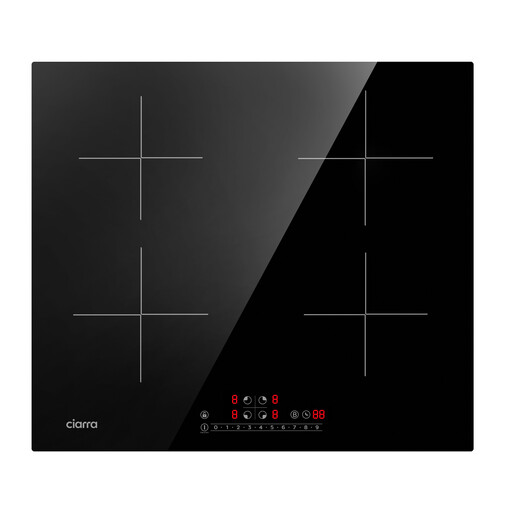
Why This Fits Their Persona: Four independent zones and a 7200W total rating provide a layout for preparing several dishes at once.
Its 32A rated fuse and 560mm by 490mm cut-out are specified, making the electrical and cabinet checks visible before purchase.
Nine power levels, individual 99-minute timers, booster function, pan detection and child lock.
We have compiled a complete, real-time list of products that fully satisfy these strict selection criteria and UK safety regulations.
Running cost depends on the appliance’s power, cooking time, electricity tariff and how efficiently heat reaches the pan. Induction heats compatible cookware directly, which can reduce wasted heat compared with some conventional electric hob designs. It is not possible to guarantee a fixed saving for every household, so compare rated power and your typical cooking habits.
Built-in models commonly require hardwiring, suitable ventilation and a correctly sized fuse or circuit. Follow the product instructions and arrange installation by a qualified electrician where specified. Check the worktop cut-out before ordering, particularly when replacing an existing electric hob.
Lifespan varies according to construction, installation, cleaning and frequency of use. Avoid abrasive cleaners, do not use a hob with cracked glass and keep portable appliance vents clear. Choosing a model with clearly stated safety functions, warranty information and replacement support can help with longer-term ownership planning.