
24/7 Customer Support

Free returns

Same-day & Next-day Delivery

Quality Guaranteed

Unlock Your Welcome Offers: FREE Delivery | Up to 80% OFF | Free 30-day JoyPlus trial
Download the APP
Choosing an induction hob involves more than comparing wattage and the number of cooking zones. A model that looks suitable online may not fit your worktop, support your existing pans or work safely with your kitchen’s electrical supply.
This guide explains the practical checks UK homeowners, tenants, students and landlords should make before buying. It also matches several options to different cooking needs, from a compact portable induction cooker to a four-zone built-in system.
Induction heating requires a magnetic connection between the hob and the cookware. Aluminium, copper, glass and some stainless-steel pans may not heat unless they have a ferromagnetic base.
Before ordering, place a magnet against the underside of your pan. If it attaches firmly, the pan may be suitable, although the hob’s stated diameter and base requirements must also be checked. A flat base is important for stable contact and even heating.
A 2000W induction cooker generally plugs into a standard socket, making it convenient for rented rooms, student accommodation and occasional extra cooking capacity. Built-in appliances can draw considerably more power.
For example, the Ciarra four-zone model is listed at 6000W and specifies a 32A rated fuse, while the compact two-zone 2900W model lists a 16A rated fuse. These figures are not interchangeable with a plug-in portable appliance. A built-in hob should be connected according to the manufacturer’s instructions and installed by a qualified electrician where required.
A smooth glass surface is simpler to wipe than exposed gas burners, but spills can still bake onto a hot panel. Check whether the controls are clearly separated from the cooking zones, whether residual heat is indicated and whether the panel has a suitable protective design.
Touch controls are convenient, but they should respond reliably and include a lock function if children are present. A child-lock induction hob can help prevent accidental button presses, but it does not remove the need for supervision around hot cookware.
A portable model is suitable when you need flexibility, live in rented accommodation or want an additional cooking surface. Measure both the available worktop and storage space. The IAGREEA portable model is listed as only 44.5mm thick, while the ochama portable induction hob also uses a slim design intended for straightforward storage.
A built-in induction hob creates a more integrated kitchen appearance but needs a correctly sized cut-out, ventilation clearance and suitable electrical provision. Do not assume that a 60cm hob fits every 60cm worktop opening. Check the manufacturer’s specified cut-in dimensions.
A 2-zone induction hob can suit one- or two-person households, compact kitchens and landlords furnishing smaller properties. A 4-zone induction hob gives more flexibility for preparing several pans at once, but it usually requires more installation space and a higher-rated electrical connection.
The Ciarra four-zone model measures 590 × 520 × 62mm and requires a 560 × 490mm cut-in. By comparison, the two-zone Ciarra induction model measures 290 × 520 × 50mm, with a 260 × 490mm cut-in. Always compare these figures with your worktop before purchasing.
Higher wattage can support faster heating, but the result also depends on pan size, ingredients and how power is distributed between zones. A 2900W induction hob is a practical middle ground for compact built-in kitchens, while a 6000W induction hob is designed for a larger multi-zone setup.
Look for adjustable power levels rather than relying only on the maximum figure. The portable IAGREEA model provides eight power levels from 100W to 2000W, temperature settings from 60°C to 270°C, seven preset functions and a timer of up to three hours. The Ciarra built-in models provide nine power levels and individual timers, with the 29cm induction version offering a timer range of up to 99 minutes.
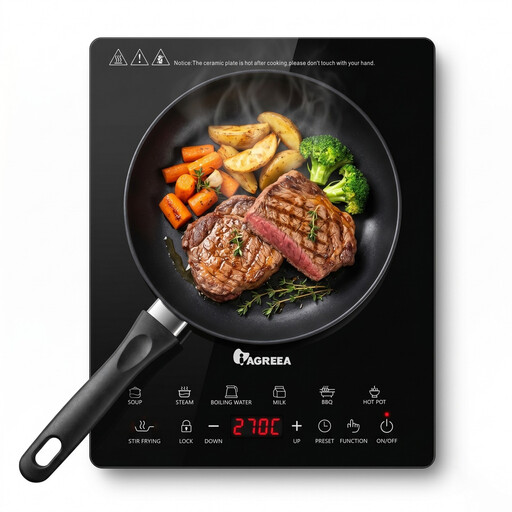
Why This Fits Their Persona: A practical option for tenants, students, offices or households needing one additional cooking zone without modifying a worktop.
Its portable format avoids the hidden installation costs associated with built-in models. It also specifies compatible magnetic cookware from 12–26cm.
2000W output, eight power levels, seven preset functions, a three-hour timer and child safety lock.
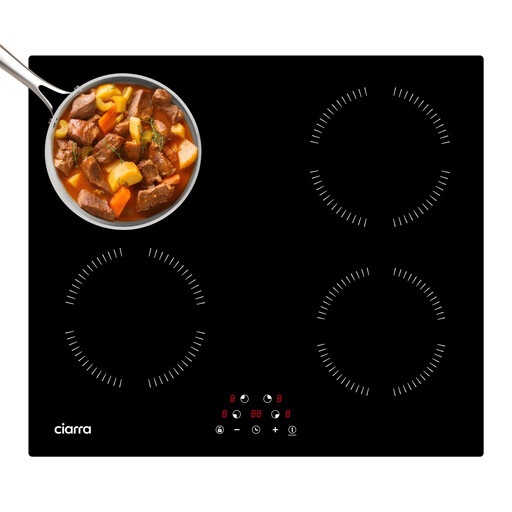
Why This Fits Their Persona: Suitable for kitchen renovators and homeowners who regularly use several pans and want an integrated 60cm cooking surface.
The listing clearly states the cut-in dimensions, 32A rated fuse and four-zone layout, helping buyers assess installation requirements before ordering.
6000W total power, nine power levels, individual 99-minute timers, automatic pan detection and residual-heat indication.
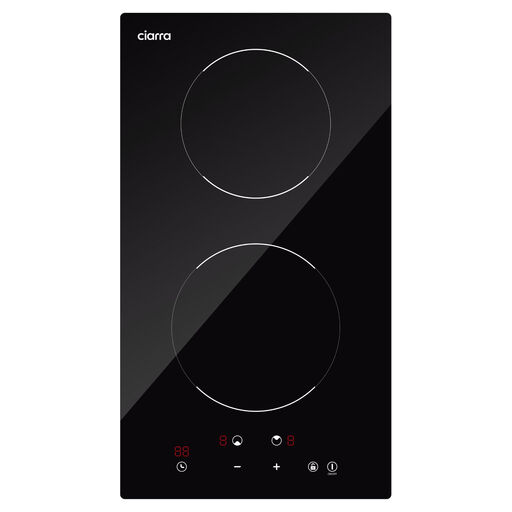
Why This Fits Their Persona: Its narrow built-in format is suited to smaller flats, compact worktops and kitchens where a full-width hob would take up too much space.
The listed 260 × 490mm cut-in size and 16A rated fuse make it easier to compare with an existing compact installation.
Two independent zones, 2900W total power, touch control, nine power levels, pan detection and child lock.
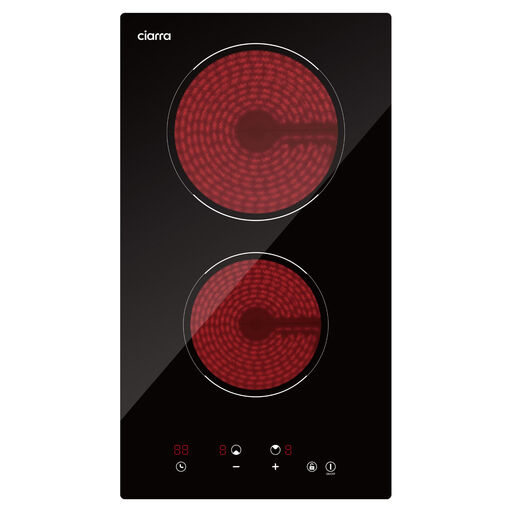
Why This Fits Their Persona: A useful alternative for buyers who want a built-in electric cooktop but do not want to replace aluminium, glass or other non-magnetic pans.
A ceramic hob avoids the magnetic cookware restriction found with induction, although the glass surface can remain hot after switching off.
Two zones, 2900W output, nine power levels, touch control, child lock and residual-heat indicator.
Induction hobs transfer heat through the pan rather than heating a visible element, but electricity use depends on cooking time, selected power and the appliance’s efficiency. A lower maximum wattage does not automatically mean lower total cost if you need to cook for longer.
For a portable cooker, use a suitable, undamaged UK socket and keep ventilation openings clear. For built-in models, check the 220–240V, 50–60Hz specification, required fuse rating and cabinet clearance. Confirm whether the appliance needs a dedicated circuit before purchase, and arrange professional installation where instructed.
A ceramic hob may be more accommodating with cookware, while induction generally offers quicker direct pan heating and automatic pan detection. The right choice depends on your existing pans, installation capacity and cooking routine rather than the headline wattage alone.
We have compiled a complete, real-time list of products that fully satisfy these strict selection criteria and UK safety regulations.
Yes. It needs cookware with a magnetic base, typically cast iron or magnetic stainless steel. Test existing pans with a magnet and check the hob’s stated cookware diameter before buying.
Running cost depends on the electricity tariff, cooking time, power setting and food being prepared. Induction may transfer heat directly to compatible cookware, but a product’s maximum wattage alone does not determine the final bill.
Lifespan varies with construction, frequency of use, installation quality and maintenance. Avoid using a hob with cracked glass, keep liquids away from the controls and follow the cleaning and ventilation instructions. Check the stated warranty and keep the purchase documentation for future support.