
24/7 Customer Support

Free returns

Same-day & Next-day Delivery

Quality Guaranteed

Unlock Your Welcome Offers: FREE Delivery | Up to 80% OFF | Free 30-day JoyPlus trial
Download the APP
Induction hobs offer fast, responsive cooking without open flames, but choosing the right model involves more than comparing prices and appearance. A low-cost purchase can become inconvenient if the electrical connection is unsuitable, the cooking zones do not fit your pans, or the advertised flexibility is limited in everyday use.
This guide explains the main buying pitfalls and compares suitable induction hobs for different UK households, from compact kitchens and rented homes to busy family kitchens.
A built-in induction hob may require hardwiring by a qualified electrician, particularly models with a 6kW or 7.4kW connected load. This can affect installation cost and whether the existing kitchen circuit is suitable.
Some models are designed for a standard UK 13A socket. For example, the Bosch PUG61RAA5B has a pre-fitted plug and a stated 3.0kW maximum connected load. However, it still needs an appropriate earthed socket, ventilation and a suitable worktop cut-out. Do not use an extension lead unless the manufacturer specifically permits it.
Always check the rated load, fuse requirement, connection type and installation instructions before ordering.
A 60cm induction hob is a common replacement size, but the visible width is not the only measurement that matters. Many 60cm models require a cut-out around 560 x 490mm, while a 90cm model may need a cut-out around 860 x 480mm.
Measure the worktop opening, available cabinet space and ventilation clearance. A 90cm induction hob may provide more room between pans, but it is unsuitable if the worktop or kitchen layout cannot accommodate it.
A flexible zone induction hob or bridge function can combine two areas for a griddle, roasting pan or larger cookware. However, the pan still needs a suitable flat, magnetic base and must sit within the marked or detected area.
Induction technology works with ferromagnetic cookware, such as many cast iron and magnetic stainless-steel pans. Glass, ceramic and some aluminium pans will not heat unless they have an induction-compatible base. Check your existing cookware with a magnet before replacing your hob.
Zone diameter also matters. A small 160mm zone may not heat a very large pan evenly, while a wider area is more practical for stockpots or griddles.
Look for clearly stated power levels and how the hob manages total output. A hob with a boost function can provide additional power to one zone for tasks such as boiling water, but using several zones at high power may trigger power sharing.
Nine power levels are sufficient for many everyday tasks, while models with 17 levels offer more incremental adjustment between simmering and high heat. A power management system can be useful where the electrical supply has a defined limit.
Useful features include:
The glass surface is usually simpler to wipe than a gas hob, but it is not scratch-proof. Allow it to cool, remove spills promptly and use a suitable ceramic hob cleaner rather than abrasive pads.
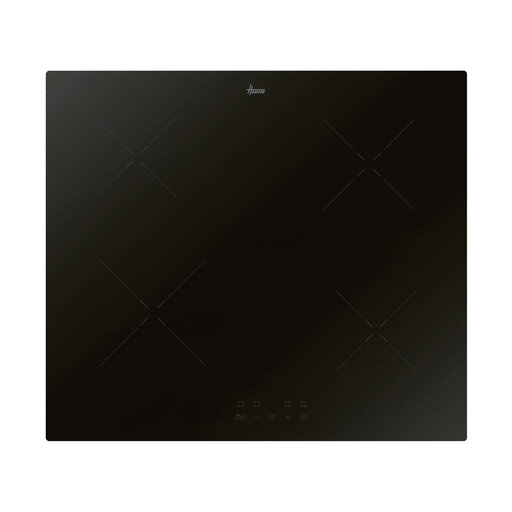
Why This Fits Their Persona: A practical 60cm format for homeowners replacing a standard hob and wanting four zones without moving to a larger worktop cut-out.
Its power management system allows the maximum draw to be limited during installation, subject to the suitability of the home’s electrical supply.
Four zones, nine power levels, a booster, child lock and an electronic timer for all zones.

Why This Fits Their Persona: Suitable for kitchen renovators seeking a conventional 60cm layout with finer heat adjustment and automated controls.
The specification clearly identifies a 7.4kW hardwired connection, helping buyers account for qualified installation rather than assuming plug-in compatibility.
It provides 17 power levels, PowerBoost, QuickStart, ReStart and an individual timer with automatic switch-off.
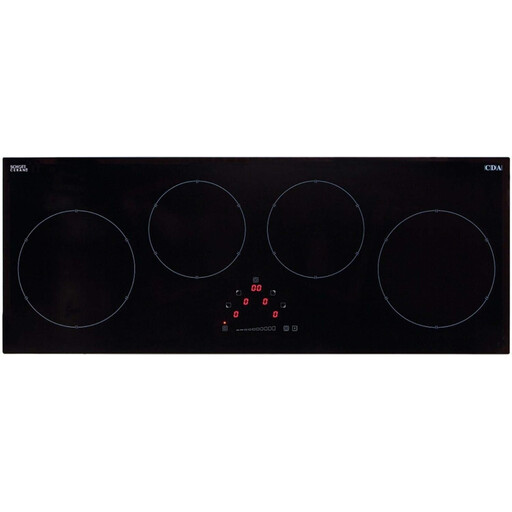
Why This Fits Their Persona: The 90cm layout gives busy households and regular batch cooks more separation between four pans.
The specification states the 86 x 48cm cut-out and 7.4kW maximum load, so worktop and electrical planning can be completed before purchase.
Zone bridging supports larger cookware, while boost, keep-warm and a 0–99-minute timer add practical cooking control.
For a small flat, annex or temporary cooking arrangement, a domino induction hob can be more suitable than a full four-zone appliance. The CDA HN3621FR is 30cm wide, has two 1.4kW zones and a 2.8kW total load. Its 13A suitability should still be confirmed by an electrician and checked against the installation instructions.
A portable induction cooker is useful as an additional cooking surface rather than a direct replacement for a built-in hob. The IAGREEA DF200-14V10 offers up to 2,000W, an eight-level power range, a three-hour timer and cookware compatibility from 12–26cm. It requires magnetic cookware and a stable, heat-resistant surface.
We have compiled a complete, real-time list of products that fully satisfy these strict selection criteria and UK safety regulations.
Running cost depends on the appliance’s power, cooking time, electricity tariff and how many zones are used together. Induction transfers heat directly to compatible cookware, which can reduce wasted heat compared with some traditional electric cooking methods. It does not automatically guarantee lower household bills.
Usually, yes, provided the worktop cut-out, electrical supply and ventilation requirements are suitable. A qualified electrician should check the connection before installation. You will also need compatible magnetic cookware.
Service life varies according to construction, installation, cleaning and frequency of use. To protect the black glass, avoid dragging pans, using abrasive cleaners or placing heavy objects on the surface. Follow the manufacturer’s maintenance and safety instructions, and stop using the appliance if the glass becomes cracked.