
24/7 Customer Support

Free returns

Same-day & Next-day Delivery

Quality Guaranteed

Unlock Your Welcome Offers: FREE Delivery | Up to 80% OFF | Free 30-day JoyPlus trial
Download the APP
Replacing a hob can look straightforward until you discover that the cut-out is the wrong size, your pans are incompatible or the electrical supply cannot support the appliance. A sleek induction hob may offer fast, controlled heating and a smooth surface, but the right choice depends on your kitchen layout, cookware and installation requirements.
This guide explains the key specifications to check, the common marketing traps to avoid and which models may suit different UK households.
A black glass hob may be induction, ceramic or another type of electric hob. The surface appearance does not tell you how it heats.
Induction uses a magnetic field to heat compatible cookware directly. A ceramic hob heats an element beneath the glass, which then transfers heat to the pan. Ceramic models accept a wider range of cookware, but their surface can remain hot for longer after cooking.
Always check the product type rather than relying on phrases such as “modern glass hob” or “electric cooking surface”.
A higher total power rating can support demanding cooking, but it may also require a more suitable circuit and fuse arrangement. For example, several 4-zone induction hobs list total ratings between 6kW and 7.2kW, while compact 2-zone models may be rated around 2.9kW.
Built-in appliances are commonly hardwired. Before buying, compare the manufacturer’s connection requirements with your existing kitchen supply and arrange installation by a qualified electrician in line with applicable UK requirements. A power-management function can be useful where the installation needs a configurable load limit, but it does not remove the need for professional checks.
A booster function usually directs additional power to one cooking zone for a limited period. Its usefulness depends on the pan, food quantity, selected zone and the hob’s power management.
Some models specify how the function behaves. The Hisense HI6442BSCE, for example, states that its Rapid Boil function automatically reduces to a low simmer after five minutes. This is more useful information than a general claim about speed because it explains what the feature actually does.
A standard-looking 60cm induction hob is not necessarily a universal fit. Many models have an external size close to 590mm wide by 520mm deep, with a cut-out of approximately 560mm by 490mm. However, compact models use different dimensions.
A 29cm 2-zone hob may require a cut-out of around 260mm by 490mm, making it suitable for a narrow worktop, small kitchen or combination installation. Measure the existing cut-out, not only the appliance currently installed. Also check ventilation space below the hob and any restrictions concerning installation above an oven.
A 4-zone induction hob suits households that regularly prepare several pans at once. Check the zone diameters as well as the number of zones, particularly if you use large stockpots, griddles or frying pans.
A 2-zone induction hob can be more practical for one- or two-person homes, compact kitchens or landlords furnishing smaller properties. If you cook with oversized cookware, an area-flex feature may be more helpful than simply having four separate zones.
Induction requires pans with a ferromagnetic base. Cast iron and many magnetic stainless-steel pans are suitable, while aluminium, glass and ceramic cookware may not work unless they have an induction-compatible base.
A simple magnet test can help: if a magnet sticks firmly to the underside of the pan, it is more likely to work. The pan should also have a reasonably flat base and match the zone’s recommended diameter. Ceramic electric hobs do not have the same magnetic cookware restriction, which may make them a practical alternative when replacing pans is undesirable.
A touch-control hob is easy to wipe around because there are fewer raised parts, but some users prefer rotary dials for tactile adjustment. Useful features to compare include:
An induction hob with timer, child lock and residual heat indicators can be particularly convenient in a busy family kitchen, but these features should be treated as aids rather than substitutes for supervision.
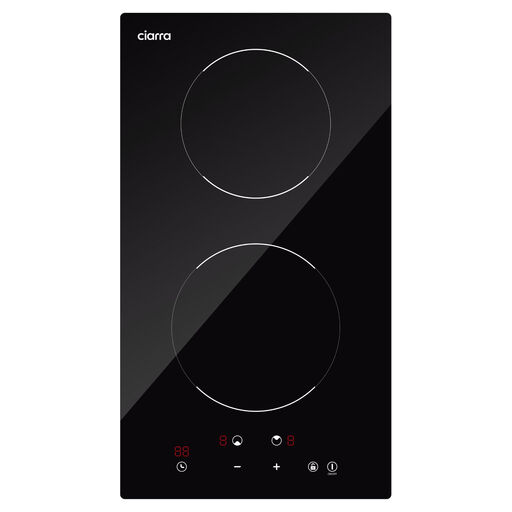
Why This Fits Their Persona: Its compact built-in format suits smaller UK kitchens, flats and households that do not need four pans running at once.
The 260mm by 490mm cut-out specification makes the installation footprint clear, while automatic pan detection helps avoid heating an empty zone.
Two zones, 2,900W total power, nine power levels, individual timers and a child safety lock.
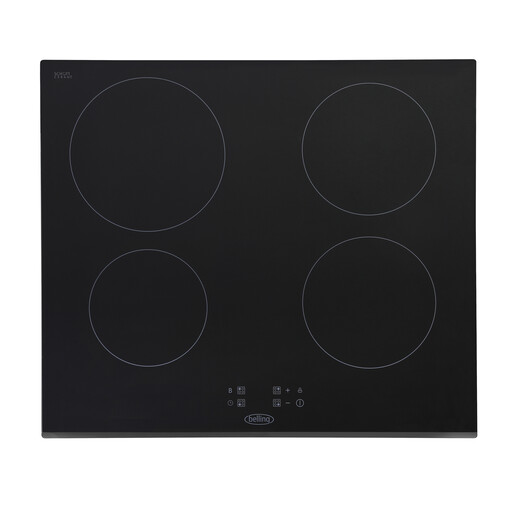
Why This Fits Their Persona: It follows the familiar 60cm built-in format and combines direct touch controls with pan detection for everyday family cooking.
The listed 590mm by 520mm appliance dimensions and 560mm by 490mm cut-out help prevent sizing errors. Its 25A fuse specification should still be checked with an electrician.
Four zones, four booster settings, nine power levels, child lock, pan detection and individual residual heat indicators.
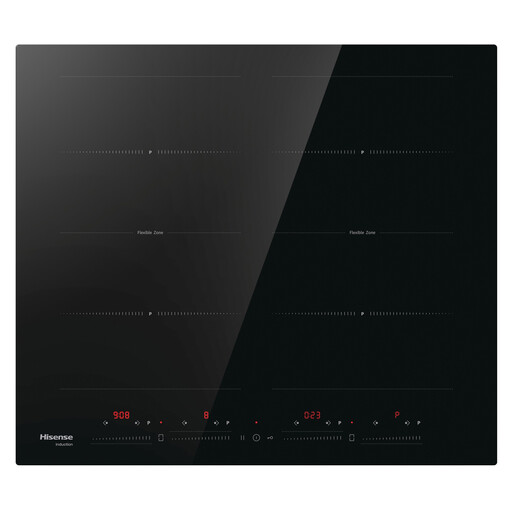
Why This Fits Their Persona: Families and frequent cooks can use four zones, combine two for larger cookware and move pans between zones using Heat Shift.
Area Flex gives a defined use for large pans, while Rapid Boil specifies a five-minute boost period before reducing to a simmer.
Four individual slider controls, integrated timer with automatic switch-off, child lock and residual heat indicators.

Why This Fits Their Persona: A portable induction cooker is suitable for rented homes, temporary kitchens, office cooking areas or an additional worktop surface.
Its portable design avoids a permanent worktop cut-out, while the stated requirement for ferromagnetic cookware makes compatibility clear.
2,000W output, 10 power settings, touch controls, six cooking functions, child lock and boil-dry protection.
We have compiled a complete, real-time list of products that fully satisfy these strict selection criteria and UK safety regulations.
Yes. It needs cookware with a magnetic, ferromagnetic base. Test existing pans with a magnet before purchasing. If the magnet does not stick, consider an induction-compatible replacement or a ceramic electric hob.
Running cost depends on the appliance’s power draw, cooking time, electricity tariff and how efficiently heat reaches the pan. Induction transfers heat directly into compatible cookware, but a high-power setting used for long periods will still consume more electricity. Using the correct pan size and lower settings once food reaches temperature can help reduce waste.
A built-in model is usually connected to the household electrical supply rather than simply plugged into a standard socket. Check the rated load, fuse requirement, cable arrangement and cabinet ventilation in the product manual. Have the installation assessed and completed by a qualified electrician, particularly when replacing an existing gas or electric hob.