
24/7 Customer Support

Free returns

Same-day & Next-day Delivery

Quality Guaranteed

Unlock Your Welcome Offers: FREE Delivery | Up to 80% OFF | Free 30-day JoyPlus trial
Download the APP
An induction hob can offer fast heat control, a smooth cooking surface and useful safety functions, but the wrong model may create avoidable costs. UK shoppers often compare headline wattage or the number of cooking zones without checking installation requirements, pan compatibility or available electrical capacity.
Whether you are furnishing a rental, upgrading a family kitchen or adding a cooking surface to a compact flat, these are the main pitfalls to avoid.
A 2000W induction hob may heat a single pan effectively, while a four-zone model can have a total rated power of 6000W or 7200W. However, the wattage figure describes maximum electrical input, not the cost of every meal.
Running costs depend on cooking time, selected power level, electricity tariff and how many zones are used together. A portable induction cooker can be practical for occasional use, but a four-zone induction hob may be more suitable for households preparing several pans at once.
Induction technology works through a magnetic field, so aluminium, copper and some stainless-steel pans will not heat unless they have a suitable magnetic base. A simple magnet test on the underside of a pan can help: if the magnet does not attach firmly, the pan may not work correctly.
Also check the recommended pan diameter. A portable model may accept cookware between 12cm and 26cm, while built-in zones commonly specify different minimum and maximum diameters.
A portable induction hob generally sits on a stable, heat-resistant surface and connects according to its supplied instructions. A built-in induction hob, by contrast, needs a correctly sized worktop cut-out, ventilation clearance and an appropriate electrical connection.
Some four-zone models list a 32A rated fuse and hard-wired installation requirements. Do not connect such an appliance to an unsuitable plug, extension lead or existing circuit without checking the installation instructions. A suitably qualified electrician should confirm the circuit, protective measures and connection before installation.
Choose a portable induction hob if you rent, have limited worktop space, need a temporary extra burner or cook occasionally. Look for a compact footprint, clear ventilation openings and controls that are easy to operate and clean.
A built-in induction hob creates a more integrated kitchen appearance. Measure the appliance dimensions and the cut-out dimensions separately. A common 60cm format may require a cut-out close to 560mm × 490mm, but the exact measurements must come from the product instructions.
Power levels are more useful than a single maximum figure. A model with multiple settings can support gentle warming, simmering and high-heat cooking without relying on constant switching.
A portable unit offering 100W–2000W, eight power levels and temperature settings from 60°C to 270°C provides a broad operating range for everyday tasks. Built-in models with nine power levels and individual timers give more control when several pans are being used.
A touch control induction hob is easy to wipe clean because it has no raised knobs, while rotary controls can be more familiar for users who prefer physical adjustment. Important functions to compare include:
The glass panel can become hot from the pan during use, even though induction heats the cookware directly. Keep the surface clear, do not use a damaged glass panel and allow the appliance to cool before cleaning.
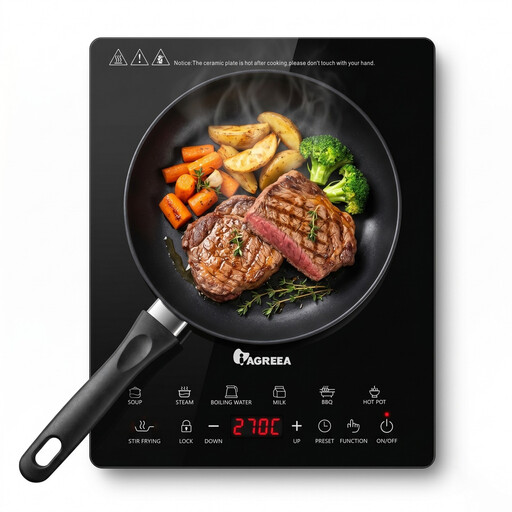
Why This Fits Their Persona: A portable option for students, renters, compact kitchens or households needing an additional cooking surface without a built-in installation.
The listed 12–26cm cookware range, adjustable output and magnetic-pan requirement make compatibility easier to check before purchase.
100W–2000W adjustment, seven preset functions, a three-hour timer and child safety lock in a 44.5mm-thick design.
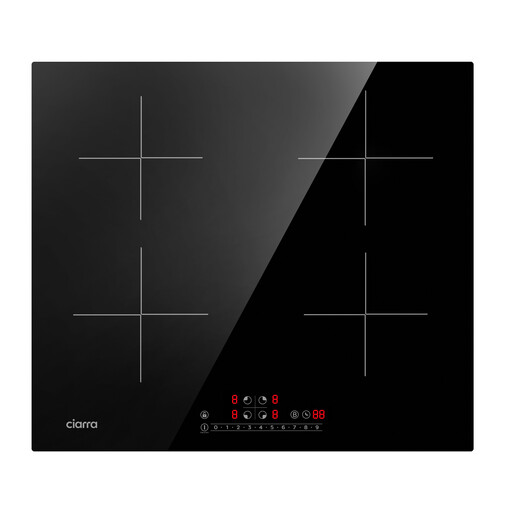
Why This Fits Their Persona: A 60cm integrated choice for homeowners renovating a kitchen and wanting four cooking zones with digital controls.
Its published 590mm × 520mm dimensions, 560mm × 490mm cut-out and 32A rating provide practical installation checks before ordering.
Four zones, nine power levels, booster function, individual 99-minute timers and child lock.
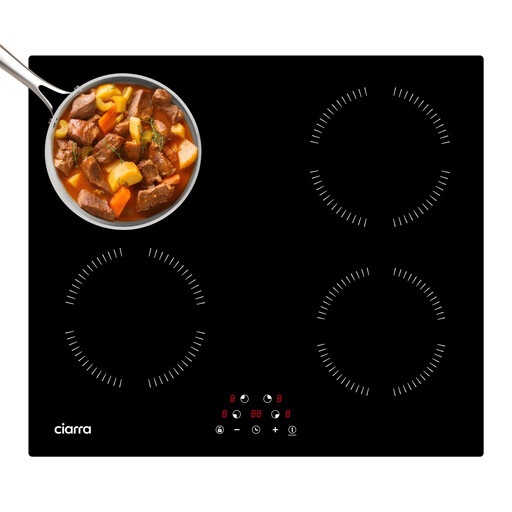
Why This Fits Their Persona: Suitable for larger households or frequent cooks who need four zones and structured power management for multi-pan meals.
The listed 6000W total power, nine load steps and individual timers help buyers assess capacity rather than relying only on a generic “fast heating” claim.
Automatic pan detection, residual-heat indicator, overflow protection, overheat protection and a 24-month warranty listing.
We have compiled a complete, real-time list of products that fully satisfy these strict selection criteria and UK safety regulations.
Yes. Use cookware with a magnetic, flat base. Cast iron, enamelled iron and suitable magnetic stainless steel generally work, but always check the pan and hob instructions.
It can be practical for one-pan or occasional cooking because it heats only the cookware placed on its single zone. Actual running cost depends on power setting, cooking duration and your electricity tariff.
Lifespan varies with build quality, installation, cleaning and frequency of use. Avoid abrasive cleaners, keep ventilation openings clear, do not use cracked glass and follow the manufacturer’s maintenance instructions.