What to check before buying
Start with control of gentle heat for the curd, then assess space for the rest of the meal and the practical requirements of fitting an induction hob. Which? uses low-temperature simmering and even heating among its hob-performance considerations; a listed power-level count alone cannot establish how a particular hob performs.
| Concern |
What to check |
Who this matters to |
| Gentle, adjustable heat |
Check individual-zone adjustment and timer controls. If a sensor appeals, confirm that the exact model has it. |
When I make egg-based curd, I need to lower the heat promptly while whisking so the mixture does not catch; around 50% of consumers would put that control first. |
| Usable cooking space |
Compare zone positions and pan-base sizes; consider a flexible area if your cookware is unusually shaped. |
I may have the curd pan on the hob while preparing other parts of a family meal, so room for simultaneous pans comes first for around 30% of consumers. |
| Pan and kitchen fit |
Check for induction-compatible pan bases, then compare the model’s connection instructions and cut-out with your kitchen. |
If my current pans or worktop cannot accommodate the hob, its cooking features will not solve that problem. Compatibility is the primary concern for roughly 20% of consumers. |
Induction hobs for this cooking scenario
These built-in induction hobs include four-zone choices for cooking lemon curd alongside a family meal and one model with a flexible bridge for differently sized cookware. Compare their controls and physical fit without treating a listed power-level count or boost function as a test of gentle simmering.
 No image available
Bosch PIE631BB5E Series 4 60cm Induction Hob, Black Glass, Hard Wired
Consider this built-in format if you use ordinary saucepans alongside the curd pan. Check how its zone controls and timer work for your recipe; confirm the worktop opening and electrical supply before ordering, as this variant is described as hard wired.
View on Joybuy
 No image available
Belling IHL773 BLK 77cm Four-Zone Induction Hob with Flexible Bridge
The flexible bridge is worth considering if other family-meal cookware needs a different zone arrangement from a small curd saucepan. Compare the pan positions you would use with the hob’s layout, and verify the worktop cut-out and electrical connection instructions.
View on Joybuy
 No image available
Hoover HI642BCB 60cm Four-Zone Induction Hob, Black Glass
This four-zone format is a candidate if the curd pan must share the hob with other dishes. Check the operation of its controls and timers rather than assuming that its settings establish gentle-heat performance. Verify the cut-out and electrical supply with the installation instructions.
View on Joybuy
 No image available
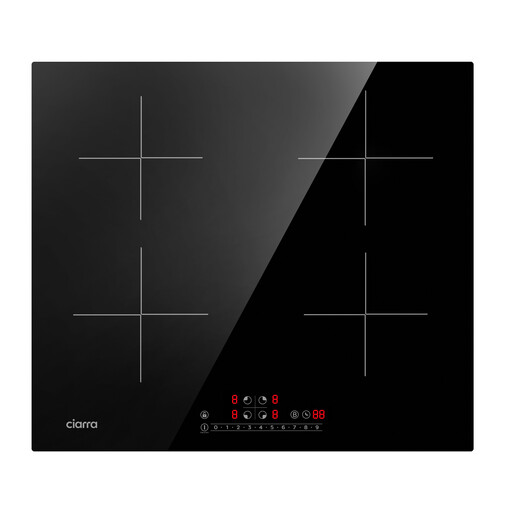
Ciarra Four-Zone Built-in Induction Cooktop, Nine Power Levels
For a family meal involving several pans, compare this four-zone layout with the bases of your cookware. Its listed power levels and booster function do not by themselves demonstrate how steadily it cooks lemon curd at low heat; check the installation instructions and worktop fit.
View on Joybuy
 No image available
Ciarra Built-in 60cm Four-Zone Induction Hob with Modular Power Control
Consider this built-in four-zone option if you need space for the curd pan and other meal components. Assess its controls for the adjustments your recipe requires, and confirm the worktop cut-out, installation clearances and electrical connection before choosing it.
View on Joybuy
Frequently asked questions
Do I need a special induction setting for lemon curd?
No universal lemon-curd setting is required. Look for controls that let you reduce the selected zone’s power promptly and use a timer if it helps you follow the recipe. A temperature sensor is relevant only if the exact model has one, and you will still need to whisk and supervise the curd.
Will my existing saucepan work on an induction hob?
It will work only if its base is induction-compatible and sufficiently magnetic. Which? explains that induction cookware needs an iron-based component; check the pan’s marking or test its base with a magnet before relying on it for the curd.
Does a built-in induction hob always need hard wiring?
No: the connection depends on the model. Bosch describes the PUG61RAA5B as Plug & Play, whereas the Hisense HIA64UK is listed as requiring hard wiring by an electrician. Use the installation instructions for the hob you actually choose, rather than assuming that similarly sized models connect in the same way.
What electrical rules should I check before fitting a hob?
For an installation in an English dwelling, GOV.UK’s Approved Document P addresses electrical safety; the work involved determines what installation and notification steps apply. Ask an appropriately qualified installer to assess the proposed connection and confirm any Building Control requirements. Check the applicable arrangements with the relevant authority or installer if the property is in Scotland, Wales or Northern Ireland.
How should I clean the hob after making lemon curd?
Follow the hob manufacturer’s instructions for cooling and cleaning its surface, including which products and tools are suitable. Keep electrical safety in mind if an appliance needs attention: Electrical Safety First advises against cleaning or repairing an electrical appliance while it is plugged in.


