Sauce-focused home entertainers
You want to adjust the heat while making cheese sauce without losing track of the rest of dinner. Direct controls may help you change a setting promptly, but the saucepan and regular stirring still matter.


For cheese sauce, choose an induction hob with controls you can adjust easily and use a saucepan with an induction-compatible base; maximum boost power is less important than being able to lower the heat and keep stirring. A 60 cm four-zone hob may suit a modest party menu, while a wider five-zone or flexible-zone layout is worth considering when several pans need space at once. Check the exact model’s worktop cut-out and electrical requirements before buying.
You want to adjust the heat while making cheese sauce without losing track of the rest of dinner. Direct controls may help you change a setting promptly, but the saucepan and regular stirring still matter.
If sauce, pasta, vegetables and another dish are often cooking together, consider how many pans will fit and remain usable at the same time. A bridge area serves a different purpose from an extra separate zone.
A built-in hob must suit both your cooking plans and your kitchen. Compare the exact cut-out, overall dimensions and connection requirements with your existing installation before committing to a wider model.
Start with a compatible saucepan and controls you can adjust while stirring. Then count the pans your party menu needs at once and check whether the hob fits your kitchen.
| Concern | What to check | Who this matters to |
|---|---|---|
| Adjustable sauce heat | Look at how you select a zone and change its power level; check what any temperature-assistance feature is designed to do. | If I need to lower the heat while stirring cheese sauce, I want controls I can read and adjust without delay. Around 33% of consumers put sauce-heat control first. |
| Space for several pans | Compare the number and positions of usable zones with the pans you plan to use together; distinguish bridge areas from separate zones. | When sauce shares the hob with pasta and vegetables, I need room for the pans rather than a rapid-heating feature on just one zone. For around 27% of consumers, simultaneous pan capacity comes first. |
| Kitchen fit and connection | Check the exact model’s cut-out drawing, overall dimensions and electrical instructions against your kitchen. | If I am replacing a built-in hob, I need to know it will fit the worktop and suit the electrical arrangement. Fit and connection are the primary concern for around 27% of consumers. |
| Existing saucepans | Look for an induction symbol or test whether a magnet sticks firmly to each pan’s base. | I would rather check my current saucepans before choosing a hob than discover they cannot be used for dinner. Around 13% of consumers place cookware compatibility first. |
An induction hob needs a pan with a magnetic base. The product information notes non-magnetic aluminium or copper pans need a special magnetic base to work.
Check the induction symbol or test the bases of the pans you use for sauce before buying.
You may need a replacement saucepan if your current one is incompatible.
Nominal width is not the worktop cut-out. AEG specifies a 750 × 490 mm opening and a hardwired-only connection for the TO84IB00FB.
Compare the exact installation drawing and electrical instructions with your kitchen before ordering; seek appropriate local professional advice for the connection.
A different opening or connection may require worktop or electrical-installation work.
Rapid heating does not replace controlled heat and stirring when making cheese sauce. A model’s frying sensor should not be assumed to control this particular sauce.
Check how easily you can reduce the power and use a compatible saucepan suited to the zone.
A bridge function joins cooking areas for larger cookware; while joined, those areas are not two separately controlled places for pans.
Lay out the pans you expect to use together before deciding whether separate zones or space for oversized cookware matters more.
The PIX631HC1E is a reference point for a 60 cm, four-zone built-in layout when an 80 cm hob is not part of the kitchen plan.
The TO84IB00FB provides an 80 cm bridge-format reference for cooks considering larger cookware alongside a party meal.
The T68FHV4L0 is an 80 cm, five-zone flex-induction reference for a menu involving several pans.
The KM 7999 FL is a reference for a kitchen planned around a particularly wide hob and several pans.
These choices cover built-in hobs with two or four zones and a portable induction cooker. For a dinner-party menu, decide whether the appliance needs to accommodate several pans or serve as a separate place to make the sauce.
 No image available
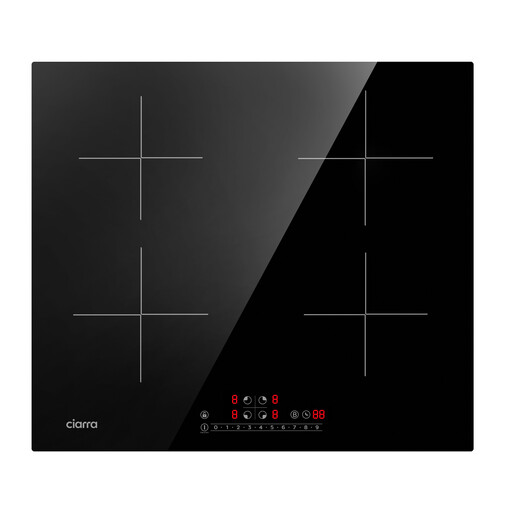
Consider this built-in model if your sauce is one of several pans in a modest party menu. Its title specifies touch controls and nine power levels; check the control layout and installation instructions if fine heat adjustment or connection details will determine your choice.
 No image available
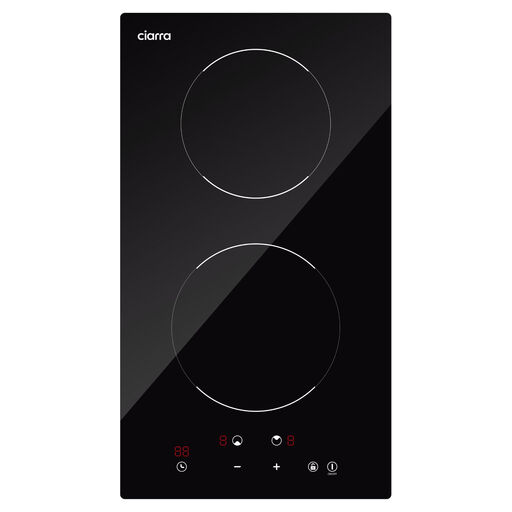
This compact built-in option suits a plan involving sauce and one other pan, rather than several dishes at once. The title specifies 2,900 W, touch controls and nine power levels; check its installation instructions and whether two zones cover your menu.
 No image available
Consider a portable cooker if you want a separate countertop place for a compatible saucepan. Its title specifies touch controls and ten power settings; check its electrical requirements and usable cooking area before relying on it for your dinner-party plans.
It will work if its base is induction-compatible and magnetic. The product information advises non-magnetic aluminium or copper needs a special magnetic base; look for an induction symbol or check whether a magnet sticks firmly underneath.
No: a compatible saucepan can use an individual zone of suitable size. Consider a bridge function if you also use large or long cookware, rather than buying it solely for one saucepan of sauce.
Four zones can suit a menu with the sauce and a few other active pans. If more pans regularly need space at the same time, compare five-zone layouts and the actual positions of your cookware, not just the advertised zone count.
Do not assume it can: connection requirements depend on the model. AEG specifies a hardwired-only connection and 7,200 W total loading for the TO84IB00FB. Check the chosen hob’s installation instructions and seek appropriate local professional advice; GOV.UK’s Approved Document P concerns electrical safety in dwellings in England, not a single rule for every UK jurisdiction.
Let the hob surface cool before cleaning it, then remove spills rather than allowing them to build up. Induction heats the pan directly, but heat transferred back from cookware can leave the surface hot after cooking.