What matters when choosing?
Start with the poaching pan and the other pans you use for the meal: their bases and positions determine whether separate circular zones are enough or a flex or bridge layout would be useful. Then compare low-power controls and installation requirements on the exact models that fit.
| Concern |
What to check |
Who this matters to |
| Manageable poaching heat |
Try the control layout where possible, and check how the exact model adjusts power at low settings. A timer can prompt a check of the pears but does not control their cooking temperature. |
If I am preparing other dishes while the pears poach, I want to turn the heat down easily and remember to check the pan; around 40% of consumers would put manageable heat first. |
| Space for several pans |
Compare each pan base with the zone diagram. Consider flex or bridge zones if large or long cookware will not fit the separate positions you need. |
When the poaching pan is on the hob, I still need positions for the rest of the meal; roughly 30% of consumers would make usable cooking space their primary concern. |
| Kitchen and pan fit |
Match the installation sheet to the worktop opening and electrical setup, and check that the pans have induction-compatible bases. |
If I am replacing a built-in hob, I need the new appliance and my existing pans to work in this kitchen; for around 30% of consumers, that fit would come first. |
Joybuy induction hobs for this meal
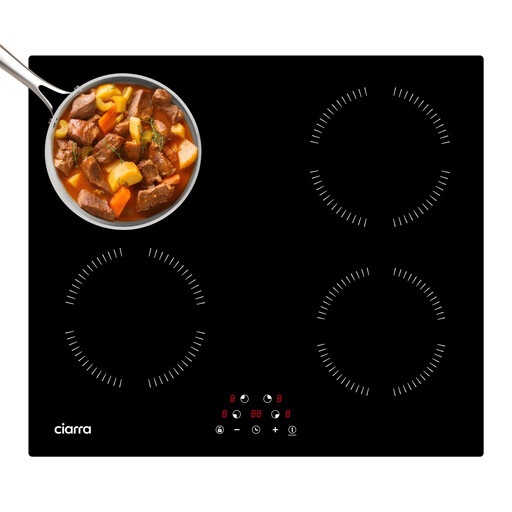
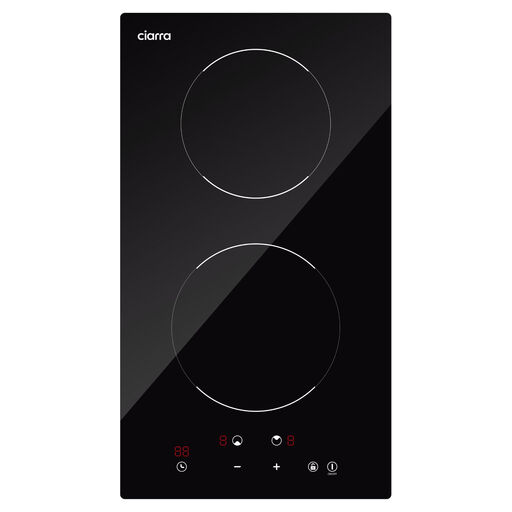
These built-in CIARRA hobs offer four-zone and two-zone layouts. For a family meal, choose between them by counting how many pans you need on the hob at once, then confirm the controls and installation fit for the model you prefer.
 No image available
Ciarra 60 cm four-zone built-in induction hob
Consider this layout if you need the poaching pan and several other pans on separate zones. Check whether its power controls give you the adjustment you want for poaching, and confirm the installation requirements for your kitchen.
View on Joybuy
 No image available
CIARRA CBBIH292T 29 cm two-zone induction hob
Consider the two-zone layout if the poaching pan and one other pan are enough for the meal. The product name specifies 2900 W, touch controls, nine power levels, a timer and a child safety lock; check the low-power adjustment and installation requirements before ordering.
View on Joybuy
Common questions
Can I poach pears on an induction hob?
Yes, with an induction-compatible pan and controls that let you reduce the power once the poaching liquid is hot. The result still depends on the pan, liquid quantity, setting and how you monitor the pears; do not assume a sensor-equipped hob has an automatic poaching programme.
Will my current poaching pan work on induction?
It will need a ferromagnetic base that suits the hob’s cooking zone. Bosch Home Appliances UK identifies cast iron, enamelled steel and suitable stainless steel as examples; check your pan’s marking or test its base with a magnet rather than judging by its appearance.
Do I need a bridge zone for a large poaching pan?
Only if the pan’s size or shape makes a single zone unsuitable and the exact bridge layout accommodates it. A round pot that fits one zone leaves separate zones available for the other dishes, which may matter more for a family meal.
Who should install a built-in induction hob?
Use a registered electrician, as Electrical Safety First recommends for electrical installation work. Ask them to assess the chosen model and the work required at your property; GOV.UK’s Approved Document P concerns electrical safety in dwellings in England, so requirements must be checked for the relevant UK nation.
What should I measure before ordering a hob?
Compare the exact model’s appliance dimensions and required worktop cut-out with your kitchen, and have its connection type and electrical loading assessed. AEG UK specifies a 750 × 490 mm opening and hardwired installation for the TO84IB00FB and SK85IM0XFB, but those dimensions do not apply to other hobs.


