Family cooks managing several pans
If the polenta saucepan stays on the hob while you cook other dishes, compare the space between zones as well as the number of zones. Each pan needs a practical position that leaves the saucepan accessible.


For polenta alongside family dishes, a conventional four-zone 60 cm induction hob can work if your pans fit its marked zones. Consider a bridge or flex layout for larger cookware, or a wider hob if you need more room between pans. Before choosing, check that your cookware has magnetic bases and that the exact hob suits your worktop, ventilation and electrical arrangement.
If the polenta saucepan stays on the hob while you cook other dishes, compare the space between zones as well as the number of zones. Each pan needs a practical position that leaves the saucepan accessible.
If your cookware is broad, long or placed differently from meal to meal, a bridge or flex zone may be more useful than fixed circular zones. Check the pans you actually use together before choosing that layout.
Start with the existing worktop opening, space beneath it and electrical arrangement. A hob described as 60 cm wide still needs to match its own installation instructions.
Start with the pans used for a typical family meal, then compare zone layout and controls. Check installation fit before treating a nominal width as a shortlist.
Choose when: The polenta saucepan and accompanying pans each fit a separate marked zone.
Trade-off: A fixed-zone layout does not combine zones for unusually long or wide cookware.
Choose when: You regularly use larger cookware or change where pans sit. AEG describes the bridge on TO64IB00FB as joining two zones; Neff lists two flex-induction zones on T56TT60N0.
Trade-off: The extra flexibility matters less when all your usual pans already fit separate fixed zones.
Choose when: You need more physical spacing for pans used at the same time and your kitchen can accommodate the exact model.
Trade-off: Width brings a different fitting requirement: AEG lists a 750 × 490 mm cut-out for its 780 mm-wide IKX84443CB.
| Concern | What to check | Who this matters to |
|---|---|---|
| Controllable heat | Check that the controls are comfortable to use and whether the model offers pause or restart functions you would use. | When polenta thickens, I want to adjust the heat promptly without relying on boost power. Around 31% of consumers would put manageable heat control first. |
| Room for several pans | Compare your pan bases with the zone sizes and positions; consider bridge or flex zones for larger cookware. | If sauces or vegetables cook alongside polenta, I need each pan to have usable space. For around 31% of consumers, simultaneous pan space would be the main concern. |
| Installation fit | Compare the existing cut-out, underside space, ventilation and electrical arrangement with the exact model's instructions. | When replacing a hob, I need it to fit the worktop and the planned installation. Roughly 23% of consumers would make installation fit their first priority. |
| Existing cookware | Test frequently used pan bases with a magnet or check the cookware maker's induction guidance. | I want to keep using my polenta pot, so its base must work on induction. Around 15% of consumers would prioritise cookware compatibility above the other concerns. |
A 60 cm label does not establish the required worktop opening or ventilation. AEG lists a 560 × 490 mm cut-out for TO64IB00FB, while Bosch advises checking dimensions for the particular model.
Measure the opening and the space beneath the worktop, then compare both with the installation document before ordering.
A mismatch may require worktop alteration before installation.
Induction needs a magnetic pan base. Which? notes that an aluminium pan without a compatible magnetic base will not work.
Check the polenta pot and the other pans you use most often with a magnet or their manufacturer's specifications.
Combining zones is useful for suitably sized cookware, but may change little if your regular pans already fit separate zones.
Set out the pans used together for a family meal and compare their bases and positions with the proposed hob layout.
Initial heating is only part of cooking polenta; you also need to adjust heat as it thickens.
Inspect how the controls work and whether pause or restart would help during interruptions. Treat boost as a secondary consideration.
Bosch provides a useful fixed-zone versus combined-zone comparison within the cited 60 cm models: PUE611BB5E has four ring zones, while PWP611BB5B adds CombiZone.
AEG's cited bridge-zone models offer two sizes to assess: TO64IB00FB is 590 mm wide, while IKX84443CB is 780 mm wide.
Neff's T56TT60N0 is a 60 cm option to consider when pan shapes and positions vary.
These induction hobs include 60 cm layouts and a 77 cm model to consider for polenta alongside other dishes. Compare the space your pans need, then check the exact model's fitting requirements.
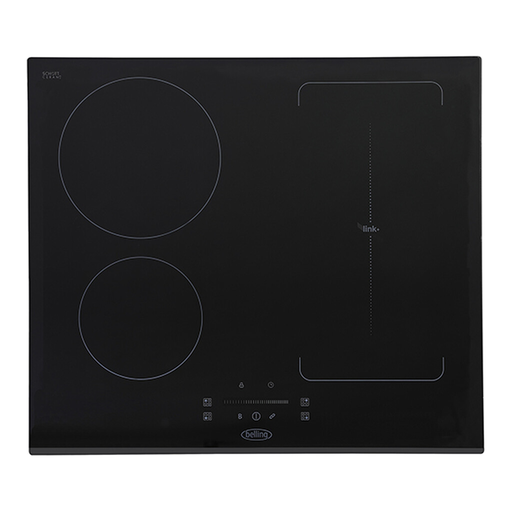 No image available
Consider this 60 cm hob for polenta alongside other pans if its zone layout accommodates your cookware. Check the exact installation instructions and use pans with magnetic bases.
 No image available
The flexible bridge is worth considering if larger cookware is part of your family meals. Confirm that this 77 cm hob, its worktop opening and its electrical requirements suit your kitchen.
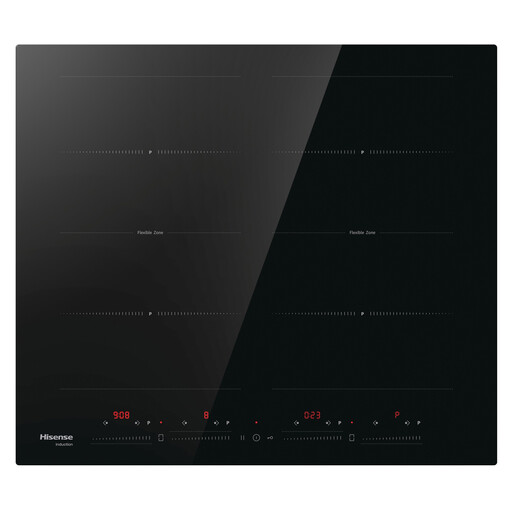 No image available
Area Flex makes this a model to consider when a larger pan is sometimes used alongside family-meal dishes. Check the cut-out, ventilation and electrical instructions for HI6442BSCE before choosing it.
 No image available
Its four-zone layout is a possibility when the polenta saucepan and side-dish pans each fit a separate zone. Check pan compatibility and the installation requirements for the exact hob.
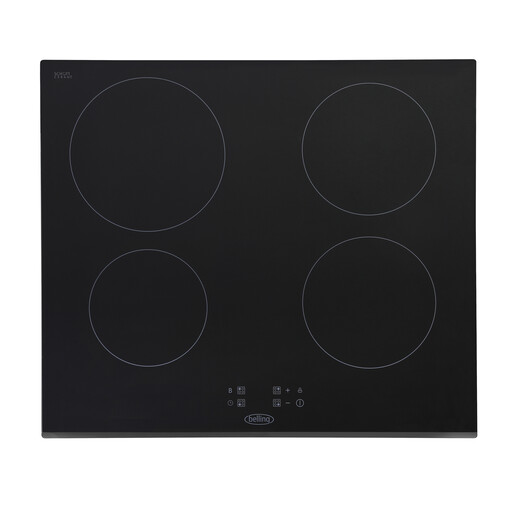 No image available
Consider this 60 cm option if your family-meal pans fit its marked zones. Before ordering, confirm the model's installation requirements and check that your cookware has magnetic bases.
It will work if its base is magnetic and compatible with induction. Which? explains that aluminium cookware needs a compatible magnetic base; check the saucepan with a magnet or its manufacturer's guidance.
Not if the polenta saucepan and other pans each fit a separate zone. Consider a bridge or flex layout when you regularly use larger or unusually shaped cookware; compare the actual pan bases with the proposed hob layout.
No: check the cut-out specified for the exact model, not just its overall width. AEG lists its 590 × 520 mm TO64IB00FB with a 560 × 490 mm cut-out, and Bosch advises checking model-specific installation dimensions.
Have the proposed electrical arrangement and the hob's installation instructions assessed before ordering or fitting it. Electrical Safety First explains that fixed electrical work in England and Wales must comply with Part P; Scotland and Northern Ireland have different requirements, so confirm what applies where you live.