Solo cooks who make risotto regularly
If you sauté mushrooms, add stock gradually and stir while maintaining a gentle simmer, you need heat controls that are easy to adjust throughout the recipe.


For one-person mushroom risotto, choose an induction hob that fits the worktop and electrical arrangement and recognises your pan before comparing cooking features. A conventional four-zone model can accommodate a risotto pan and a separate pan for stock; look for controls you can adjust easily during sautéing and simmering, and consider assisted boiling or flexible zones only if they suit your wider cooking routine.
If you sauté mushrooms, add stock gradually and stir while maintaining a gentle simmer, you need heat controls that are easy to adjust throughout the recipe.
Your choice has to fit the existing worktop opening and electrical arrangement. Zone layout also matters if you want to warm stock in a second pan.
Before choosing a hob, you need to check whether your usual pans have magnetic bases and whether the selected model's connection requirements suit your kitchen.
Check fit, electrical requirements and cookware first: cooking features cannot make an unsuitable installation or pan work. Then consider how you prefer to control heat and whether you regularly cook with a second pan or larger cookware.
Choose it when: You want a built-in hob for solo meals and sometimes heat stock or cook another dish in a second pan.
Keep in mind: Four zones provide space for separate pans, but you still need to adjust the heat, stir and add stock yourself.
Choose it when: You value help managing water as it reaches the boil; AEG says SenseBoil reduces heat after detecting boiling on supported models.
Keep in mind: The sensor has pan, liquid-volume and zone-use conditions. It does not stir risotto or manage staged stock additions.
Choose it when: You also use cookware of varied sizes or prefer a physical dial; the Neff T56TT60N0 combines flex zones with a removable TwistPad control.
Keep in mind: Flexible zones are not needed for a single risotto pan. Check the exact hob and cut-out dimensions before choosing this layout.
| Concern | What to check | Who this matters to |
|---|---|---|
| Fit and compatibility | Compare the hob and cut-out dimensions, check its electrical connection requirements, and test the pan base with a magnet. | If I am replacing a hob, I need the new model to fit my kitchen and recognise the pan I use for risotto. Around 42% of consumers put fit and compatibility first. |
| Heat control | Compare the controls, available heat settings and timer on the exact model; check any sensor's operating conditions. | When I move from sautéing mushrooms to simmering rice, I want to change the heat without interrupting frequent stirring. Heat control is the primary concern for around 33% of consumers. |
| Useful capacity | Decide whether you normally heat stock in a second pan and whether your other cookware would make use of flex zones. | For a meal for one, I want enough space for the pans I actually use without choosing features solely for this recipe. Around 25% of consumers place that practical simplicity first. |
Induction requires a suitable magnetic base. An aluminium or copper pan without one will not work, and the pan base should suit the intended zone.
Test the base of your usual risotto pan with a magnet and check that it is flat before choosing a hob.
If your current pan is unsuitable, you will need an induction-compatible replacement.
Built-in models have different electrical requirements. For example, AEG specifies a hardwired connection and a total electricity loading of 7,350 W for the IAX64411CB.
Read the installation instructions for the exact model and have the kitchen's electrical arrangement assessed before altering a worktop or committing to a hob.
The installation may require electrical or circuit work, depending on the property and model.
A booster provides high heat, while a supported boil sensor can reduce heat after water reaches the boil. Neither stirs rice, sautés mushrooms or adds stock gradually.
Choose these functions for the particular heating step they help with, while retaining manual heat adjustment for the risotto itself.
Flex zones accommodate different cookware arrangements; they are not a requirement for one risotto pan. A conventional four-zone layout also lets you use a separate stock pan.
Consider flex zones if your other meals regularly involve larger or unusually shaped cookware, and compare the dimensions of any model you are considering.
The HII64400MT illustrates a conventional induction-hob approach with touch controls rather than assisted cooking.
Selected AEG models offer assisted boiling, which may be useful when bringing water to the boil before returning to manual risotto cooking.
The T56TT60N0 is relevant if you prefer a removable rotary control and use cookware that could benefit from flexible zones.
These built-in induction hobs are relevant if you want a cooking zone for risotto and are assessing a full hob for other meals too. Compare their fit, connection requirements and controls against your kitchen and cooking routine; the Hisense model also has an Area Flex configuration.
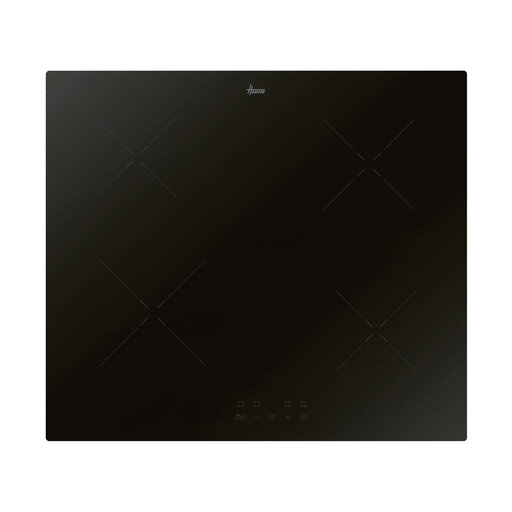 No image available
Consider its four-zone layout if you want to use a risotto pan and a separate pan for stock. Check the worktop opening and electrical connection requirements for the HI642BCB before ordering.
 No image available
This built-in model is an option if a 60 cm hob suits your kitchen. Its product name specifies hardwired installation, so compare the exact cut-out and electrical requirements with your existing arrangement.
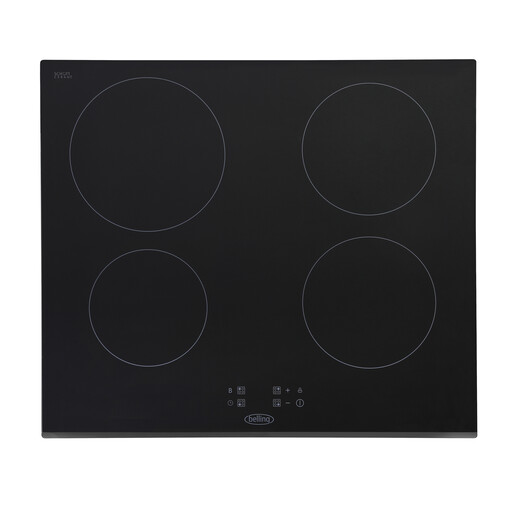 No image available
Consider this built-in 60 cm model for a kitchen where you cook risotto as well as everyday meals. Check its installation instructions, worktop cut-out and the size of the zone you would use with your risotto pan.
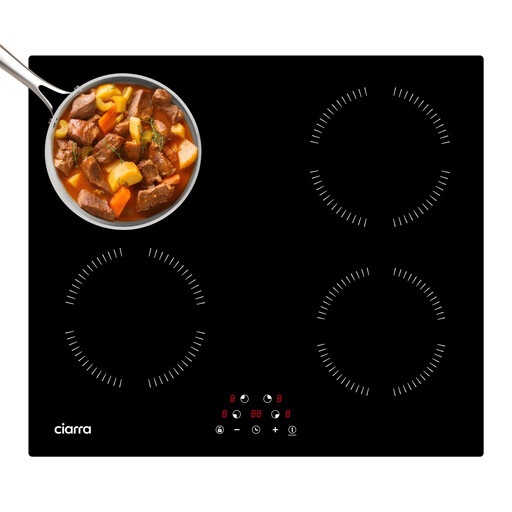 No image available
Its four-zone built-in layout is relevant if you use separate pans for risotto and stock. The Ciarra CABBIH4-A listing states 6000 W total power; check its installation instructions and your electrical arrangement rather than treating that figure alone as confirmation of suitability.
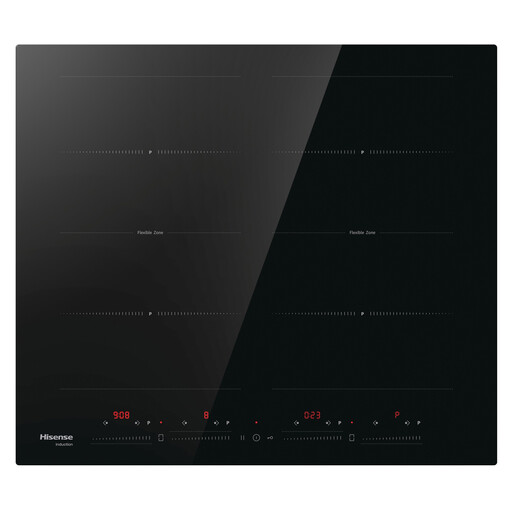 No image available
Consider the Area Flex configuration if you also use cookware of different sizes; it need not drive the choice for a single risotto pan. Confirm the HI6442BSCE's cut-out, electrical requirements and control behaviour against your cooking routine.
It will need a suitable magnetic base. Test the base with a magnet and check that it is flat and appropriately sized for the cooking zone; an aluminium or copper pan needs a magnetic base to work on induction.
Not necessarily: one zone can hold the risotto pan while another heats stock, and the remaining zones may be useful for other meals. Choose the layout around the pans you regularly use rather than assuming that this recipe requires flex zones.
No. AEG says SenseBoil can detect boiling and reduce heat on supported models, but you still need to stir risotto and add stock in stages. AEG states operating conditions including 1–5 litres of water, 1–5 kg of water and contents in total, one sensor zone at a time and 4 cm of space below the pot rim.
No; check the connection specified for the exact model. For example, AEG lists the IAX64411CB as hardwired-only with a total electricity loading of 7,350 W, so its installation needs assessment against the property's electrical arrangement.
Let the cooking zone cool before wiping away spills. An induction hob can retain residual heat after the pan is removed, so check the hob's indicator and cleaning instructions rather than touching the surface immediately.