What matters when choosing?
For family shakshuka, decide whether your usual pan needs one round zone or a joined cooking area, then check cookware and installation fit. Boost or frying assistance should serve the way you move from frying to cooking the sauce, rather than decide the purchase on its own.
Standard four-zone layout
Consider it when: Your round pan’s magnetic base fits a cooking zone without joining zones.
Trade-off: A particularly wide or elongated pan may need a different zone layout.
Bridge-zone layout
Consider it when: You regularly use wide cookware and want to operate two linked zones as one larger area, as AEG describes for its bridge function.
Trade-off: Linking zones does not establish that the hob will fit your opening or electrical supply.
Flex-zone layout
Consider it when: You switch between pan sizes and want to compare model-specific placement or frying-assistance features; NEFF lists both flex zones and a frying sensor on its T66FHX4L0.
Trade-off: Those features depend on the exact model and do not guarantee a cooking result.
| Concern |
What to check |
Who this matters to |
| Pan and zone fit |
Compare the pan’s flat base with the zone dimensions and any bridge or flex arrangement. |
If my family meal needs one broad pan, I want its base to sit over a suitable cooking area; around 36% of consumers put pan and zone fit first. |
| Installation fit |
Check the specified cut-out and connection type, then have the electrical load assessed for your kitchen. |
Replacing an existing hob should not leave me with an opening or connection that needs unexpected work; roughly 29% of consumers make installation fit their primary concern. |
| Heat control |
Compare zone controls and the model’s available timing or frying-assistance functions. |
I need to change from frying aromatics to cooking sauce and eggs without relying on boost alone; around 21% of consumers prioritise heat control. |
| Cookware compatibility |
Test the pan base with a magnet and check that it is flat and appropriately sized. |
If I hope to keep my current skillet, I need to know it will work on induction; about 14% of consumers place cookware compatibility first. |
Joybuy product choices
These induction hobs offer four-zone layouts for family cooking, including models whose names specify a flexible or joined-zone feature. Check your usual pan and the installation instructions for the individual model before choosing.
 No image available
Belling IHL773 BLK 77 cm induction hob
Consider its flexible bridge if you use a wide skillet, but compare your pan base with the model’s cooking areas.
The product name specifies four cooking zones, touch controls and Boost mode. Check the installation dimensions and electrical requirements against your kitchen.
View on Joybuy
 No image available
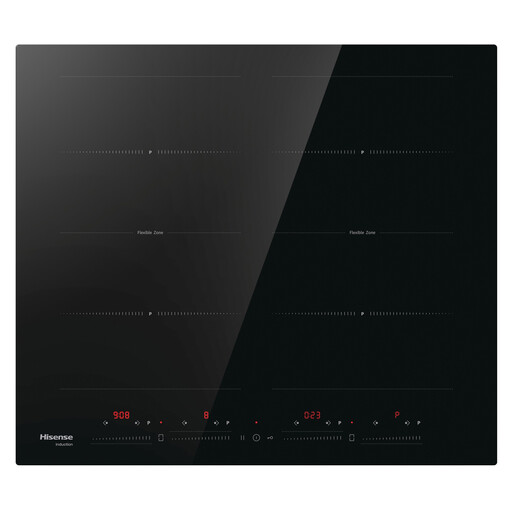
Hisense HI6442BSCE 60 cm Area Flex induction hob
Consider this model if a flexible cooking area interests you for a broad pan; confirm that the intended pan base suits its zone layout.
Check the cut-out, connection and electrical requirements for the exact model before ordering.
View on Joybuy
 No image available
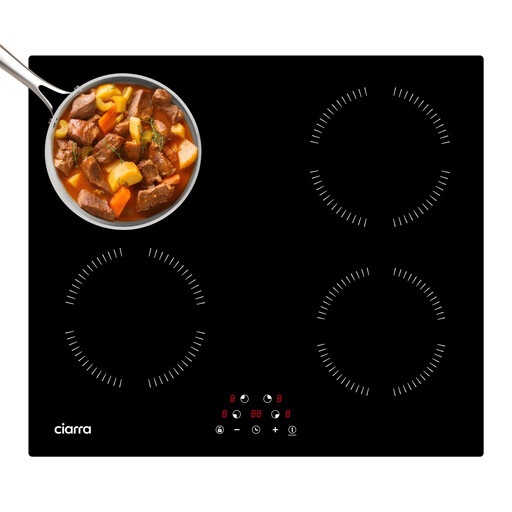
Ciarra built-in 60 cm four-zone induction hob
Consider a four-zone layout if your round shakshuka pan fits one of its cooking zones; check the pan-base size against the model’s zone information.
Confirm the cut-out and electrical connection requirements with your installer.
View on Joybuy
 No image available
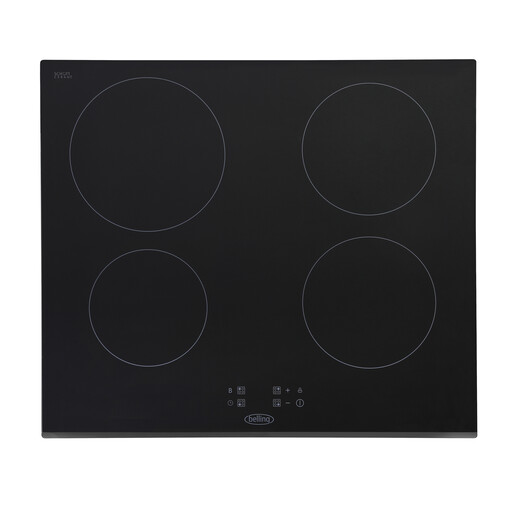
Belling ComfortCook IHT603 60 cm induction hob
For a conventional round skillet, check whether its base fits a cooking zone on this model.
Compare the exact cut-out and electrical requirements with your existing installation before ordering.
View on Joybuy
 No image available
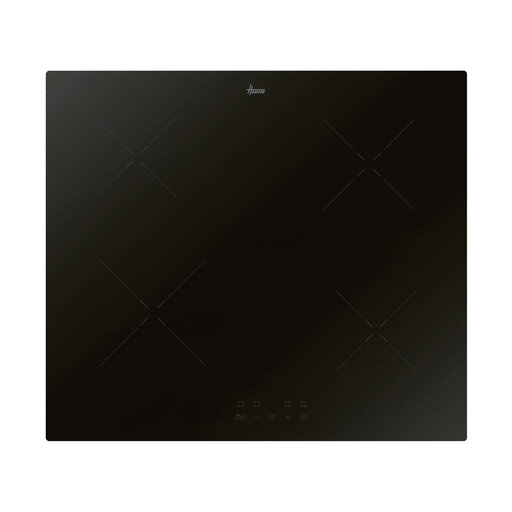
Hoover HI642BCB 60 cm four-zone induction hob
Consider its four-zone layout for a round pan once you have checked the pan base against a suitable zone.
Confirm the model’s electrical requirements and installation arrangements with a qualified electrician.
View on Joybuy
Frequently asked questions
Will my current shakshuka pan work on induction?
It should have a flat, ferromagnetic base of a suitable size for the chosen zone. Test the base with a magnet and measure it rather than the pan’s rim; NEFF advises matching induction cookware to the cooking-zone size.
Do I need a bridge or flex zone for family shakshuka?
Not if your usual round skillet fits a suitable single zone. A joined or flexible area becomes more relevant for regularly used wide or elongated cookware; AEG describes its bridge function as linking two zones, while NEFF lists flex zones on its T66FHX4L0.
Will any 60 cm induction hob fit my existing opening?
No: compare the exact model’s cut-out, connection type and electrical load with your kitchen. AEG, for example, specifies a 560 × 490 mm opening, hardwired connection and 7,200 W total loading for the SO64IB00FB; those figures should not be assumed for another 60 cm hob.
What should I check before arranging installation?
Have a qualified electrician review the chosen hob’s instructions and the work required in your kitchen. GOV.UK’s Approved Document P concerns electrical safety in dwellings in England; confirm the requirements applicable to the work and your nation rather than assuming the same arrangements apply throughout the UK.


