Solo cooks who need to put the hob away
If you blanch one saucepan of vegetables at a time, a portable cooker lets you reclaim the worktop afterwards. You still need a suitable surface for using it and space to store it.


For blanching one portion of green vegetables, a portable single-zone induction cooker is a proportionate choice if you need only one saucepan and somewhere safe to use and store it. Choose a plug-in built-in hob if you also want a permanent cooking surface and the exact model fits your worktop and electrical arrangement; consider a hardwired four-zone hob chiefly for regular cooking with several pans. Check that your saucepan works on induction before choosing any of them.
If you blanch one saucepan of vegetables at a time, a portable cooker lets you reclaim the worktop afterwards. You still need a suitable surface for using it and space to store it.
If the hob will also handle everyday cooking, a built-in model may make sense. Check the existing opening and electrical arrangement before choosing a particular plug-in model.
If blanching is one part of preparing larger meals, a permanent four-zone hob may be more useful. A higher-load hardwired model calls for careful checks of the kitchen supply and installation space.
Decide whether this is a one-pan appliance or your main hob before comparing heating features. The three formats bring different space and installation commitments.
Choose it when: One saucepan is enough and you want to put the cooker away after use.
Trade-off: It occupies worktop space while in use and offers only one cooking position.
Choose it when: You want a permanent surface and a particular plug-in model suits the existing opening and supply.
Trade-off: Plug-in capability is model-specific, and the available supply may constrain simultaneous high-power use.
Choose it when: The hob will serve regular multi-pan cooking as well as blanching.
Trade-off: Its electrical load and permanent installation need checking; more power does not by itself improve a one-saucepan task.
| Concern | What to check | Who this matters to |
|---|---|---|
| One-pan use and storage | Check the cooker footprint, storage space and permitted cookware size. | If I only blanch a small portion, I want to clear the worktop when I am done. Around 42% of consumers put compact one-pan flexibility first. |
| Built-in replacement | Measure the cut-out and recess; check the exact model’s connection instructions. | When replacing my main hob, I want it to fit without committing to electrical changes I have not planned. For around 33% of consumers, manageable built-in installation is the primary concern. |
| Broader cooking capacity | Check the relevant zone and boost specifications alongside total electrical loading. | If I regularly cook with several pans, the hob has to do more than heat one blanching saucepan. Wider cooking capacity comes first for roughly 25% of consumers. |
A higher-load hob may need electrical work before it can be installed or used as intended. AEG UK advises checking kitchen electrical capacity when moving to induction.
Read the exact model’s loading and installation instructions, and seek competent installer advice before changing the connection.
An electrical assessment or connection work may be needed.
A built-in hob also needs an opening and space beneath the worktop that meet its installation requirements.
Measure the existing cut-out and cabinet recess, then compare both with the manufacturer’s dimensions and clearance instructions.
A mismatch may call for worktop or cabinet changes before installation.
Induction needs compatible cookware. Which? notes that many pans are suitable, but not all; the pan used for blanching is the one to check.
Check its base against the hob manufacturer’s cookware guidance, including any pan-size requirements.
An incompatible saucepan would need replacing for this task.
A permanent multi-zone hob makes more sense when it will also serve wider everyday cooking. The number of zones does not, on its own, tell you how well a small saucepan will fit.
Start with how often you cook with other pans, then check the zone intended for your blanching saucepan.
Bosch has relevant 60 cm built-in models on both sides of the installation decision.
The T36CA50X1U is a 60 cm, four-zone built-in option for considering a plug-in installation.
The SO64IA0SCB provides a reference point for a higher-load, built-in installation.
These choices include portable cookers for a single blanching saucepan and 60 cm hobs to consider when induction will also be a permanent cooking surface. For any built-in model, confirm the opening and electrical requirements before ordering.
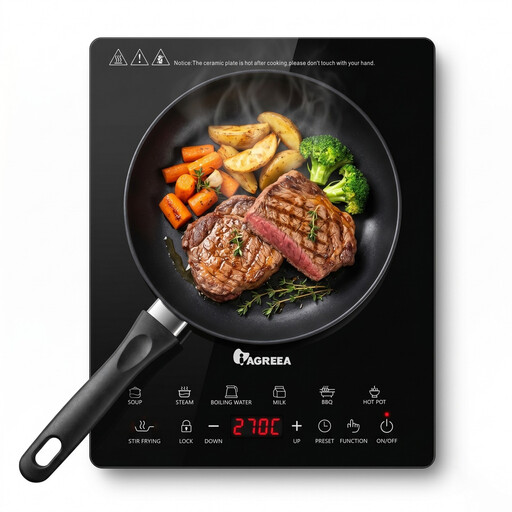 Image unavailable
Consider this portable model if you need to heat one saucepan and put the cooker away afterwards.
 Image unavailable
This portable cooker suits a one-pan setup where you have a stable place to use it and room to store it afterwards.
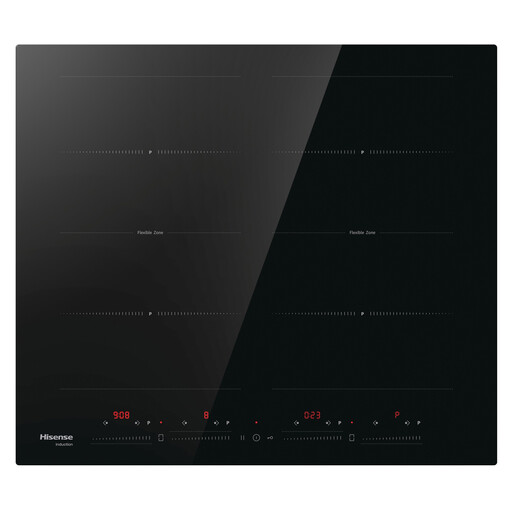 Image unavailable
Consider this 60 cm hob if blanching is one of several jobs for a permanent cooking surface.
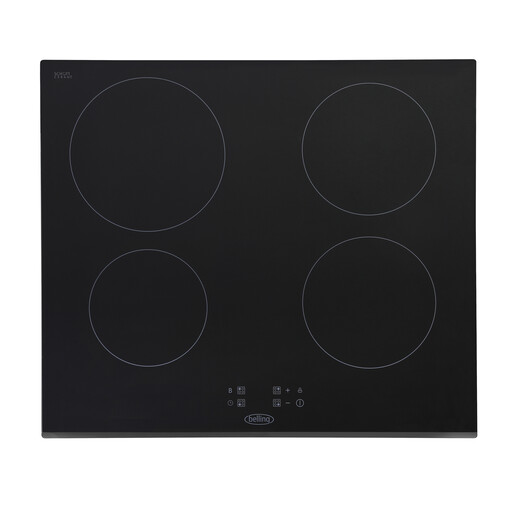 Image unavailable
This built-in format is worth considering if the hob will serve everyday cooking beyond one saucepan of vegetables.
 Image unavailable
Consider this hardwired hob if it will be your permanent cooking surface and you also use multiple pans regularly.
No: a portable single-zone induction cooker can suit one saucepan if you have a suitable place to use it. A four-zone built-in hob is more relevant when it will also be your regular cooking surface.
No: the connection depends on the exact model. Bosch Home Appliances GB identifies PUG61RAA5B as Plug & Play, while AEG UK specifies SO64IA0SCB as hardwired only; check the installation instructions for the hob you intend to buy.
Measure the worktop cut-out and the space beneath it, not just the visible glass width. Compare those measurements with the exact model’s installation requirements and check the electrical arrangement as well.
It will work only if its base is suitable for induction and meets the hob’s cookware requirements. Which? notes that many pans are compatible but not all, so check the saucepan you actually use for blanching before changing hob type.
Seek competent electrical installation advice before connecting a hardwired hob. Electrical Safety First strongly recommends using a registered electrician for installation work; confirm the requirements for the particular job and location with the installer.