
24/7 Customer Support

Free returns

Same-day & Next-day Delivery

Quality Guaranteed

Unlock Your Welcome Offers: FREE Delivery | Up to 80% OFF | Free 30-day JoyPlus trial
Download the APP
Upgrading your kitchen hob is a significant decision. With so many options on the market, it's easy to fall into common traps set by clever marketing. Many UK homeowners invest in a new induction hob expecting a leap in performance, only to be disappointed by overlooked details. Before you commit, let's cut through the clutter and focus on what truly matters for a fast, efficient and safe cooking experience.
One of the most frequent pitfalls is the promise of a simple plug and play induction hob. While convenient, these 13 amp induction hob models often come with a hidden trade-off: aggressive power management. When you try to use multiple cooking zones at once, the hob can automatically reduce power to stay within the 13-amp limit, leaving you with sluggish heating just when you need speed. Another common oversight is cookware. An induction hob only works with ferromagnetic pans and discovering your favourite cookware is incompatible after installation is a frustrating and costly mistake.
To avoid these issues, it pays to understand a few core parameters. This isn't about complex technical jargon, but practical knowledge that ensures your new electric hob meets your daily cooking demands.
This is the most critical choice you will make. Your home's wiring will dictate your options.
13 amp induction hob (Plug & Play): These hobs have a total power load of around 3kW and come with a standard UK plug. They are ideal for kitchens without a dedicated high-power cooker circuit. The main advantage is the ease of installation, often not requiring an electrician. However, be aware of the power-sharing limitations mentioned earlier. They are suitable for lighter cooking duties but may frustrate keen cooks who need high power across multiple zones simultaneously.The terms induction hob and ceramic hob are often used interchangeably, but they describe very different technologies.
The most common size is the 60cm induction hob, which typically features a 4 zone induction hob layout. This is perfectly adequate for most families. However, if you frequently use large griddle pans, fish kettles or oversized pots, look for a hob with flexible zone technology. This allows you to 'bridge' two adjacent zones, creating one large, evenly heated area, offering far greater cooking versatility. For larger kitchens or those wanting a statement appliance, 90cm hobs or even modular 'domino' hobs provide even more space and customisation.
We've filtered the options to match different needs and kitchen setups, focusing on models that deliver on their promises without the hidden drawbacks.
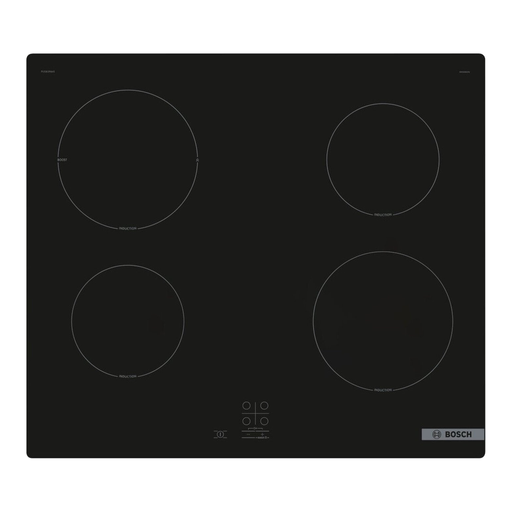
Why This Fits Their Persona: Ideal for those upgrading their kitchen on a budget or without a 32A circuit. The plug-and-play design from a reputable brand like Bosch avoids the cost and hassle of hiring an electrician for a straightforward replacement.
While it is a 13A model, its Power Management system is a transparent feature, not a hidden flaw. It intelligently distributes power and the PowerBoost function still allows for rapid heating on a single zone when needed.
Simple installation with a pre-fitted UK plug. Features reliable TouchSelect controls and a PowerBoost function for speed.

Why This Fits Their Persona: This hard-wired Belling hob is for the user who needs performance and flexibility. The 77cm width provides more elbow room than a standard 60cm model, and the flexible bridge zone is perfect for large family meals, accommodating griddles or oversized pans with ease.
As a high-power (7.0kW) hard-wired unit, it completely avoids the performance throttling of 13A models. The flexible zone directly solves the problem of fixed-size rings being too restrictive for varied cookware.
A flexible bridge zone for versatile cooking and powerful performance with Power Boost available on each of the four zones.
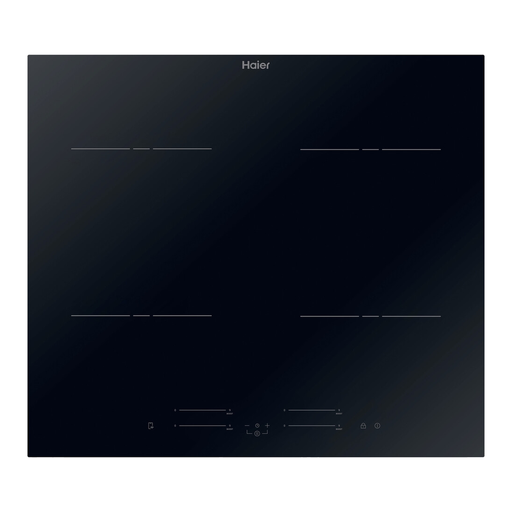
Why This Fits Their Persona: This is a genuinely smart hob for those who appreciate technology that enhances cooking. The individual touch sliders for each zone offer a far more intuitive and rapid control experience than repeatedly tapping a +/- button.
Unlike hobs with gimmicky apps, the Haier hOn app's 'Cook with me' feature provides practical, guided recipes that interact with the hob. The multislider control is a tangible usability improvement, not just a marketing feature.
Dedicated multislider controls for immediate, precise power adjustment per zone. Genuinely useful smart connectivity for guided cooking.
If you've decided the sleek, touch-control interface of an induction hob isn't for you, or if you prefer the tactile feedback of physical dials, we have other options. We have compiled a complete, real-time list of products that satisfy strict selection criteria and UK safety regulations.
1. Do I need to buy all new pans for an induction hob? Not necessarily. The rule is simple: if a magnet sticks firmly to the bottom of your pan, it will work on an induction hob. Many modern stainless steel pans, all cast iron pans and enamelled cast iron are induction-compatible. Aluminium, copper and glass pans will not work unless they have a specific magnetic plate bonded to the base.
2. How much does it cost to run an induction hob vs a ceramic hob? Induction hobs are generally more energy-efficient. Because they heat the pan directly, very little energy is wasted heating the glass surface or the surrounding air. A ceramic hob loses a significant amount of heat during this transfer process. While the purchase price may be higher, an induction hob can lead to lower electricity bills over its lifespan.
3. Can I install an induction hob myself? This depends entirely on the model. A plug and play induction hob that operates on a 13A supply and comes with a fitted plug can usually be installed by a competent person, as it fits into a standard wall socket. However, any hob with a power rating above 3kW requires hard-wiring into a dedicated 32A cooker circuit. This work must be carried out by a qualified electrician to ensure it is safe and complies with UK electrical regulations.