One-pot weeknight chilli cooks
If you usually cook chilli in one saucepan and use another pan for onions or a side dish, check that the saucepan base fits a cooking zone and that there is room for both pans.


For a pot of bean chilli with another pan alongside it, start with a four-zone induction hob whose zones fit your cookware; bridge or flex zones are more relevant if you regularly use unusually wide cookware or several pans at once. Before ordering, check that the pot has an induction-compatible base, measure the worktop opening and confirm whether the exact hob is designed to plug in or requires hardwiring.
If you usually cook chilli in one saucepan and use another pan for onions or a side dish, check that the saucepan base fits a cooking zone and that there is room for both pans.
If you make a large pot of chilli while cooking other dishes, usable surface area and the layout of bridge or flex zones matter more than zone count alone.
If you want to limit changes to the kitchen, check the worktop opening and electrical connection. A Plug & Play designation applies to the particular model, not to every four-zone hob.
Check your chilli pot and the space available for other pans first. Then compare the installation requirements before deciding whether boost, bridge or flex-zone features would change how you cook.
| Concern | What to check | Who this matters to |
|---|---|---|
| Room for a pot and other pans | Compare the pot’s flat magnetic base with the intended zone, and check whether other pans fit alongside it. Consider a bridge or flex zone for wide cookware. | I need room for a large chilli pot while other pans are in use; around 31% of consumers put pan space first. |
| Boiling and simmer control | Check the exact model’s boost function and how its power settings are adjusted. | I want to bring the chilli to a boil, then lower the heat for a simmer without awkward adjustments; around 25% of consumers put heating and control first. |
| Worktop and electrical fit | Compare the installation drawing with the cut-out and ventilation space, and confirm the connection method and electrical load. | My choice has to fit the existing worktop and electrical setup; around 25% of consumers put installation fit first. |
| Less disruption when replacing a hob | Look for an explicit Plug & Play designation and follow that model’s connection instructions; similar width does not establish plug-in suitability. | I would rather avoid extensive electrical changes if a suitable socket-designed model fits my kitchen; around 19% of consumers put a low-disruption replacement first. |
Induction needs a ferromagnetic cookware base, according to Bosch UK. An unsuitable pot may not heat on the hob.
Check your chilli pot’s induction compatibility and compare its flat base with the intended cooking zone.
You may need a compatible pot if the one you use now is unsuitable.
The appliance width does not tell you whether it fits the opening in your worktop. Installation dimensions vary by model, as Bosch UK notes.
Measure the existing cut-out, cabinet space and underside clearance, then compare them with the exact installation drawing.
A mismatched opening may call for worktop alteration.
Electrical connection is model-specific. Bosch UK identifies the PUG61RAA5B as Plug & Play, while AEG UK lists the IKX84443CB as hardwired only.
Confirm the connection method and supply requirements for the model you choose; arrange a qualified electrician for a hardwired installation.
A hardwired model may involve professional electrical work.
Combining zones can accommodate certain wider cookware, but an ordinary round chilli pot may fit a single appropriately sized zone.
Compare the pans you actually use with the zone layout before making bridge or flex capability a priority.
Bosch UK lists both a four-zone Plug & Play model and a 60 cm model with a CombiZone, offering distinct routes for a straightforward replacement or wider cookware.
AEG UK’s wider IKX84443CB and NII84F00FZ models are relevant when batch cooking calls for more pan-placement flexibility.
The NEFF T66FHX4L0 is a 60 cm option to consider if moving pans around the hob is important to your routine.
These built-in, four-zone induction hobs cover narrower everyday layouts and a wider bridge-zone option. Compare the pan layout and installation instructions for each model before deciding which suits your chilli routine.
 Image unavailable
Consider the bridge layout if you regularly use wide cookware as well as a chilli pot.
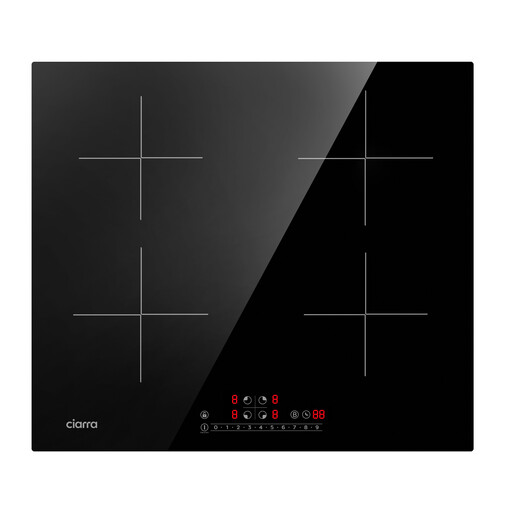 Image unavailable
The separate zones may suit a chilli pot with other pans alongside it, provided your cookware fits the zones.
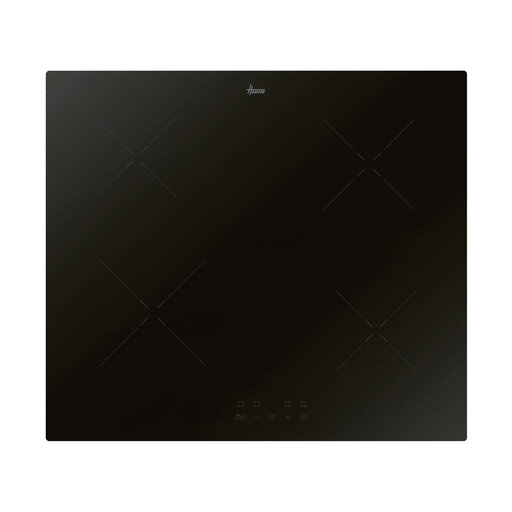 Image unavailable
This four-zone layout is worth considering if you cook chilli while using separate pans for other dishes.
 Image unavailable
Consider this four-zone model for a chilli pot and other pans if its individual zones suit your cookware.
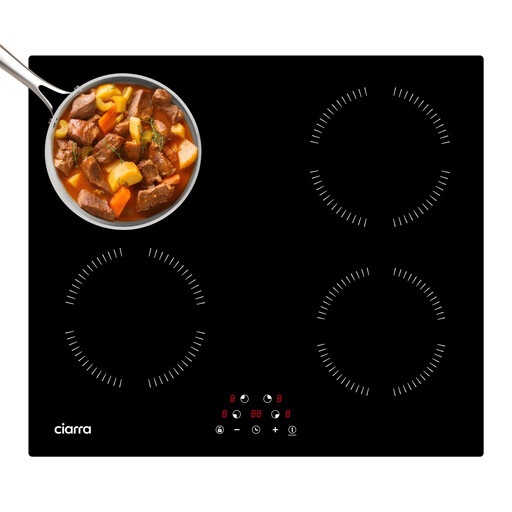 Image unavailable
This model offers separate zones to consider when cooking chilli and other dishes at the same time.
It will work if it has an induction-compatible ferromagnetic base that suits the chosen zone. Bosch UK lists cast iron and enamelled steel among suitable materials; cookware without a suitable magnetic base will need a compatible alternative.
Not necessarily: a round pot can use one appropriately sized zone. A bridge or flex layout becomes more relevant if you regularly use unusually wide or long cookware; check the particular hob’s zone arrangement against your pans.
No; the connection depends on the exact model. Bosch UK identifies the PUG61RAA5B as Plug & Play, whereas AEG UK lists the IKX84443CB as hardwired only. Follow the chosen model’s installation instructions rather than judging by its width or zone count.
Check the exact model’s installation drawing for clearance and ventilation requirements before cutting or reusing a worktop opening. Bosch UK notes that installation measurements vary between models, so another hob’s dimensions are not a substitute.