
24/7 Customer Support

Free returns

Same-day & Next-day Delivery

Quality Guaranteed

Unlock Your Welcome Offers: FREE Delivery | Up to 80% OFF | Free 30-day JoyPlus trial
Download the APP
Replacing a hob can improve everyday cooking, but the wrong choice may create installation problems, restrict your cookware or increase cleaning time. Marketing often focuses on power ratings and stylish black glass while leaving out practical details that matter more in a UK kitchen.
This guide explains the main pitfalls, the specifications worth checking and suitable options for different households, from renters needing a portable induction hob to homeowners planning a built-in installation.
Induction heating requires a magnetic cookware base. Aluminium, copper, glass and some stainless-steel pans may not heat unless they have a ferromagnetic layer. Before buying an induction hob, place a magnet against the base of your pans. If it sticks firmly, the pan is more likely to be suitable.
A portable model may specify a cookware diameter range. For example, the IAGREEA cooker accepts magnetic, flat-based cookware from 12–26cm, while the ochama model also requires suitable ferromagnetic cookware.
A high total wattage does not always mean every zone can operate at maximum output simultaneously. Built-in models use power management to distribute electricity between zones. Check the rated power, fuse requirement and whether the product has a booster function or power-sharing system.
A 2-zone induction hob may suit a compact flat, but a household cooking several pans at once may prefer a 4-zone induction hob. Remember that a portable 2000W induction cooker is designed for one pan at a time, not the same workload as a full-size built-in appliance.
A “60cm induction hob” commonly has external dimensions close to 590mm wide, but the worktop cut-out can be different. Several built-in models listed here require a cut-out of approximately 560 × 490mm. Always compare the product dimensions, cut-out dimensions, worktop thickness and ventilation requirements with your existing kitchen.
For gas appliances, installation involves additional requirements. A gas hob should be connected by a suitably qualified Gas Safe registered engineer, while hard-wired electric and induction appliances should be installed by a qualified electrician in line with the manufacturer’s instructions and applicable UK regulations.
A 2-zone model saves worktop space and can be sufficient for one or two people. A 4-zone model is more practical for family cooking. Zone diameters should match your pans: undersized cookware may heat unevenly, while oversized cookware may not receive heat across the full base.
Some models include flexible cooking areas. The Hisense HI6442BSCE has an Area Flex feature that combines two zones for larger pans, griddles or batch cooking.
A touch-control hob is easy to wipe around because there are fewer raised parts, although some users prefer rotary knobs for tactile adjustment. Useful features include:
Safety features do not replace supervision. Do not use a hob with cracked glass, block ventilation openings or leave cooking unattended.
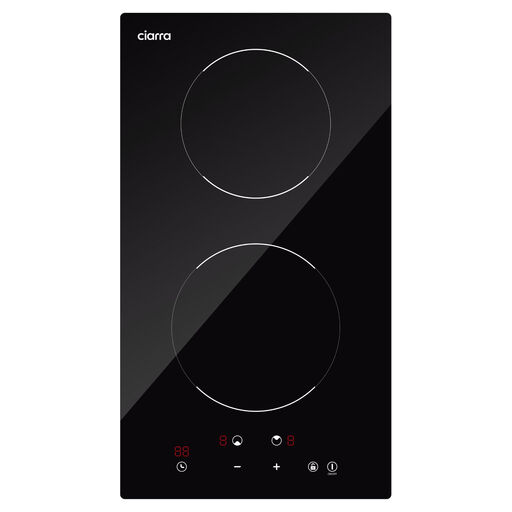
Why This Fits Their Persona: Its compact 290mm width is suited to small kitchens, studio flats and homeowners who need to preserve worktop space while retaining two cooking zones.
The stated 2900W output, 16A rated fuse and 260 × 490mm cut-out help buyers check electrical and installation requirements before purchase.
Nine power levels, a timer, child lock, automatic pan detection and residual heat indication are listed features.
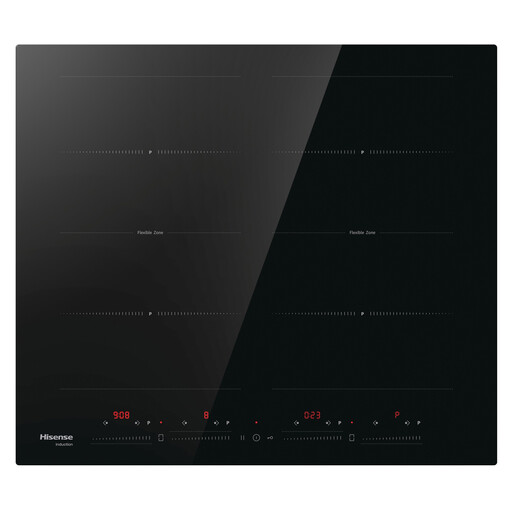
Why This Fits Their Persona: This is a practical choice for homeowners seeking a full-size four-zone layout with flexible cooking space and convenient controls.
The 60cm format, four individual sliders and Area Flex specification make the available cooking capacity clearer than a headline wattage alone.
It includes Area Flex, Rapid Boil, Heat Shift, an integrated timer, child lock and residual heat indicators.
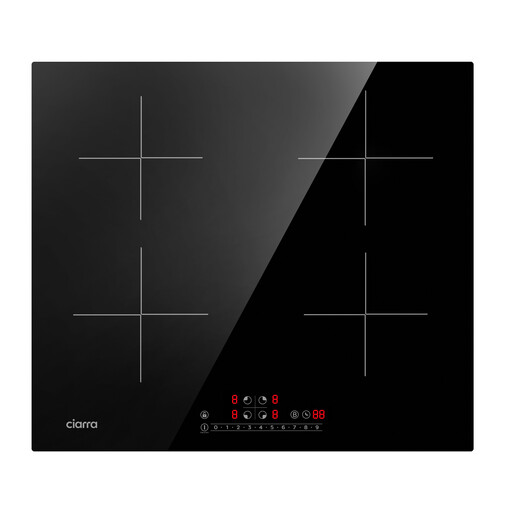
Why This Fits Their Persona: Four independent zones and a listed 7200W total power suit households that regularly prepare several dishes at once.
Its 32A rated fuse and 560 × 490mm cut-in dimensions are clearly specified, helping buyers arrange professional installation rather than relying on assumptions.
It offers nine power levels, individual 99-minute timers, automatic pan detection, overflow protection and a child lock.
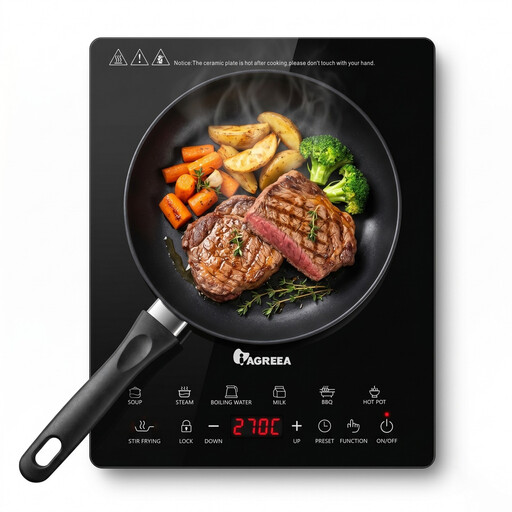
Why This Fits Their Persona: Its portable format is suitable for rented homes, small kitchens, temporary cooking areas or as an extra hob during entertaining.
The 44.5mm thickness, 100–2000W range and stated 12–26cm cookware compatibility provide practical information beyond a slim-design claim.
It has eight power levels, temperature control from 60–270°C, a three-hour timer, seven preset functions and a child safety lock.
We have compiled a complete, real-time list of products that fully satisfy these strict selection criteria and UK safety regulations.
Running cost depends on electricity and gas tariffs, cooking habits, pan size and heat settings. Induction transfers heat directly to compatible cookware, while ceramic and solid-plate electric hobs heat the surface first. This may reduce wasted heat during some cooking tasks, but a direct cost comparison should use the appliance’s actual power consumption and your current tariff.
Built-in induction hobs are commonly hard-wired and may require a dedicated circuit, suitable fuse rating and ventilation clearance. Use a qualified electrician and follow the supplied installation instructions. Portable models are simpler to position, but they still need a stable, dry surface, unobstructed ventilation and a suitable UK power connection.
Lifespan varies with build quality, installation, cleaning and frequency of use. Avoid dragging pans across the glass, using abrasive cleaners or operating the appliance with damaged surfaces. Allow the hob to cool before cleaning, keep controls dry and follow the manufacturer’s maintenance guidance.