Sauce-focused home cooks
If you brown chicken before adding stock or cream, you need to move from higher heat to a controlled simmer. Straightforward power adjustment matters more to you than an extra cooking zone you would rarely use.


For chicken fricassee in a pan that fits one cooking zone, start with a four-zone induction hob that lets you adjust the heat as you move from browning chicken to simmering the sauce. Consider linked zones if your usual sauté pan or casserole needs a larger cooking area; an assisted frying feature is optional, not a requirement for the dish. Check the exact model’s worktop fit, electrical connection and cookware requirements before choosing between them.
If you brown chicken before adding stock or cream, you need to move from higher heat to a controlled simmer. Straightforward power adjustment matters more to you than an extra cooking zone you would rarely use.
If you make family portions in a broad sauté pan, casserole or roaster, check whether its base fits a single zone. Bosch and AEG describe linked-zone features on specific models for larger cookware.
If you are replacing a built-in hob or planning a new worktop, establish the cut-out and electrical connection requirements before settling on cooking features. The requirements can differ between models.
Check the worktop opening and electrical provision first, then compare the size of your usual pan with the hob’s zones. Heat adjustment matters for both browning and simmering, whether or not you need linked zones.
| Concern | What to check | Who this matters to |
|---|---|---|
| Browning-to-simmer control | Check how you select a zone and lower its power. Treat a boost function as an aid to heat-up, not as a sauce setting. | When I move from browning chicken to cooking the sauce, I want to reduce the heat without losing control of the simmer. Around 27% of consumers would make heat-stage control their main concern. |
| Pan space | Compare the base and shape of your usual pan with the zone layout; check which zones can be linked on a bridge or combi model. | A broad casserole or roaster may need more cooking area than one zone offers. For around 27% of consumers, fitting that cookware would be the priority. |
| Installation and compatibility | Match the model’s cut-out and connection instructions to your kitchen, and check that your pans are suitable for induction. | If I am replacing a built-in hob, I need it to fit the worktop and suit the available connection before its extra features matter. Roughly 33% of consumers would put fit and compatibility first. |
| Assisted cooking | Check the exact model for a frying sensor, pause function or child lock, and read how each is intended to work. | When I am managing other parts of the meal, I may value a feature that helps with an interruption or the browning stage. That convenience would be the main concern for around 13% of consumers. |
Similar overall widths do not establish the same worktop cut-out or connection. AEG lists a 560 × 490 mm cut-out and a hardwired-only connection for its TO64IB00FZ.
Compare the exact model’s installation instructions with your worktop opening and electrical provision before ordering.
A mismatch can also mean arranging worktop alteration or electrical installation work.
A bridge or combi zone is intended to accommodate cookware that benefits from a larger linked area. It may add little to your fricassee routine if your usual pan sits comfortably on one zone.
Measure the base and shape of the cookware you regularly use, then compare it with the exact hob’s linked-zone layout.
Neff describes a frying-temperature sensor on its T68FHV4L0, while Bosch lists PowerBoost on its PUE611BB5E. Neither feature removes the need to adjust heat for the sauce and follow the appliance instructions.
Check the feature’s instructions for the exact model, and continue to watch the pan as the cooking stage changes.
Product safety alerts and recalls concern particular products; they cannot be ruled out by choosing a brand alone.
Keep the exact model details, register the appliance where available and use the UK Office for Product Safety and Standards product-safety alerts and recalls service to check for notices.
Compare Bosch’s conventional four-zone layout with its model-specific combi-zone option.
The TO64IB00FZ is a built-in option to consider if your cookware would use a bridge zone.
The T68FHV4L0 is a wider option for cooks considering flexible zones and assisted frying-temperature control.
The IB 65B60 NE provides another four-zone induction layout to compare with your pan and kitchen plans.
These four-zone hobs include single-zone layouts and models with a named flexible or bridge area. Choose according to your usual pan first, then check the exact installation requirements; the models below are different from the Bosch, AEG and Neff examples discussed above.
 No image available
Consider this four-zone layout if your fricassee pan fits one zone. Check the pan’s induction compatibility and the hob’s stated hardwired installation requirements against your kitchen.
 No image available
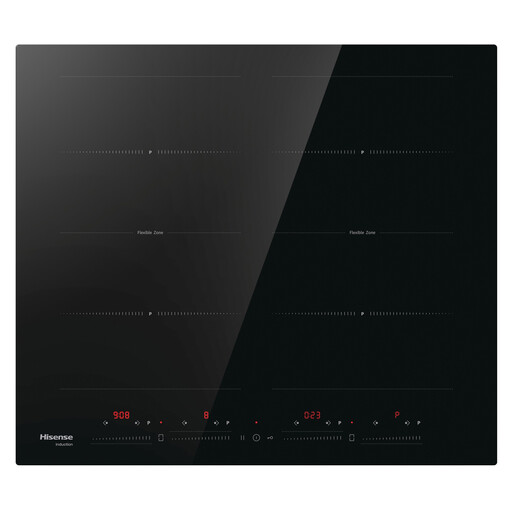
The flexible bridge is worth considering if your regularly used pan needs a larger cooking area. Its 77 cm format makes worktop fit important; confirm the cut-out and electrical connection before ordering.
 No image available
Consider Area Flex if the base of your usual sauté pan would benefit from linked zones. Compare the model’s installation dimensions and connection instructions with your kitchen, and check cookware compatibility.
 No image available
This 60 cm model is a choice for cooking in a pan that fits one zone, provided a hardwired installation suits your kitchen. Check the cut-out in the installation instructions and use induction-compatible cookware.
 No image available
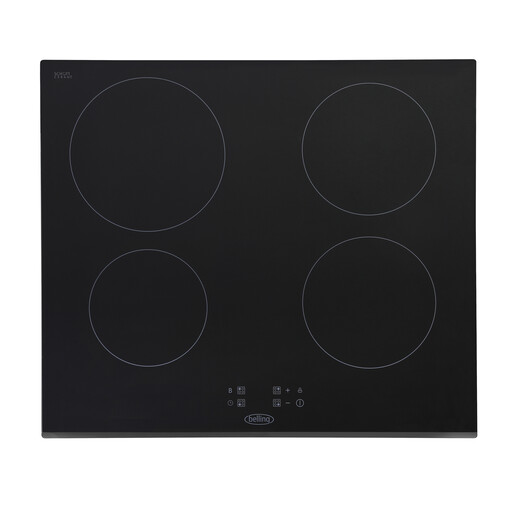
Consider this format if your fricassee cookware fits a single zone. Check the model’s zone and pan-base guidance, its 560 × 490 mm cut-out requirement and its electrical connection instructions before buying.
No, not if the pan you normally use fits one induction zone. A bridge or combi zone becomes more relevant for a wide or elongated pan; Bosch and AEG describe linked zones on specific models for larger cookware.
A boost setting is for faster heat-up, not for holding a gentle sauce simmer. Bosch describes PowerBoost on the PUE611BB5E as providing up to 50% more power for faster heating; you still need to lower and manage the heat as the dish cooks.
Match the exact model’s overall dimensions, required cut-out and electrical connection to your kitchen plan. For example, AEG lists a 560 × 490 mm cut-out and hardwired-only connection for the TO64IB00FZ, while Bosch describes the PWP611BB5B as Plug & Play.
Clear spillages promptly and follow the cleaning instructions for your hob’s surface. Electrical Safety First advises regular hob cleaning and immediate attention to spills to avoid a build-up of food and fat.
Use the exact model details to search the UK Office for Product Safety and Standards product-safety alerts and recalls service. Register the appliance with its manufacturer where that option is available so you can receive relevant product communications.