Regular homemade-custard cooks
If you stir custard on the hob, you need to be able to lower the heat as it thickens. Good Food’s custard method calls for gentle heating and continued stirring before lumps form.


For custard, prioritise low-heat control you can adjust while stirring, plus an induction-compatible saucepan that fits the cooking zone. A temperature-maintaining sensor is worth considering if you regularly make sauces and its documented modes suit your cooking; a sensor designed to detect boiling water is not a custard programme. Check the exact hob’s connection and worktop requirements before ordering.
If you stir custard on the hob, you need to be able to lower the heat as it thickens. Good Food’s custard method calls for gentle heating and continued stirring before lumps form.
If you often prepare sauces or melt ingredients, a temperature-maintaining function may be useful. Check the exact model’s supported modes and cookware requirements: NEFF and Miele describe these functions for particular sensor-equipped hobs, not every model in their ranges.
If you are replacing a built-in hob, compare the worktop opening, electrical connection and your custard saucepan with the model you plan to buy. Connection types vary even among induction hobs of similar width.
Choose between manual control and a documented sauce or simmer sensor for the cooking you actually do; then check that your pan and kitchen can accommodate the hob.
Consider it when: You make custard occasionally and are comfortable adjusting the heat while you stir.
Trade-off: The hob does not take over the gentle heating and stirring required by Good Food’s custard method; Which? assesses simmering separately from heating speed, so check evidence for the exact model’s low-heat behaviour.
Consider it when: You regularly make sauces or melted mixtures and can use a model whose documented sensor mode suits those tasks.
Trade-off: Sensor functions and cookware requirements are model-specific. NEFF describes its Frying Sensor for melting and sauces, while Miele describes simmer settings on TempControl hobs; neither removes the need to follow and stir a custard recipe.
| Concern | What to check | Who this matters to |
|---|---|---|
| Gentle heat control | Try the power controls if possible, and look for an exact-model manual or independent assessment of simmering. Fast-boil power is a different consideration. | When I stir egg custard as it thickens, I want to reduce the heat promptly without relying on a boiling setting. Around 36% of consumers would put low-heat control first. |
| Saucepan and zone fit | Check that the saucepan has a magnetic base, then compare its base diameter with the model’s zone and minimum-pan guidance. | For a small batch, I need my existing custard saucepan to work on an appropriately sized zone. Roughly 29% of consumers would make cookware fit their primary concern. |
| Kitchen installation | Compare the exact connection, electrical specification and required worktop cut-out with your kitchen; ask an appropriately competent installer to assess the fit. | Before replacing a built-in hob, I need to know whether its connection and cut-out suit my kitchen. Around 21% of consumers would prioritise installation fit. |
| Wider cooking use | Check whether any extra zone layout or automatic mode supports meals you make regularly, rather than assuming it helps with custard. | I also use the hob for other dishes, so an extra cooking function matters only if I will use its stated mode. Roughly 14% of consumers would place wider cooking flexibility first. |
Good Food calls for gentle heating and stirring when making custard. Which? assesses simmering separately from speed, so rapid heating alone does not answer the low-heat question.
Look for guidance or independent testing of the exact model’s simmering behaviour, and consider whether you can adjust its controls comfortably while stirring.
AEG describes SenseBoil for water or water with potatoes, not a milk-and-egg custard mixture. An automatic boil setting should not replace the recipe’s gentle-heat method.
Use manual low heat for custard unless the exact hob’s instructions explicitly identify a suitable mode, and keep stirring as the recipe directs.
Induction needs a magnetic cookware base. A small saucepan must also suit the zone and any minimum pan size stated for the model.
Check the pan base with a magnet, measure it and compare it with the hob’s cookware guidance before ordering.
If your current saucepan is incompatible, you may need a suitable replacement.
Connection requirements differ by model: Bosch calls the PUG61RAA5B Plug & Play, while AEG specifies a hardwired-only connection and 7350 W total electrical loading for the IAX64411CB.
Take the exact installation drawing and electrical specification to an appropriately competent installer before committing to a built-in hob.
A different worktop opening or electrical provision may require alteration work.
Relevant if you want to investigate a model-specific temperature-maintaining sensor for sauce-related cooking.
Relevant if you want to compare sensor-supported simmer settings with flexible-zone options.
Relevant if automatic assistance with water boiling also matters in your everyday cooking.
Relevant if you are comparing conventional touch-controlled hobs and need to check a particular model’s connection type.
These built-in hobs offer different sizes and zone layouts for cooking custard while you manage the heat and stir. Compare each model’s low-heat behaviour, saucepan guidance and installation instructions before choosing.
 No image available
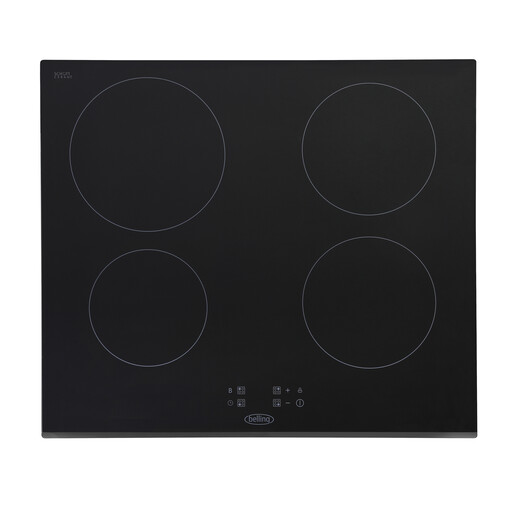
Consider this four-zone layout if you want to make custard alongside other dishes. Check the exact model’s low-heat behaviour, saucepan-size guidance and installation requirements before buying.
 No image available
This built-in hob is an option if you want to manage custard’s heat yourself. Before choosing the IHT603, check its simmering behaviour, the zone suited to your saucepan and the kitchen fitting instructions.
 No image available
The four-zone layout may suit cooking custard alongside another dish. Check which zone accepts your saucepan, how the HI642BCB behaves at low heat and whether its built-in fitting requirements suit your kitchen.
 No image available
Consider this model if a hardwired built-in hob suits your kitchen. For custard, check its low-heat behaviour and saucepan fit; have an appropriately competent installer assess the electrical connection and required cut-out.
 No image available
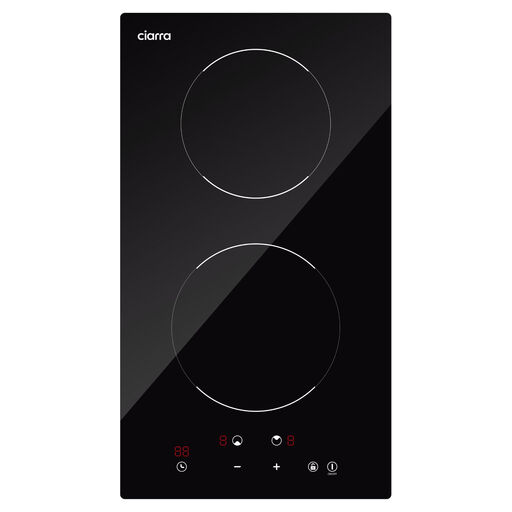
The narrower two-zone layout is worth considering where worktop space is limited, provided it leaves enough zones for your other cooking. Its title specifies 2900 W, touch control, nine power levels, a timer and a child safety lock; check low-heat behaviour, saucepan fit and installation requirements separately.
Controllable low heat matters more than fast-boil power when you make custard while stirring. Good Food calls for gentle heating until the mixture thickens, and Which? assesses simmering as a separate aspect of hob performance. Consider a temperature-maintaining sensor only when the exact model documents a mode suited to your cooking.
It needs a magnetic base and must suit the intended cooking zone. NEFF’s induction cookware guidance calls for a magnetic base; compare your pan’s base diameter with the exact hob’s zone and minimum-pan instructions before ordering.
Do not assume that it can. AEG describes SenseBoil for boiling water or water with potatoes, not egg custard. Use the recipe’s gentle-heat and stirring method unless the exact hob instructions explicitly confirm a suitable mode.
No: the connection depends on the model and whether the installation suits your property. Bosch describes the PUG61RAA5B as Plug & Play, whereas AEG specifies the IAX64411CB as hardwired only, with 7350 W total electrical loading. Check the chosen hob’s installation instructions and ask an appropriately competent installer to assess your kitchen; Electrical Safety First advises using registered electricians working to BS 7671.