Hands-off dessert cooks
If you want fewer manual adjustments while poaching, a timer and model-specific simmer assistance may matter more to you than additional cooking zones. AEG describes a Boil Sensor on its NII64B10AB model.


For one small poaching pan, prioritise a suitable induction cooking zone, controllable low heat and a timer. A standard built-in hob can make sense when you are replacing an everyday kitchen appliance; simmer assistance is more relevant if you want fewer heat adjustments, while flexible zones chiefly matter if you also use larger or unusually shaped cookware.
If you want fewer manual adjustments while poaching, a timer and model-specific simmer assistance may matter more to you than additional cooking zones. AEG describes a Boil Sensor on its NII64B10AB model.
If you usually make one or two portions in a small saucepan, check both its magnetic base and its diameter against the intended zone. Bosch UK identifies ferromagnetic cookware as necessary for induction, while AEG UK advises checking the zone’s supported pan size.
If this hob must also replace your everyday cooking appliance, compare the worktop opening, appliance dimensions and electrical connection as well as its poaching controls. Electrical Safety First recommends using a registered electrician for installation work.
Start with the saucepan and the space available. Then decide whether a standard built-in hob meets your everyday cooking needs or whether model-specific simmer assistance would be useful.
| Concern | What to check | Who this matters to |
|---|---|---|
| Steady simmer | Check low-heat controls and whether a timer or assisted-simmer function is available on the exact model. | If I want to poach without repeatedly adjusting the heat, controllable simmering is my priority; around 42% of consumers put that need first. |
| Small-pan fit | Check that the pan has a magnetic, flat base and that its diameter suits the chosen zone. | Cooking a single portion in a small saucepan makes pan-to-zone fit more important to me than extra zones; roughly 33% of consumers prioritise that fit. |
| Everyday replacement | Compare the worktop cut-out, electrical connection and cooking zones with your wider kitchen needs. | When replacing my main hob, I need it to fit the kitchen and handle meals beyond dessert; about 25% of consumers place that replacement need first. |
Induction needs a ferromagnetic pan base. AEG UK also notes that cookware below a zone’s minimum supported diameter may receive only part of the available power.
Test the base with a magnet and compare its flat diameter with the exact hob’s zone specifications.
A 60 cm four-zone hob may suit an everyday kitchen replacement, but those extra zones are not required for one poaching pan.
Decide whether you need a replacement main hob, then check its cut-out and connection requirements before choosing features.
A mismatched worktop opening or electrical supply may mean additional alteration or installation work.
Rapid heating does not answer the more important poaching question: how you will keep the liquid at a gentle simmer once it is hot.
Prioritise adjustable low heat and a timer; consider assisted simmer control if reducing manual adjustments matters to you.
Electrical requirements depend on the hob, the existing supply and the work being done. GOV.UK’s Approved Document P addresses electrical safety in dwellings in England, not every installation throughout the UK.
Read the exact installation instructions and ask a suitably registered electrician about the applicable work before ordering.
Worth considering if you want model-specific simmer assistance in a 60 cm built-in hob.
A reference point for a 60 cm everyday built-in hob and induction cookware guidance.
Relevant if you will also cook with varied cookware and want to assess flexible zones.
These choices cover a portable one-pan cooker, a compact built-in hob and 60 cm built-in hobs for kitchens that also need everyday cooking capacity. Check low-heat behaviour, pan fit and installation requirements for the model you choose.
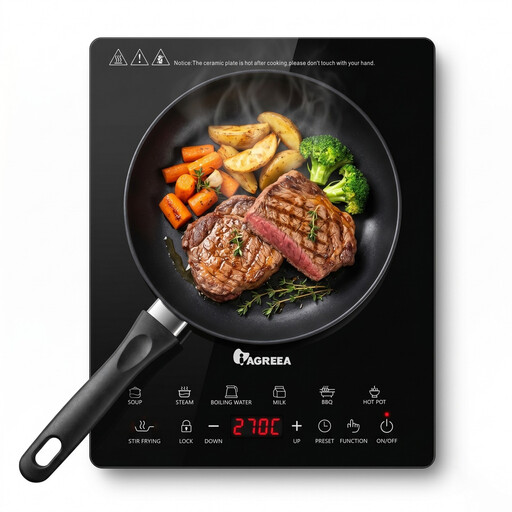 Image unavailable
A portable option if you want a one-pan setup rather than a built-in replacement.
The stated specifications are 2000 W, eight power levels, a 60–270°C temperature range, a timer of up to three hours and suitability for cookware measuring 12–26 cm.
Check the UK plug and electrical supply requirements, and do not assume the temperature settings establish steady simmering.
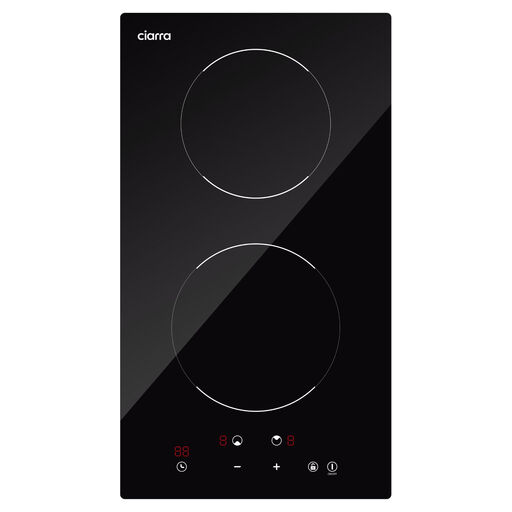 Image unavailable
A compact built-in choice to consider when one or two cooking zones meet your wider cooking needs.
Its name specifies two zones, 2900 W, nine power levels, touch controls and a timer.
Check your pan’s base against the intended zone, and confirm the worktop and electrical requirements in the installation instructions. Nine power levels alone do not establish steady simmering.
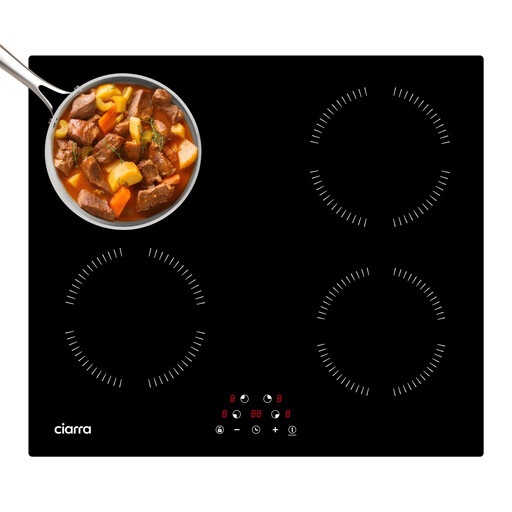 Image unavailable
Consider this format if poaching is only one use for a replacement main hob.
The product name identifies a 60 cm built-in hob with four zones.
Check the intended zone against your saucepan and confirm the cut-out, ventilation and electrical requirements. Four zones do not, by themselves, indicate how steadily the hob simmers.
 Image unavailable
A built-in everyday-cooking option if you are replacing a main hob rather than buying solely for one saucepan.
The product name specifies a hardwired 60 cm induction hob. Bosch UK lists four zones and TouchSelect controls for this model.
Check the required cut-out, electrical supply and minimum cookware diameter for your chosen zone. Descriptions of simmer control should not be taken as a measure of steady low-heat performance.
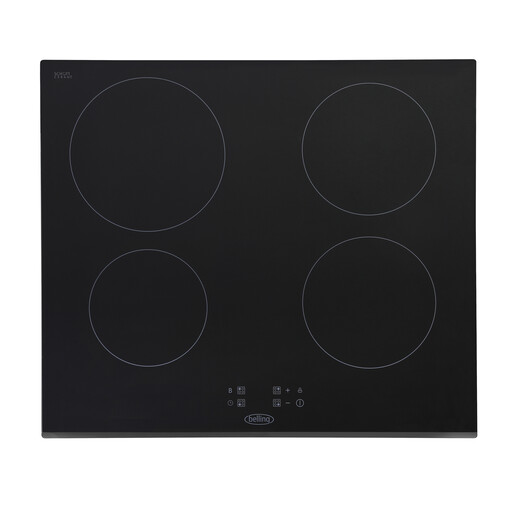 Image unavailable
Consider this built-in format when the hob needs to serve ordinary cooking as well as a one-pan dessert.
The product name identifies the ComfortCook IHT603 as a 60 cm induction hob.
Check the exact zone’s minimum cookware diameter, the worktop opening and the electrical instructions. Confirm that its low-heat control meets your poaching needs rather than relying on the number of settings.
It needs a suitable magnetic base, and its base diameter must suit the intended cooking zone. Bosch UK advises using ferromagnetic cookware; AEG UK notes that a pan below a zone’s minimum supported diameter may receive only part of the available power. Test the base with a magnet and check the hob manual.
Not for a single saucepan that fits an ordinary induction zone. Flexible zones are more relevant if you also expect to use large or unusually shaped cookware; NEFF UK lists them on its T56TT60N0 model.
Consider it if reducing manual heat adjustments matters to you. According to AEG UK, the Boil Sensor on its NII64B10AB adjusts rising bubbles to a simmer; that model-specific description does not remove the need to check your food while it cooks.
Do not assume the new hob is a simple swap: check its installation instructions and the existing electrical supply before purchase. GOV.UK’s Approved Document P covers electrical safety in dwellings in England, while Electrical Safety First recommends a registered electrician for installation work. Ask about the requirements that apply to your location and the specific job.
Compare the existing worktop opening and available depth with the new hob’s specified installation dimensions, not just its nominal width. AEG UK specifies a 560 × 490 mm built-in opening for the NII64B10AB; Bosch UK lists a 592 × 522 mm appliance footprint for the PIE631BB5E. An opening and an appliance footprint are different measurements.