Attentive polenta cooks
If you make polenta regularly, look for controls you can adjust comfortably throughout cooking. A timer or pause function may help you manage the session, but neither establishes how steadily a particular hob simmers.


For polenta in a conventional round saucepan, start with an induction hob whose controls are easy to adjust and whose cooking zone suits the pan’s magnetic base; a standard four-zone hob can be sufficient. Consider a bridge or flex zone if you also use large or unusually shaped cookware. Check the electrical connection and worktop opening before ordering, and do not treat a rapid-boil feature as evidence of steady low-heat simmering.
If you make polenta regularly, look for controls you can adjust comfortably throughout cooking. A timer or pause function may help you manage the session, but neither establishes how steadily a particular hob simmers.
If you prepare other dishes alongside polenta or use long or irregular cookware, a bridge or flex zone may be more relevant than it is for a single round saucepan.
If the hob must fit an existing kitchen, check your pans, the worktop opening and the electrical arrangement before choosing between built-in models.
Start with the pan you use for polenta and how you adjust the heat while cooking. Then check whether the hob’s size and electrical requirements suit your kitchen.
| Concern | What to check | Who this matters to |
|---|---|---|
| Heat control | Try the control layout if possible, check timer and pause functions, and look for an independent simmering test of the exact model. | If I adjust the heat repeatedly while tending polenta, I want controls I can use without interrupting cooking. Around 36% of consumers put attended heat control first. |
| Pan and zone fit | Confirm that the pan has a ferromagnetic base and compare its base diameter with the cooking zone; consider a bridge or flex zone for cookware that needs one. | When I use an existing saucepan or switch between differently shaped pans, I need them to work on the heated area. For around 29% of consumers, pan and zone fit is the primary concern. |
| Installation fit | Compare the exact model’s connection type, connected load, overall dimensions and required cut-out with your kitchen. | If I am replacing a built-in hob, I need the new one to fit the opening and electrical arrangement before its cooking features matter. Installation fit comes first for around 21% of consumers. |
| Everyday handling | Check the control surface and model-specific safety features, such as a child lock or automatic switch-off. | If splashes and accidental control changes complicate cooking at home, I value straightforward cleaning and supplementary safety features. Around 14% of consumers make everyday handling their main priority. |
Bosch and AEG describe boost functions in terms of faster heating. That does not establish how steadily a hob maintains low heat once polenta is cooking.
Treat boost as an initial-heating feature. If simmer control will decide your purchase, seek an independent simmering result for the exact model and assess how comfortable its manual controls are to use.
Induction requires a ferromagnetic pan base. Bosch also advises matching the base to the zone for even heat distribution and warns against heating empty or thin-base cookware.
Check the material and base diameter of the pan you plan to use before choosing a zone layout.
If your current pan is unsuitable, you will need a compatible one.
These layouts accommodate larger or differently shaped cookware, but the layout alone does not show that an ordinary round saucepan will simmer polenta more steadily.
Choose the flexible area for cookware or multi-pan routines that will use it; otherwise focus on pan fit, control usability and model-specific simmering evidence.
The AEG TO64IB00FB is specified as hardwired only with a 560 × 490 mm cut-out, while Joybuy lists the Bosch PUG61RAA5B with a pre-fitted UK 13 A plug. Their installation requirements are not interchangeable.
Compare the exact hob’s installation instructions with your worktop and electrical arrangement. For work in an English dwelling, consult GOV.UK’s Approved Document P and obtain appropriate installation advice; check the applicable requirements separately elsewhere in the UK.
An incompatible worktop opening or electrical arrangement may require changes before a built-in hob can be installed.
Bosch illustrates the choice between a conventional four-zone layout and a model listed with a plug-in connection; compare the exact variants rather than treating the brand as one installation route.
The TO64IB00FB is a standard-width built-in option for cooks who sometimes need a larger combined cooking area.
The T68FHV4L0 is relevant if you have room for an 80 cm hob and use several pans or flexible cookware placement.
The NZ64B6056GK is worth considering when the number, size or shape of your cookware varies.
These options include built-in hobs with conventional or flexible zones, a compact two-zone hob and a portable cooker. Choose by the pan and kitchen setup you intend to use, then check the exact model’s installation requirements and simmering evidence where those affect your decision.
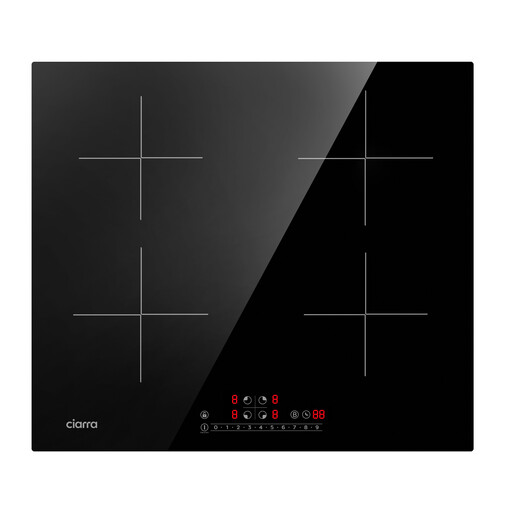 No image available
A conventional four-zone layout is an option when your polenta saucepan fits a circular cooking zone.
The product name specifies touch controls, nine power levels and a booster function. Check the installation instructions against your worktop and electrical arrangement, and seek a model-specific simmering test if low-heat control is decisive.
 No image available
Consider its flexible bridge if you also cook with larger or elongated cookware.
The product name specifies four zones, touch controls and boost mode. Its 77 cm format calls for a careful worktop-fit check; confirm the connection requirements and look for an exact-model simmering test before relying on its low-heat performance.
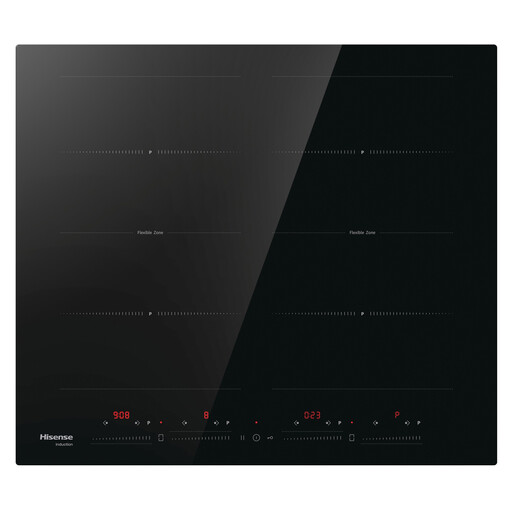 No image available
Area Flex may be relevant if your cookware sometimes needs a larger cooking area than a single circular zone.
Check the pan’s base size and this model’s cut-out and electrical specifications before ordering. A flexible area alone does not establish how steadily the hob will simmer polenta.
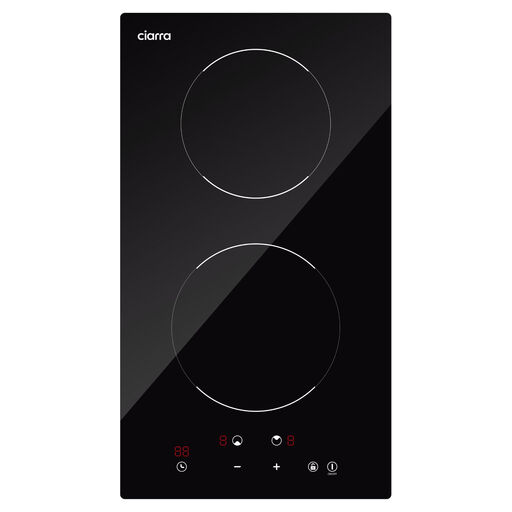 No image available
This compact built-in format is an option when you need two cooking zones and have a suitable worktop opening.
The product name specifies 2900 W, touch controls, nine power levels, a timer and a child safety lock. Confirm the pan-to-zone fit and electrical connection, and check an exact-model simmering test if sustained low heat is a priority.
 No image available
Choose a portable format only if a separate cooker suits where you plan to prepare polenta; it is not a built-in hob replacement.
The product name specifies touch controls, ten power settings, six functions and a safety lock. Check that your pan base fits the cooking area and that the controls meet your timing and simmering needs.
It will work if its base is ferromagnetic and suits the chosen cooking zone. Bosch advises matching the base size to the zone for even heat distribution; check the base rather than judging by the pan’s rim.
No, a suitable round saucepan can use a standard circular zone. A bridge or flex zone becomes more relevant if you also use large, long or differently shaped cookware; it does not, by itself, establish better simmering.
No. The boost features described by Bosch and AEG concern faster heating, not a measured low-heat result. Look for independent simmering results for the exact model if that performance matters to your polenta cooking.
No; the connection depends on the model. AEG specifies the TO64IB00FB as hardwired only, while Joybuy lists the Bosch PUG61RAA5B with a pre-fitted UK 13 A plug and 3.0 kW maximum connected load. Check the exact model’s instructions and your kitchen’s electrical arrangement before ordering.