
24/7 Customer Support

Free returns

Same-day & Next-day Delivery

Quality Guaranteed

Unlock Your Welcome Offers: FREE Delivery | Up to 80% OFF | Free 30-day JoyPlus trial
Download the APP
Induction hobs can offer responsive temperature control, a smooth cooking surface and a convenient alternative to gas or conventional ceramic cooking. However, choosing between a portable induction hob, a built-in induction hob, a 60cm induction hob or a larger 4-zone induction hob requires more than comparing wattage and appearance.
The most expensive mistakes usually come from three areas:
Measure the available space rather than relying only on the advertised width. A standard 60cm induction hob may measure approximately 590–592mm wide, while the worktop cut-out can be around 560 x 490mm. Always compare the product’s installation diagram with your worktop and cabinet ventilation arrangements.
A built-in model also needs an appropriate electrical connection. Several models in this range are rated between 6kW and 7.4kW and are specified for hardwiring. Installation should be completed by a qualified electrician in accordance with the manufacturer’s instructions and applicable UK requirements.
For renters, smaller kitchens or occasional cooking, a portable induction hob can be more practical. It needs a level, heat-resistant surface, clear ventilation openings and a suitable socket. Do not move it while operating.
A 2-zone induction hob is useful for compact kitchens, studio flats, annexes or as an additional cooking surface. It can accommodate two pans, but larger meals may require more careful timing.
A 4-zone induction hob is more suitable for family cooking and preparing several dishes at once. Some models include a bridge or flexible area, allowing two zones to work together for a griddle, roasting pan or larger cookware.
Do not assume that every zone can run at maximum power simultaneously. Built-in hobs may use power management to distribute the available electrical load. Check the total connected load, fuse recommendation and whether the model supports adjustable power limits.
An induction hob with booster function can provide a temporary increase in power for tasks such as heating a pan or bringing water towards the boil. The useful question is how the booster operates: is it available on one zone, several zones or all zones, and does it reduce automatically after a set period?
A practical control panel should also include:
A black glass induction hob is generally straightforward to wipe clean, but it still needs careful handling. Wait until the residual heat indicator has cleared, then use a soft cloth and a suitable hob cleaner. Avoid abrasive pads, harsh powders and placing objects on the surface.
Test an existing pan with a magnet before replacing your cookware. If the magnet attaches firmly to the base, the pan may be compatible, although the product instructions remain the final reference. Cast iron, enamelled iron and some stainless-steel pans can work; aluminium, glass and ceramic cookware without a magnetic base will not heat properly.
The base should also be reasonably flat and within the hob’s stated diameter range. For example, the IAGREEA portable model specifies compatible magnetic cookware measuring 12–26cm. Using a pan that is too small can trigger no-pan detection or produce uneven results.
Induction surfaces can remain hot because heat transfers back from the pan. Keep handles away from adjacent zones, do not leave an empty pan on an active zone and supervise children. A child lock helps prevent unintended operation, but it does not replace supervision.
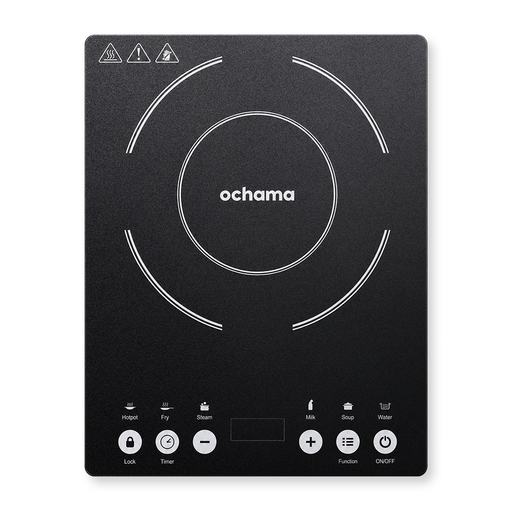
Why This Fits Their Persona: This slim portable model suits renters, students and households needing an occasional extra cooking surface without a built-in installation.
Its specifications clearly state 2000W output, 10 heat settings and ferromagnetic cookware compatibility, helping buyers set realistic expectations for single-pan cooking.
Touch controls, six preset functions, boil-dry protection and a child lock are listed features.
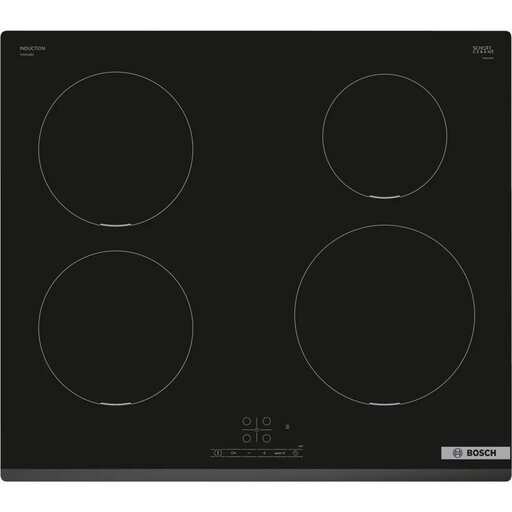
Why This Fits Their Persona: A suitable option for homeowners replacing a standard-width hob and looking for detailed controls and integrated cooking assistance.
The listing specifies the 592 x 522mm appliance size, 560 x 490mm installation requirement and hardwired connection, reducing the risk of ordering an incompatible replacement.
It has four zones, 17 power levels, PowerBoost, individual timers, child lock and residual heat indicators.
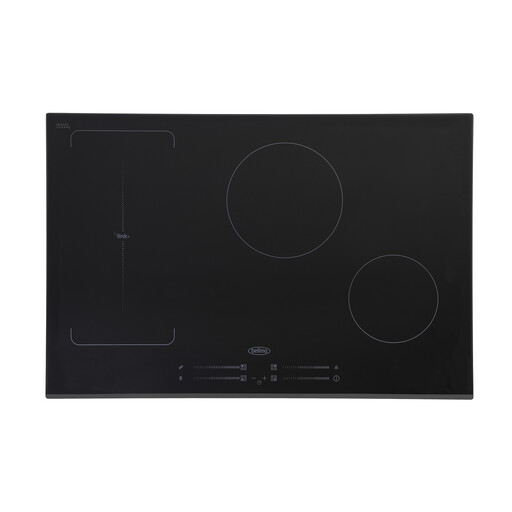
Why This Fits Their Persona: Its wider layout and flexible bridge area suit frequent family cooking, batch preparation and larger pans.
The 77cm width, 744 x 494mm cut-out and 7,000W connected load are stated clearly, so buyers can check space and electrical suitability before purchase.
Four zones, a flexible bridge, touch-slider controls, zone timers, keylock and pan detection support varied cooking tasks.
We have compiled a complete, real-time list of products that fully satisfy these strict selection criteria and UK safety regulations.
Yes. They need cookware with a magnetic, ferromagnetic base. A magnet test is a useful first check, but consult the hob and pan instructions for diameter and base requirements.
Running cost depends on the appliance’s power, cooking time, electricity tariff and how efficiently heat is transferred to the pan. Induction heats the cookware directly, but a higher-wattage setting can still use more electricity while it is operating. Use the lowest suitable setting and avoid heating an empty pan.
Built-in models that require hardwiring should be installed by a qualified electrician. Check the product’s dimensions, cut-out size, fuse recommendation, ventilation requirements and total connected load before arranging installation.