Who each hob may suit

Home chocolate temperers

If you make moulded chocolates, coatings or decorations, you need to monitor the chocolate itself, not just select a hob power level. Callebaut’s tempering guidance gives an initial melting temperature of 40–45°C; a digital thermometer and a pan you can move away from the heat are useful alongside controllable low settings.

Everyday bakers melting small batches

For brownies, drizzles or ganache, a suitable small pan or bain-marie and a low setting may matter more to you than a boost function. AEG’s chocolate recipe calls for low heat and continuous stirring; check that your chosen zone accommodates the pan you intend to use.

Kitchen upgraders keeping their pans

If you are replacing a hob, test your existing pans before choosing induction: AEG says it requires cookware with a magnetic base. A radiant ceramic hob avoids that particular requirement, but either built-in route still needs a model-by-model check of the installation and worktop opening.

What matters when choosing

Induction

Consider it when: You have a suitable magnetic-base pan and want heat input to respond promptly when you turn the hob down or off.

Trade-off: Existing non-magnetic pans will not work directly, and a cooking sensor is not a substitute for measuring the chocolate.

Radiant ceramic

Consider it when: Keeping a suitable non-magnetic pan is a deciding factor in your hob replacement.

Trade-off: The glass zone retains heat after switch-off, so move the pan away when you need to stop warming the chocolate.

Concern What to check Who this matters to
Low-heat control Try the layout of the low-power controls and check whether the zone suits your small pan. Use a digital thermometer for the chocolate. If I temper chocolate, I need to reduce heat before it overshoots the temperature my recipe calls for. Around 50% of consumers put low-heat control and monitoring first.
Pan compatibility Test the pan base with a magnet before choosing induction, and check the model’s permitted pan sizes. Keeping the saucepan or bain-marie pan I already use may decide which type of hob I can choose. For roughly 30% of consumers, pan compatibility is the primary concern.
Installation and fit Compare the exact model’s worktop cut-out, connection and electrical requirements with your kitchen. When replacing a built-in hob, I need it to fit the opening and be suitable for the available electrical connection. Installation and fit come first for about 20% of consumers.

Mistakes to avoid

  • Choosing boost power for a low-heat task

    A high-power setting does not tell you how gently a hob can warm chocolate. Callebaut’s tempering guidance starts with melting at 40–45°C and calls for lower working temperatures later.

    Look at how easily you can select and reduce low settings, then follow your recipe with stirring and a digital thermometer.

  • Ordering induction without testing your pan

    AEG says induction requires a magnetic-base pan. A favourite pan that lacks one will not work directly, regardless of how suitable its size appears.

    Check the base with a magnet and compare the pan diameter with the chosen hob’s cookware guidance.

  • Leaving chocolate on a switched-off ceramic zone

    A radiant ceramic zone and the pan can remain hot after switch-off, so the chocolate may continue warming.

    Move the pan away as you approach your recipe’s target temperature, keep stirring and heed any residual-heat indicator.

  • Assuming a built-in hob will fit the existing opening

    Connection and worktop dimensions are model-specific. For example, AEG lists its HK614000CB ceramic hob as hardwired-only, with a 590 × 520 mm footprint and a 560 × 490 mm cut-out.

    Compare the exact installation diagram and electrical requirements with your kitchen before ordering, and seek qualified installation advice where needed.

Brands for reference

AEG

AEG offers induction and radiant ceramic built-in hobs across different layouts.

  • AEG’s chocolate-tempering recipe uses low heat and continuous stirring on an induction hob.
  • Its induction hobs require magnetic-base cookware. The cited HK614000CB ceramic model is hardwired-only; its dimensions should not be assumed to apply to other models.

Bosch

Bosch lists both induction and radiant ceramic hobs, including models with different control layouts.

  • Bosch lists FlexInduction and DirectSelect on the PIX631HC1E; its PKE611CA3E is a four-zone radiant ceramic model.
  • Bosch’s PerfectFry Plus feature does not establish a chocolate-tempering temperature setting. Use a thermometer rather than assuming a frying function will control the chocolate.

NEFF

NEFF’s cited T56TT60N0 induction hob combines flexible cooking zones with cookware detection and Power Move.

  • NEFF describes induction as heating the cookware directly and stopping that heat input when switched off.
  • NEFF gives a 70–220°C range for its cited frying sensor, above Callebaut’s 40–45°C initial chocolate-melting guidance. Induction also requires a magnetic-base pan.

Joybuy hob choices

These choices include built-in induction and ceramic hobs for comparing pan compatibility and kitchen fit, plus a portable induction option if you do not need a built-in replacement. None of their listed power settings should be treated as a measured chocolate temperature.
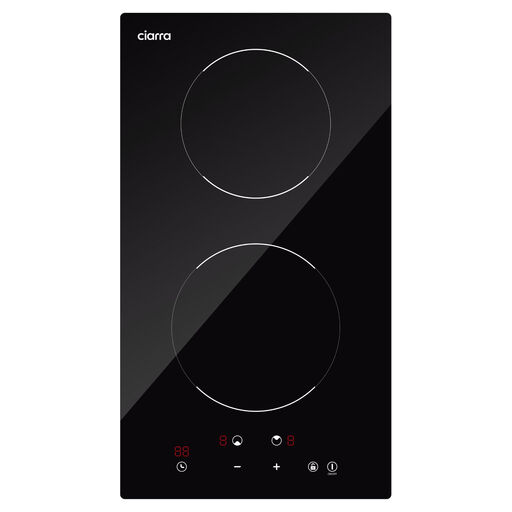
CIARRA CBBIH292T built-in induction hob

CIARRA CBBIH292T 29 cm built-in induction hob

Consider this compact built-in option if your chocolate pan has an induction-compatible magnetic base. Its title specifies two zones, 2900 W, touch controls and nine power levels; check the pan-size and installation requirements for this exact model, and use a thermometer to monitor the chocolate.

Joybuy
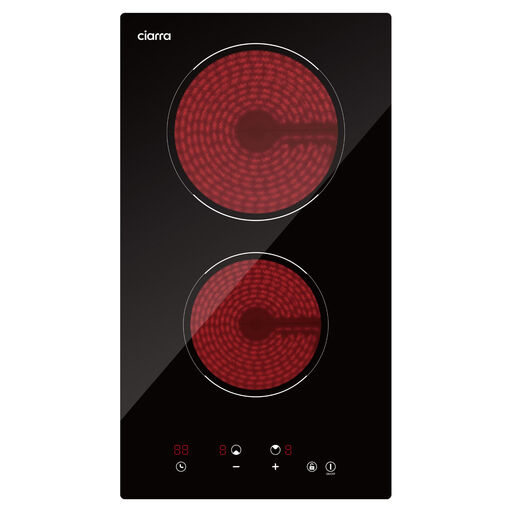
CIARRA CBBCH292T built-in ceramic hob

CIARRA CBBCH292T two-zone built-in ceramic hob

Consider this radiant ceramic route if you want to keep a suitable non-magnetic pan. Its title specifies two zones, 2900 W, touch controls and nine power levels; check installation fit, and move the pan away from the zone when residual heat could keep warming the chocolate.

Joybuy
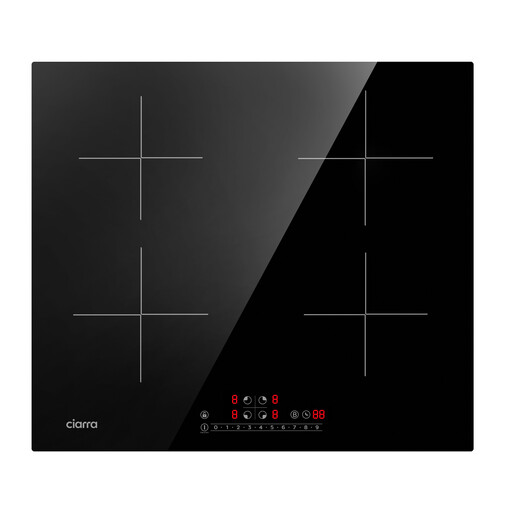
Ciarra four-zone built-in induction hob

Ciarra four-zone built-in induction hob

Consider this model if you need four cooking zones as well as a surface for a magnetic-base chocolate pan. Its title specifies touch controls, nine power levels and a booster function; check the pan-size guidance, worktop cut-out and electrical requirements before choosing it for your kitchen.

Joybuy

ochama 2000 W portable induction cooker

ochama 2000 W portable induction cooker

Consider a portable surface if you are not replacing a built-in hob and have a magnetic-base pan. Its title specifies touch controls, ten power settings and six functions; check the permitted pan-base size and use a thermometer rather than assuming a setting corresponds to a chocolate temperature.

Joybuy

Common questions

Is induction or ceramic better for gently melting chocolate?

Choose induction for its prompt response to a change in heat input if your pan has a magnetic base; choose radiant ceramic if keeping a suitable non-magnetic pan is more important. With either type, stir, monitor the chocolate with a thermometer and move the pan away from heat as your recipe requires.

Can a hob’s frying sensor temper chocolate?

Do not assume that a frying sensor can control the chocolate-tempering stage. NEFF gives a 70–220°C range for its cited frying sensor, whereas Callebaut’s guidance starts by melting chocolate at 40–45°C and then uses lower working temperatures. Check the exact hob’s instructions and measure the chocolate with a digital thermometer.

How do I check whether my saucepan works on induction?

Test whether a magnet sticks firmly to the saucepan’s base, then check its size against the hob’s cookware guidance. AEG says induction needs a magnetic-base pan; the material named on a pan is not enough to establish compatibility if its base has a different construction.

Should I arrange installation advice before buying a built-in hob?

Yes, if you cannot confirm that the exact model suits your worktop opening and electrical connection. AEG lists its HK614000CB ceramic hob as hardwired-only, illustrating why connection requirements vary by model. For homes in England, GOV.UK’s Approved Document P addresses electrical safety in dwellings; ask a suitably qualified installer about the requirements that apply to your location and planned work.