Family meal multitaskers
If compote simmers while you prepare the rest of the meal, look at how your pans fit across the available zones. A bridge or flexible zone becomes relevant when your largest pan extends beyond a conventional zone.


Choose induction if you want to bring the fruit to the boil and then adjust the heat promptly for simmering, provided your compote pan is induction-compatible. A four-zone hob can accommodate other meal pans; consider a bridge or flexible zone if your largest pan needs one. Ceramic is worth considering when keeping non-magnetic cookware matters more, but either choice must fit the worktop and the household electrical installation.
The size of your compote pan, what else is cooking and whether you are replacing an existing hob change which features are worth checking.
If compote simmers while you prepare the rest of the meal, look at how your pans fit across the available zones. A bridge or flexible zone becomes relevant when your largest pan extends beyond a conventional zone.
If adjusting the heat as fruit reaches a simmer is your main concern, compare induction with ceramic heating. Check your saucepan’s compatibility before choosing induction: Bosch states that it requires ferromagnetic cookware.
If the new hob must replace an existing one, measure the worktop opening and check the exact model’s connection requirements before ordering. Similar-looking hobs need not have the same fitting or electrical requirements.
Decide whether your pans and preferred heating method point towards induction or ceramic, then check the zone layout and installation requirements for the exact model.
Consider it when: A regular compote saucepan needs to share the hob with other meal pans.
Bear in mind: Induction needs a compatible magnetic pan base, and a standard zone may not suit unusually wide cookware.
Consider it when: A large preserving pan needs a cooking area spanning more than one zone; AEG and Indesit describe models that combine zones for larger cookware.
Bear in mind: The pan still needs to be induction-compatible, and the exact zone layout must suit its base.
Consider it when: Keeping a compote pan that is not induction-compatible is the deciding factor.
Bear in mind: As Which? explains, ceramic heating warms an element beneath the glass rather than generating heat in the pan itself; allow for the hot cooking surface after use.
| Concern | What to check | Who this matters to |
|---|---|---|
| Responsive simmering | For induction, check that the compote pan has a magnetic base and fits the zone. Compare the exact models’ heat settings and timer functions. | When fruit reaches the boil, I want to turn it down for a gentle simmer without changing pans; around 38% of consumers put heat control first. |
| Pan space during a family meal | Check how your pans fit across the zones. For an unusually large pan, check the dimensions and instructions for any bridge or flexible area. | If several dishes need attention at once, I need space for the compote pan without crowding the others; around 31% of consumers prioritise pan capacity. |
| Fit and electrical installation | Compare the worktop cut-out with the installation sheet, and ask a qualified installer to assess the model’s connection type and electrical loading. | I am replacing a built-in hob and need the new one to fit and connect appropriately; around 31% of consumers make installation compatibility their primary concern. |
Induction requires a suitable magnetic base. A copper, aluminium, glass or clay pan without an induction-compatible base may look right on the hob but will not heat as intended.
Test the base of your compote pan with a magnet, then check its diameter against the induction hob’s pan guidance. Bosch identifies ferromagnetic cookware as necessary for induction.
Changing to induction may mean replacing a pan you otherwise intended to keep.
Two hobs described as 60 cm wide can have different installation requirements. The worktop opening, not just the visible hob width, determines whether a built-in model will fit.
Measure the existing cut-out and compare it with the exact model’s installation sheet before ordering. Give those measurements to the installer.
A mismatched opening can require worktop alteration before fitting can proceed.
A bridge or flexible area is useful when the pan needs a larger cooking area. A regular saucepan that fits a standard zone does not need that function simply because you are making compote.
Measure the base of the largest pan you actually use and compare it with the hob’s zone instructions before choosing a flexible layout.
Bosch describes the PUE611BB5B as Plug & Play, while AEG specifies the IKX64301CB as hardwired-only. Similar cooking layouts therefore do not establish that two models use the same installation route.
Ask a qualified installer to assess the exact model’s instructions, connection type and electrical loading against your home before purchase.
The existing electrical installation may need work before a chosen hob can be fitted.
These examples show differences between particular product lines; choose by the exact model’s pan layout, connection and fitting requirements rather than by brand alone.
Bosch offers induction models relevant to households comparing a standard four-zone layout with their existing cooking arrangements.
AEG has 60 cm induction models to compare when connection requirements or space for a larger pan are decisive.
The cited Indesit models give shoppers both a ceramic option and an induction option with a larger-pan function to examine.
NEFF’s wider induction layouts are relevant if compote is often one of several pans in use.
These models cover induction choices for a standard four-zone layout or a larger bridged area, plus a ceramic option for households keeping non-induction cookware. Compare each model’s fitting instructions with your kitchen before choosing.
 No image available
Consider this layout if a large compote pan needs a flexible bridge area while other pans are in use.
Four cooking zones, touch controls and Boost mode are identified in the product name. Check the bridge-zone pan guidance, worktop dimensions and electrical requirements for your kitchen; induction also needs compatible cookware.
 No image available
A four-zone layout is worth considering when compote cooks in a regular saucepan alongside other family-meal pans.
Check that your saucepan has a magnetic base and fits a cooking zone. Have a qualified installer assess the model’s electrical requirements for your home.
 No image available
This four-zone model suits consideration when the compote pan and other meal pans each fit a conventional zone.
Confirm that your compote pan is induction-compatible. Before choosing a built-in hob, compare its installation instructions with the worktop opening and household electrical installation.
 No image available
Consider its four-zone layout if a standard compote saucepan will share the hob with other dishes.
The product name identifies this model as hardwired. Check the pan’s magnetic base, the exact worktop cut-out and the electrical installation requirements with a qualified installer.
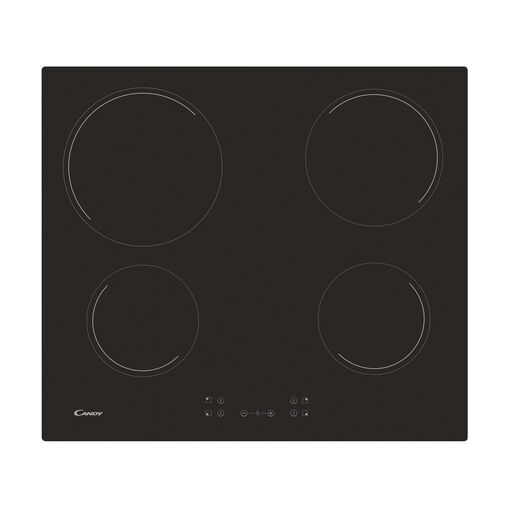 No image available
Consider ceramic if keeping a non-magnetic compote pan is more important to you than induction’s pan-directed heating.
Allow for heat remaining in a ceramic cooking zone after use. Check the hob’s controls and installation instructions against your simmering needs and kitchen.
Choose induction if prompt heat adjustment matters to you and your compote pan is compatible; choose ceramic if keeping a non-magnetic pan is the stronger reason. Which? explains that induction generates heat in the pan, whereas a ceramic hob heats an element beneath the glass, so take particular care with the ceramic zone’s residual heat.
Test whether a magnet sticks to the pan base, then check the hob maker’s guidance for pan size and construction. Bosch states that induction requires ferromagnetic cookware; a pan made from a non-magnetic material needs a suitable induction-compatible base.
A bridge zone is worth checking if the pan’s base needs more space than one conventional zone provides. Measure that base and compare it with the exact hob’s instructions: AEG describes a bridge function that joins two zones, while Indesit describes a similar larger-area purpose for DualZone.
Check the worktop cut-out and the new model’s installation instructions before ordering, and have a qualified installer assess its connection and electrical loading. Requirements for electrical work can differ across the UK, so confirm the route applicable to your home rather than assuming a replacement can be fitted in the same way as the old hob.
Check the exact model against the Office for Product Safety and Standards product recalls and alerts before purchase and if a concern arises later. GOV.UK provides a searchable list of alerts for products people own.