Regular batch-risotto cook
You want to move between sautéing mushrooms and gently simmering rice. If induction appeals, check the base of your current risotto pan before choosing a hob.


Induction is a sensible choice for batch risotto if your pan is compatible and you want heat generated directly in the pan as you move between sautéing and simmering. If you regularly use a wide risotto pan alongside other pots, check a wider hob with linked zones. Ceramic lets you keep a broader range of cookware, but its glass surface can remain hot after cooking.
You want to move between sautéing mushrooms and gently simmering rice. If induction appeals, check the base of your current risotto pan before choosing a hob.
You use a large main pan while keeping stock or another component in a separate pot. Usable zone positions and worktop space may matter more to you than zone count alone.
You want a built-in electric hob without replacing a non-magnetic pan. Ceramic cooking is worth considering alongside induction, which needs compatible cookware.
Start with the pans and cooking positions you actually use, then check whether the hob fits your worktop and electrical setup. Which? explains the underlying distinction: induction generates heat in the pan, while an electric ceramic hob heats elements beneath the glass.
Choose it when: One induction-compatible risotto pan and a supporting pot fit the zones you plan to use.
Trade-off: A standard-width layout may be restrictive for an unusually wide pan, even when a model offers linked zones.
Choose it when: A large batch routinely calls for a wide main pan and other pans at the same time.
Trade-off: The hob needs enough worktop space; installation requirements depend on the exact model.
Choose it when: Keeping non-induction cookware matters more than heating the pan directly.
Trade-off: The glass can remain hot after the pan is removed, so allow for cooling before cleaning.
| Concern | What to check | Who this matters to |
|---|---|---|
| Heat control | Compare induction and ceramic heating, then check the chosen model’s settings and your pan’s induction compatibility. | If I move from frying mushrooms to a gentle simmer, I want to adjust the heat without changing pans. Roughly 31% of consumers would put that heat-control need first. |
| Usable cooking space | Measure the main pan base and check zone sizes, linked-zone placement and space for a stock pot. | When I cook a larger batch, I need room for the risotto pan and another pot at once. For about 25% of consumers, that pan arrangement would be the primary concern. |
| Installation and cookware fit | Check the exact hob’s dimensions, connection instructions and electrical requirements; test the pan base if considering induction. | I need the hob to fit my kitchen and want to know whether I can keep using my risotto pan. Around 25% of consumers would make that combined fit question their first priority. |
| Cleaning and residual heat | Check the model’s residual-heat indication and cleaning instructions; wait until the surface is safe to wipe. | After a starchy spill, I want to clean the hob without overlooking a hot surface. That concern would come first for roughly 19% of consumers. |
Four zones do not necessarily give a wide risotto pan and a stock pot useful positions at the same time. Beko’s HIC164402T has a dual ceramic zone, while AEG’s SK85IM0XFB offers linked induction zones; the layouts serve different pan arrangements.
Measure the flat base of your main pan and plan where every supporting pot will sit before choosing a zone layout.
Connection arrangements differ by model. Bosch describes its PWP611BB5B as plug-and-play, whereas AEG lists the SK85IM0XFB as hardwired-only.
Read the installation instructions for the exact model and check its requirements against your kitchen’s electrical provision.
A hardwired choice may involve arranging electrical installation work before the hob can be used.
Induction requires a suitable magnetic pan base, so a current risotto pan may not work on the new hob.
Test the base with a magnet and consult the pan maker if you are unsure; compare ceramic hobs if keeping a non-magnetic pan is essential.
Changing hob type may also mean replacing that pan.
A ceramic element heats the glass, which can remain hot after the pan is removed. Beko lists residual-heat indicators on its HIC164402T.
Pay attention to the indicator and follow the hob’s instructions before cleaning a spill or touching the surface.
Bosch offers induction options relevant to a standard-width batch-cooking setup.
AEG has a wider induction option for kitchens using several pans at once.
NEFF’s flex-induction range is relevant when pan positioning is a priority.
Beko has a ceramic option for cooks who want to retain non-induction pans.
These choices include wider and standard-width built-in induction hobs, compact built-in induction and ceramic models, and a portable induction cooker. Choose the format that suits your batch-cooking routine, then check pan fit and the installation instructions for the exact product.
 No image available
Consider this built-in model if you want positions for a risotto pan and supporting cookware. Its title lists four cooking zones and a flexible bridge.
Touch controls and Boost are listed. Check that your pan fits the bridge area and that the installation requirements suit your kitchen.
 No image available
This built-in induction model is a standard-width option if its cooking zones fit your risotto pan and any supporting pot.
Its title specifies hardwired installation. Check pan compatibility, zone dimensions and the installation instructions before ordering.
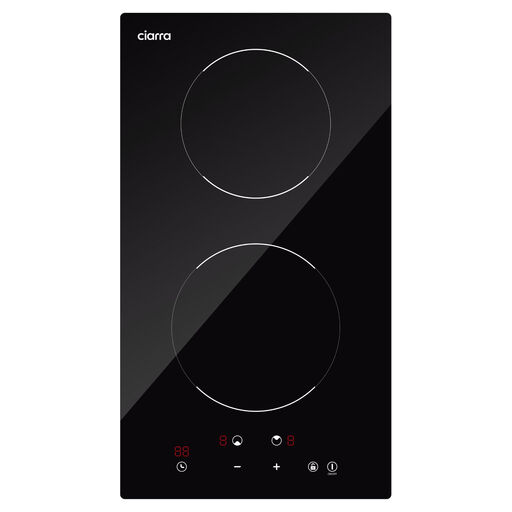 No image available
This compact built-in format is worth considering if your batch and supporting cookware fit a two-zone layout.
The title lists 2900W, nine power levels, a timer and a child lock. Check magnetic pan compatibility, zone fit and installation requirements.
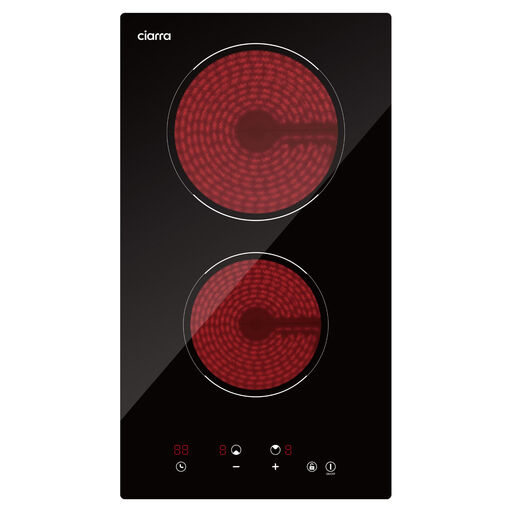 No image available
This built-in ceramic option may suit a cook keeping a non-induction risotto pan, provided its base fits a cooking zone.
The title lists 2900W, nine power levels, a timer and a child lock. Check the zone sizes and installation instructions, and allow the surface to cool before cleaning.
 No image available
Consider this portable format if you do not need a built-in hob for your risotto setup.
The title lists 10 power settings, six functions and a safety lock. Check that the cooking area fits your magnetic-based pan and follow the product’s hot-surface handling guidance.
Choose induction if direct heating of a compatible pan suits the way you move between sautéing and simmering; choose ceramic if keeping non-induction cookware matters more. A ceramic hob heats the glass through elements beneath it, so take care with residual heat after cooking.
Not necessarily: compare the pan’s flat base with the hob’s stated cooking zones first. Linked or flexible zones are worth considering if their usable area matches your wider cookware and still leaves room for any other pot you use.
That depends on the exact model. Bosch describes the PWP611BB5B as plug-and-play, while AEG lists the SK85IM0XFB as hardwired-only; check your chosen hob’s installation instructions and your kitchen’s electrical provision.
Check the rules applicable to your property and the installation instructions for the chosen hob. For properties in England, GOV.UK’s Approved Document P explains when electrical work requires notification and provides guidance on design, installation, inspection and testing; do not assume the same arrangements apply in every UK nation.
Wait until the surface is safe to clean, then follow the appliance instructions. Beko lists a residual-heat indicator on its HIC164402T ceramic hob; pay attention to that warning after removing the pan.